
Major fire under the bridge at Son Gotleu: Why the settlement by the Ma-20 repeatedly becomes a danger
Major fire under the bridge at Son Gotleu: Why the settlement by the Ma-20 repeatedly becomes a danger
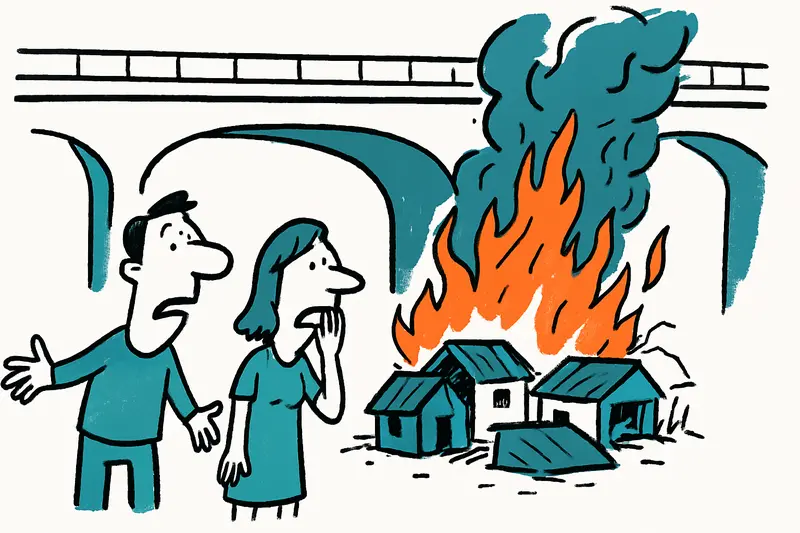
Yesterday several huts of a shantytown under a bridge near Son Gotleu burned. Residents escaped in time and no one was reported injured. The scene, however, raises fundamental questions about safety and urban planning in Palma.
Major fire under the bridge at Son Gotleu: Why the settlement by the Ma-20 repeatedly becomes a danger
14 May 2026 – Palma
Yesterday afternoon several makeshift huts under a bridge near the Ma-20 ring road at Son Gotleu were in full flames. People were able to get to safety in time, and according to initial reports no injuries were recorded. Nevertheless, the dense smoke partially blocked the lane towards Andratx and caused long traffic jams.
Investigators suspect that the fire started in one of the shacks. Nothing more is confirmed at this time. What remains is the concrete question: How can an accommodation situation that is so visibly located on a heavily trafficked artery be operated safely in the long term?
Key question: Who ensures that people living in makeshift settlements do not become a permanent danger to themselves and to traffic? This question is not only moral, it is practical and planning-related. A fire under a bridge is a hazard for the residents, for drivers and for emergency services that have to fight the flames with limited space; similar risks have been highlighted by incidents such as a fall from a roof in Son Gotleu.
Critical analysis: Such settlements arise in marginal zones — under bridges, on embankments, in industrial in-between spaces. The reasons are known: shortage of rooms, high rents in Palma, lack of quick alternatives, short distances to workplaces. Added to this are improvised electrical and cooking connections, flammable materials and missing fire protection infrastructure. The combination increases the risk that a single accident turns into a major blaze.
The public discourse usually lacks a sober view on three things: first, concrete figures and plans — how many people live there permanently, how many huts are connected to electricity? Second, a realistic short-term safety strategy — water access points for firefighting, escape routes, on-site fire safety education. Third, a medium-term perspective: affordable housing and legalized accommodations that meet standards.
Everyday scene from Palma: Those who drove along Avenida Miramar yesterday evening saw the orange-red flickering flames under the bridge, heard sirens and the dull horn of a truck stuck in the jam. Residents on Carrer de Son Gotleu reported smoke entering their apartments; one woman pulled baby shoes out of a plastic bag, an older neighbor handed blankets out of a window. The neighbourhood has also experienced serious traffic incidents, including a bus collision in Son Gotleu that left five people injured. Images like these linger in the mind long afterwards.
What is specifically missing: coordinated responsibility between the city council, social services and emergency planning, and not only reactive measures such as the major police operation in Son Gotleu. Fire brigades and police do their work, but preventive measures are often piecemeal. Binding standards are needed for makeshift settlements: safe distances to traffic arteries, verified power connections, sufficiently wide access routes for emergency vehicles and regular inspections that are not merely repressive but aimed at improvement.
Concrete solutions: In the short term, mobile water points and firefighting posts at known hotspots should be considered. A list of contacts for rapid evacuation and emergency shelters must exist and be published. In the medium term, temporary but standardized accommodations should be created — containers with electrical installations compliant with building regulations, sanitary communal facilities, fire safety training for residents. At the same time, housing policy in Palma must place greater emphasis on affordable, small units; that would reduce the formation of new settlements.
Another approach: strengthen local neighborhood initiatives. If residents have access to simple means of early fire detection — smoke detectors, portable extinguishers, light sources — many fires can be stopped in their initial stage. Such aids can be distributed relatively cost-effectively through municipal programs.
Conclusion, pointed: A major fire under the Ma-20 is not an isolated incident but a symptom. As long as the causes — housing shortage, precarious electricity supply, lack of prevention — are not addressed, such scenes will recur. Someone must not only put out fires but also organize and plan. This is not solely the task of the fire brigade, but a political, social and urban planning obligation.
On site it remains to be seen how quickly the city and social services will respond. The people who lost their huts yesterday now need not only emergency shelters but a perspective so that the flames do not flare up again at the same spot soon.
Frequently asked questions
When is the best time to visit Mallorca if you want good beach weather?
Is the sea warm enough to swim in Mallorca?
What should I pack for a holiday in Mallorca?
What is Mallorca like in spring and autumn?
Is Mallorca too hot in summer for sightseeing?
What kind of beach holiday can you expect in Mallorca?
Is Palma de Mallorca a good base for a trip?
What is Sóller like for a Mallorca holiday?
Similar News

More water than last year: Mallorca's reservoirs breathe easier
September rain refilled the Tramuntana's reserves: overall fill around 35 percent, Cúber at 40.42 percent, Gorg Blau at ...
Three Luxury Hotels in Banyalbufar: Lots of Money, Many Questions
A Danish investor plans three exclusive accommodations in Banyalbufar — including the historic Son Valentí. The announce...
2.1 tonnes of cocaine on sailing yacht off Spain's coast – a reality check for the coastguard
A 14-metre yacht was seized with 2.1 tonnes of cocaine. Who monitors the ports, how does the international hunt succeed ...

Heat Bonus in Mallorca: 100 Euros Extra for Outdoor Staff at MarSenses
MarSenses pays employees who worked outdoors in August an extra €100 as recognition. Lighter uniforms, reduced hours for...
Renovating in Mallorca: What You Really Can Do Without Neighbour Consent
Many think they can do whatever they want in their apartment. That's partly true — but only as long as structural elemen...
More to explore
Discover more interesting content

Can Cap de Bou

Townhouse Lleo 72
