
Too many people, too little space: Why locals avoid certain beaches in Mallorca
Too many people, too little space: Why locals avoid certain beaches in Mallorca
A survey at the University of the Balearic Islands shows: Many Mallorcans deliberately avoid beaches in high summer — out of frustration with crowds, parking chaos and disrespect. A look at causes, gaps in public debate and practical solutions.
Too many people, too little space: Why locals avoid certain beaches in Mallorca
The heat is intense, scooters roar along the Passeig Marítim, and orange cake drifts from the ice cream shops — and yet many Mallorcans avoid certain coves in July and August. A survey by the University of the Balearic Islands with 404 respondents (see new survey showing three out of four Mallorcans find visitor numbers too high) shows that 35 percent deliberately avoid beaches in August and 24 percent in July. Which beaches these are and why is less a matter of feeling than an expression of a problem we should no longer dismiss as a mere 'tourist wave'.
Guiding question
Why do locals withdraw from certain beaches — and what does that say about the balance between tourism and everyday life on the island?
Critical analysis
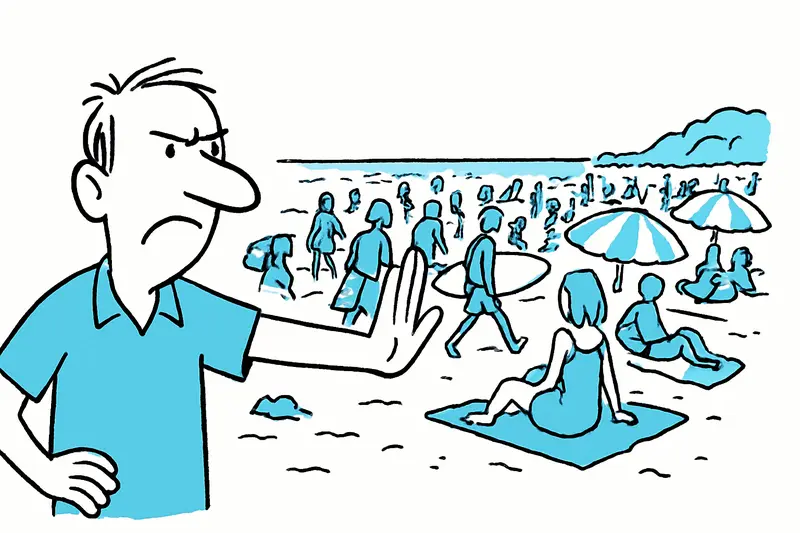
The list of places residents avoid reads like a summer map: Cala Deià, Caló des Moro, Es Trenc, Sa Calobra, Playa Formentor, Magaluf, Port de Sóller, Cala Agulla, Cala Varquès and the Amarador beach repeatedly appear. In many of these places two realities collide: the natural offer — clear water, cliffs, old pines — and a changed sense of space due to visitor numbers. Shaded spots are taken, access roads are clogged, illegal parking appears in side streets, residents find fast rubbish and loud music in the early morning.
The problem is not only quantity. It is the way space is used: rows of towels reaching the water, short stays for photos, disrespect for protected areas. It becomes particularly critical when emergency access routes are blocked or when protected dunes are damaged by foot traffic. Many locals also report a feeling of alienation: the familiar beach becomes the backdrop for an image of the island that is not their island's image. This tension has been raised in recent reporting (see coverage asking whether Mallorca will break its visitor maximum).
What's missing in the public discourse
We talk a lot about visitor numbers, less about daily patterns: when people arrive, how long they stay, how they move. There is a lack of verifiable data on parking pressure, peak times along individual access routes and the consequences for local ecosystems. Also rarely discussed is the perspective of residents who do not merely demand 'fewer tourists' but sensible rules for use and access. Almost no one speaks openly about the role of tour operators, influencers and booking platforms that actively promote certain places and thus trigger intensified peaks. Recent analysis notes that even a slight decline in August leaves Mallorca under pressure and underlines the need for practical measures (see a short-breather analysis stressing concrete measures).
Everyday scene from the island
A Wednesday afternoon in Cala Rajada: delivery vans beep, an old man pushes his shopping bag up the steep steps to the bus stop, teenagers carry surfboards past. Cars are double-parked in the side streets, a bar owner sweeps the pavement — on the beach itself a father angrily pulls plastic litter from a beach towel. These are the small daily conflicts that do not appear in statistics but shape life here.
Concrete solutions
Regulations must be practical, not just symbolic. Some proposals:
1) Time windows and reservations: Pilot projects for heavily frequented coves with free, time-limited access quotas. This reduces peaks and protects nature.
2) Parking and access management: Clear parking bans, signposted alternative parking with shuttle service on weekends and in high season.
3) Decentralized visitor guidance: Investment in lesser-known beaches and in on-site information — better signage, simple maps, digital notices about occupancy.
4) Sanctions and infrastructure: Enforcement of waste and noise protection rules, more controls in sensitive natural zones, expansion of toilets and bins so problems do not fall back on residents.
5) Communication instead of bans: Awareness campaigns in several languages, cooperation with booking platforms and influencers to avoid targeted promotion of fragile places.
Conclusion
The figures from the study are clear: a notable portion of the island's population withdraws from certain beaches during the hottest months. This is not an issue exclusive to Mallorca — but it is particularly visible here because our coasts are both habitat and lifeline (see analysis showing Mallorca remains crowded while the Balearic Islands quiet down). Those who want solutions must think locally and act practically: traffic planning, visitor management and respect for public space belong together. Otherwise our coves will remain full, but the island will be emptier of what makes it special.
Frequently asked questions
What’s the typical weather in Mallorca throughout the year?
What should I pack for a trip to Mallorca?
Is it good to swim in Mallorca year-round?
What are the best outdoor activities in Mallorca for nature lovers?
Is Palma a good base for exploring Mallorca?
Which Mallorca beaches are best for long sandy shores?
Are there scenic drives or hikes in the Serra de Tramuntana?
When is the best time to visit Cap de Formentor?
Similar News

When the Wallet Becomes a Danger: Attack in Peguera and Lessons for Mallorca
In Peguera, two women are said to have stolen the wallet from a 75-year-old German couple. When the victim intervened, t...
Plata stays Plata: Young people take over, Llonguets remain
A small bar on Carrer de l'Argenteria will continue: Tolo Serra hands the place over to young Mallorcans at the end of t...

Unnoticed in the Luggage Compartment: How a Boy Traveled More Than 100 Kilometers in a Team Bus
A minor traveled in the undercarriage of a team bus for more than 100 kilometers until his cries for help were heard. A ...

Cap Vermell Grand: Second Michelin Key – a Gift for the East
The Cap Vermell Grand in Capdepera has been awarded its second Michelin key. For the region this elevates the luxury off...
Eurowings lets four aircraft carry names – a friendly idea that also reaches Mallorca
Eurowings is launching a campaign: four Airbus A320s are to carry the first names of people who help others in everyday ...
More to explore
Discover more interesting content

Can Cap de Bou

Townhouse Lleo 72
