
Reality Check: Luxury Moves Inland — Who Will Pay the Price in Mallorca?
Reality Check: Luxury Moves Inland — Who Will Pay the Price in Mallorca?
More and more million-euro villas are being built in Costitx, Binissalem and beyond. Who benefits and who pays the price? A critical look with concrete proposals for the island.
Reality Check: Luxury Moves Inland — Who Will Pay the Price in Mallorca?
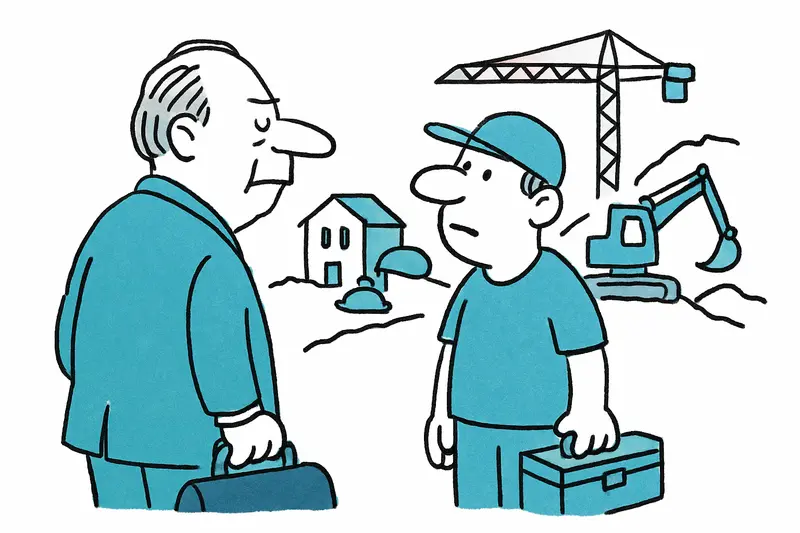
Saturday morning in Sineu: church bells, an old Peugeot heading for the weekly market, and young people with thermoses chatting on the plaza. Before ten o'clock, tradesmen with toolboxes are already parking, while on the surrounding hills excavators and cranes can be seen reshaping plots into terraces for villas. This everyday scene shows what has changed over the last two years: luxury properties are no longer moving only to the coast — a contrast with When luxury addresses come into focus – Son Vida and Andratx on Spain's top list — they are carving into the island's interior.
Key question
Who really benefits from the boom that puts Costitx, Binissalem, Puigpunyent or Sineu on the list of million-euro hotspots — the island community or just a small, wealthy circle, as discussed in Balearic Islands in the Price Squeeze: Who Can Still Afford Mallorca??
Critical analysis
The numbers are clear: the luxury segment has grown. These trends are examined in Balearic Islands: Housing Becomes a Luxury — Who Will Stay on the Island? Buyers are looking for peace, privacy and larger plots. This drives up prices in places that were once considered "honest villages." But this price increase has side effects: young families can no longer find affordable homes, land prices rise and rural tracks are turned into driveways for expensive estates. Local infrastructure — water, sewage, power lines — is locally overloaded because systems built for farming communities suddenly have to meet luxury demands.
Another effect: owners who buy properties as second homes or investments are less interested in long-term integration. Vacancies in the winter months, closed village bakeries and partially rising rents for service providers are concrete consequences. At the same time, the architectural appearance shifts: dry-stone-wall-like natural stone gives way to paved driveways and high walls that create privacy — often at the expense of the open views locals have shared for generations.
What is missing in the public discourse
The debate focuses on buzzwords like "luxury boom" or "value increase." Rarely does it address the budgetary consequences: Who pays for the expansion of the sewer system? How do a few luxury estates change a municipality's property tax base? It is also hardly discussed how many of these projects rely on extensive conversions of agricultural land and what that means for local food production. The voices of those who run the bakery in the morning or drive the bus too seldom reach planning offices and town councils.
Everyday scene as a mirror
In Binissalem you can hear a tractor on Calle Mayor driving between newly paved driveways. A shop assistant in the wine store quietly complains that customers now come who want to buy wine in name but do not know the price; at the same time a young electrician reports that on construction sites he is often only allowed to make temporary connections because the projects run through private utility companies. Such small snapshots show that changes are not only economic but also alter the rhythm of the village.
Concrete solutions
1) Community-centered planning: Municipal councils should designate binding land quotas for subsidized housing before issuing building permits for luxury projects. 2) Renovation incentives: Tax incentives for renovating vacant historic buildings can create housing without sealing new land. 3) Infrastructure charges: Developers must contribute proportionally to water supply and sewage; transparent cost-sharing prevents shifting the burden onto residents. 4) Ownership rules for agricultural land: Stricter conditions for converting farmland into building land protect local production. 5) Community land trusts: Local cooperatives acquire land and secure permanently affordable housing. 6) Registration and transparency: A public register of larger property purchases would enable municipalities to steer developments at an early stage.
Conclusion
The influx of millionaire villas into the island's interior is not a natural phenomenon but the result of market trends and planning gaps. Luxury can bring income and taxes. But without clear rules, the benefits risk ending up with a few while the burden falls on neighboring families. People who live on Mallorca do not want a stage set change: we want villages to remain lively — with bakeries, children in the schoolyard and tradespeople, not just cameras at high gates. If municipalities steer developments now instead of patching things up afterwards, the island can benefit from change while preserving its everyday rhythms.
Frequently asked questions
Why are luxury homes moving inland in Mallorca?
What does the luxury property boom mean for local families in Mallorca?
Are inland villages in Mallorca becoming unaffordable?
What problems can luxury villas create for Mallorca villages?
Is Sineu changing because of luxury development?
Why is Binissalem mentioned in Mallorca’s property price debate?
Can Mallorca municipalities make luxury housing pay its way?
What solutions are being suggested for Mallorca’s housing pressure?
Similar News

Bomb threat on board? Why the Tenerife incident concerns us in Mallorca
A passenger on a Jet2 flight from Tenerife to London triggered an evacuation and intensive security checks. The result: ...

More Electric Cars in the Balearic Islands: Sales Rise Sharply
Between January and August, 14,185 vehicles without petrol or diesel propulsion were sold — an increase of more than 40 ...

Autumn in Mallorca: What Truly Remains of Summer
The days grow shorter, the evenings cool — and yet more of summer lingers than you might think: sounds, recipes, people,...

Rescue operation at Tolleric: Why nighttime cliff parties become dangerous
A British holidaymaker fell about ten meters at the cliffs of Tolleric during the night, later climbed back up and was r...

Car accident on the MA-1: Mother and daughter on a bicycle struck by a fellow countryman – Who protects cyclists here?
On the MA-1 between Portopí and the Cala Major exit, a mother and her daughter on a bicycle were struck by a car. A para...
More to explore
Discover more interesting content

Can Cap de Bou

Townhouse Lleo 72
