
Baggage counters removed: Ryanair kiosks at Palma Airport – faster service or a burden for travelers?
Baggage counters removed: Ryanair kiosks at Palma Airport – faster service or a burden for travelers?
At Palma Airport Ryanair has introduced new self-service kiosks: pair the app, weigh your suitcase, print the label, and load it onto the conveyor belt yourself. A plus for the tech-savvy, a problem for others. We ask: who gets left behind?
Baggage counters removed: Ryanair kiosks at Palma Airport – faster service or a burden for travelers?
Key question
Do the new Ryanair self-service kiosks at Palma Airport really improve the check-in process — or do they shift work and responsibility onto passengers who struggle with apps or QR codes?
What happened?
Self-service kiosks were recently installed on the check-in level of Palma Airport. The process, as experienced by travelers on site, runs entirely through the Ryanair app, as reported in Digital Boarding in Mallorca: Ryanair Stops Paper Boarding Passes – Who Gets Left Behind?: hold your smartphone with the QR code to the kiosk, the device pairs, the baggage is weighed, and the luggage label is printed automatically. After that, travelers must take their suitcase to a separate bag drop point and place the luggage on the conveyor belt themselves. Fees for excess baggage or additional services appear directly in the app and can be paid there.
Critical analysis
On paper this sounds like speed and digitalization. In reality several problems arise at once. First: not all passengers are familiar with the app, have enough battery or mobile data. Second: families, tourist groups and older guests often need help weighing, labeling and loading — exactly the assistance traditional counters provided. Third: the real bottleneck shifts. Instead of waiting at a single service desk, new queues form at the drop-off belt when passengers are unsure how to place their luggage correctly on the belt or when labels are applied incorrectly.
What's missing in the public debate
Current reports and announcements focus mainly on efficiency gains and less on the gaps created; this mirrors other changes such as Nuevos marcos de medición de equipaje de mano en el aeropuerto de Palma: ¿Más claridad o solo teatro en la puerta?. Hardly anyone talks about travelers without smartphones, people with reduced mobility, those without a bank account for in-app payments, or visitors whose phone battery dies at the moment the kiosk system asks them to connect. Staff issues are often left out as well: the removal of desks means not only less personal service but also fewer staff who can help when technology fails.
A typical scene from Palma
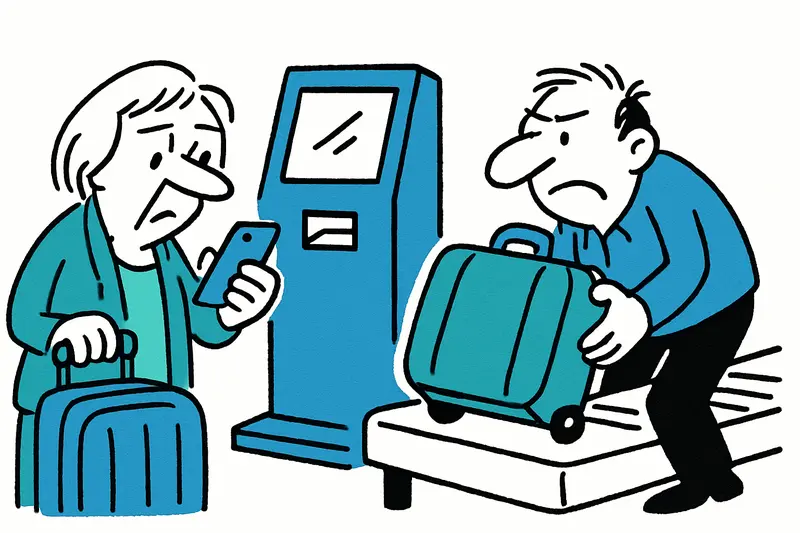
Walk through the check-in level in the morning and you see it at once: the smell of coffee from the terminal café, the rattling of roller suitcases on the tiled floor, voices from groups from Germany and the UK. At one of the new kiosks an elderly woman stands with her walker beside her, smartphone in hand. She presses at the display, looks confused at the printer whose label comes out unreadable. Two suitcases stack up in front of her, it gets busier behind her. No staff within reach. A young man who has just arrived helps, but that's not a lasting solution. Scenes like this repeat at several kiosks.
Concrete solutions
The switch need not turn into chaos. Pragmatism helps: 1) A mandatory 'assistance lane' with staff at each Ryanair check-in area, especially for guests without the app, with dead batteries or accompanying persons of travelers with reduced mobility. 2) Visible, multilingual step-by-step instructions directly at the kiosks — not only as text but with large pictograms. 3) Loan tablets or staff with mobile devices who can assist for a few minutes. 4) Clear separation of self-service and assisted areas so the two flows do not hinder each other. 5) Airport authorities and the airline should collect data on processing times and problems during the rollout and readjust implementation after two weeks. 6) Legal protection: people with reduced mobility and other vulnerable groups must have permanent access to personal assistance.
Why it matters
Majorca lives off visitors, from relaxed arrivals and the feeling of being welcome. If the start of the journey begins with frustration, haste or the sense of being left alone, that harms the reputation of the airport and the island. Technology should reduce work, not cause extra worry. Without clear, practical rules the digital offensive risks crossing that line.
Punchy conclusion
The kiosks can be useful — if their introduction is honestly planned and people who need help are not treated as "exceptions". Otherwise the terminal will end up looking modern but leaving many passengers baffled. A bit of human assistance is often enough to make technology truly helpful. The question is not whether we want to become more digital, but how we bring along people who do not automatically come along.
Frequently asked questions
How do Ryanair self-service baggage kiosks work at Palma Airport?
Are the new baggage kiosks at Palma Airport actually faster than traditional check-in counters?
What problems can travelers face when using Ryanair kiosks at Mallorca’s Palma Airport?
What should I know about luggage labels and excess baggage fees at Palma Airport?
What kind of help is available for passengers who cannot use the Ryanair app at Palma Airport?
Is Palma Airport still manageable for families and older travelers with the new Ryanair system?
Where are the Ryanair baggage kiosks located at Palma Airport?
What would make the new baggage system at Palma Airport work better?
Similar News
Rental Car Theft in El Arenal: What This Incident Reveals About Our Gaps
A teenager steals a running rental car in El Arenal, flees on foot, climbs over walls and is caught by the Guardia Civil...
Red Rope in Palma's Library: What Helps Against Selfie Tourism — and What's Missing
Palma's city library cordoned off an area with a red rope to keep selfie tourism away from reading and working activitie...
Fort San Carlos: Museum, Harbor Dispute — and a Conflict That Demands Answers
The military museum at Fort San Carlos sits right on Palma's harbor, with unexpectedly quiet rooms filled with cannons a...
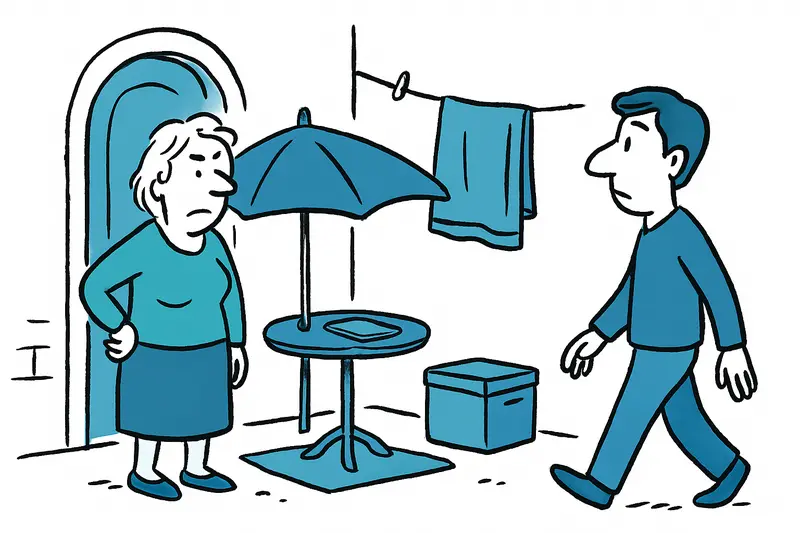
Old Town Under Pressure: When a Doorway Becomes a Sleeping and Shower Place
For months a woman has been living with a parasol, a clothes rack and personal belongings next to the social welfare off...
When Shopping Weighs Heavier: Mallorca Demands a Tax Pause on Food and Fuel
Rising prices are putting pressure on households and agriculture. The Balearic Islands are calling for temporary tax rel...
More to explore
Discover more interesting content

Can Cap de Bou

Townhouse Lleo 72
