
Magaluf in transformation: a smarter promenade — does it really improve everyday life?
Work on Magaluf's harbour promenade starts in November: natural stone, new lighting, irrigation with recycled water. Nice — but for whom? A closer look at maintenance costs, light pollution and the municipality's communication policy.
Start in November: More space by the water, but at what cost?
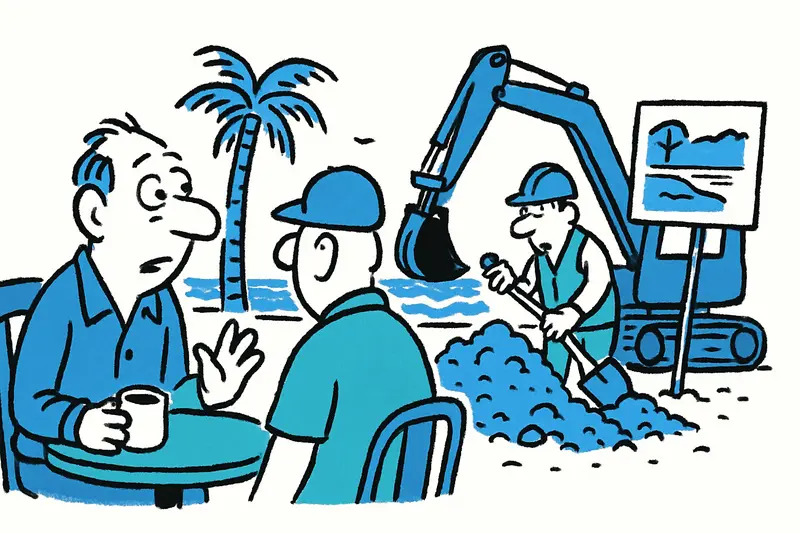
In November the excavators will return to Magaluf's harbour promenade, as reported in Magaluf en transformación: el paseo marítimo se vuelve más atractivo, ¿pero es suficiente? The yellow markings at the harbour were no coincidence: the municipality has awarded a second construction package, just under €1.9 million, according to Magaluf: Second Promenade Phase — More Than New Paving?, with a construction period of about six months. The central guiding question is simple: does the promenade's new look really make life better for the people who live here — or is it mainly a pretty showcase for the season?
What is planned — briefly and concretely
The plan includes natural stone paving, more modern promenade and street lighting, the renewal of water, sewage and power lines, and an automatic irrigation system using treated water. Small shady islands with palm trees are planned. Beach replenishment or changes to the dunes are explicitly excluded.
The often overlooked questions
At first glance the plans seem well thought out. But the details make the difference: how high will the long-term maintenance costs for natural stone be so close to salt-laden winds? Who pays for replacement lights when salt and corrosion attack the equipment? And will the new lighting flood the night and lead to more light pollution along the coast — with consequences for residents and star visibility, as highlighted in light pollution and its effects?
Another blind spot is communication with residents. Many older people do not follow online updates. Will they be informed in time about temporary closures? Or will they suddenly be confronted with a closed path and midday drilling when they want to go to the hairdresser or the doctor?
Environment: good principles, execution matters
Positive is the decision to use treated water for irrigation and the use of durable natural stones. But ecological quality only arises in the execution. Does the treated water evaporate in the midday sun, or are there drippers and timers? And do they really have to be palm trees — couldn't native plants be used that require less care, cope better with salt and strengthen local biodiversity?
Businesses, schedule and daily life
For cafés and small shops on Playa de Magaluf the schedule is crucial. The high season is the business year for many companies. Six months is ambitious. If a section stalls, extended restrictions and revenue losses threaten, as local coverage such as Magaluf: segunda fase del paseo marítimo — ¿más que solo nuevo pavimento? has noted. Clear milestones, binding sanctions for delays and a transparent penalty mechanism in the tenders would be sensible here.
Concrete proposals that would help
A few pragmatic ideas that don't cost much but deliver a lot: first, a publicly accessible, realistic maintenance plan with cost estimates before acceptance. Second, the use of native coastal plants instead of imported palms — this saves water and maintenance. Third, a noise protection schedule with clear working windows so that the catering trade does not suffer too much during peak times. Fourth, information signs at the entrances that not only indicate closures but also explain materials and environmental measures. That builds trust and reduces frustration at the construction fence.
Who monitors quality and the schedule?
A shiny promenade is quickly photographed. What matters is that construction supervision doesn't disappear after acceptance. Regular quality checks are needed, a citizen feedback portal and independent inspection reports, ideally every six months for the first two years. Otherwise there's a risk that the most beautiful paving stones will have to be ripped up again soon.
What we should watch in the coming months
Three measurement points are important: adherence to the schedule, the vulnerability of materials to salt and moisture, and the effect of the lighting on residents and the sea nights. I will be at the harbour more often — coffee in hand, accompanied by the squawking of gulls and the occasional roar of machines — to see whether budget items turn into real improvements for Magaluf.
Magaluf is changing; that is normal in a place that lives from tourism. What matters is that the change is not only photogenic but sustainably eases everyday life. Otherwise you end up with a shiny promenade — and the same problems as before.
Frequently asked questions
When will the Magaluf promenade works start again?
What improvements are planned for the Magaluf seafront promenade?
Will the Magaluf promenade works affect daily life for residents?
Why are people in Mallorca questioning the new Magaluf promenade design?
How long will the Magaluf promenade construction take?
Will the new Magaluf promenade use treated water for irrigation?
Could the new lighting on the Magaluf promenade increase light pollution?
What should visitors know about the Magaluf harbour promenade during construction?
Similar News
Why the Striped Breams in Cala Pí Should Be a Wake-up Call
Once again bathers in Cala Pí were surrounded while swimming by small, nippy fish — some wounds bled. Time for clear rul...

Daily from New York: How Palma's Air Traffic Is Growing — and What Must Change
United will increase the Newark–Palma service to daily flights in 2027 (Boeing, 231 seats). Strong tourist numbers clash...

When Love Ends in Shards: Destruction in Son Vida and the Questions That Remain
In Son Vida a relationship dispute escalated: a woman destroyed furniture in a luxury villa, later pressed a panic butto...

Who Bears the Burden? Mallorca Between Tenant Protection and Landlord Fears
Madrid's new housing decrees strengthen tenant rights — but on Mallorca concern is growing: will the law drive small lan...

On the Edge: What Mallorca's Airport Loses If a Major Low-Cost Carrier Falters
The company that operates numerous connections from Palma to France and domestically is negotiating with creditors to re...
More to explore
Discover more interesting content

Can Cap de Bou

Townhouse Lleo 72
