
Mallorca Airport in a Labyrinth: Passengers Tired of the New Detours
Mallorca Airport in a Labyrinth: Passengers Tired of the New Detours
Renovation, closures, relocated exits: those arriving or departing at Palma Airport often stand confused. What's lacking in coordination — and what can be improved immediately?
Mallorca Airport in a Labyrinth: Passengers Tired of the New Detours
Main question
How much inconvenience may an airport impose on people before construction work becomes a noticeable impairment for travelers?
Critical analysis
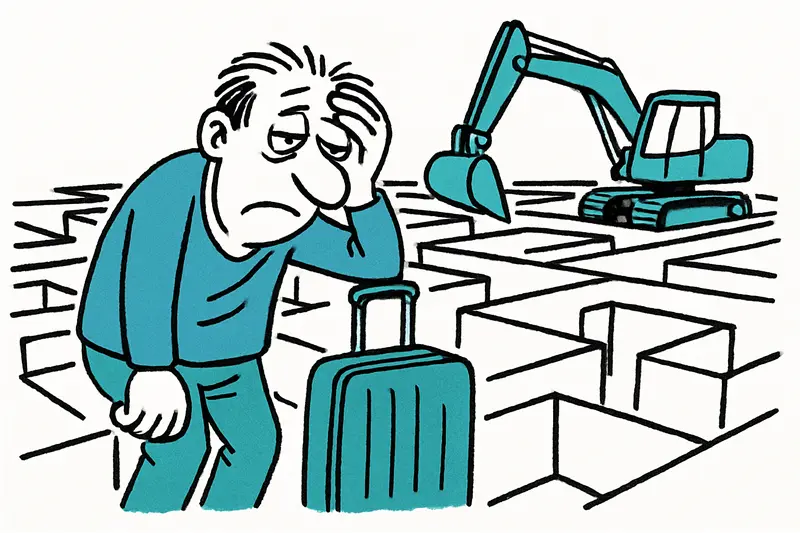
For weeks Palma Airport has been visibly under construction: cordoned-off areas, construction fences, blue tarps, excavators and red-and-white barrier tape dominate the scene, as noted in Palma Airport: The construction site that never stands still — and how we cope with it. Large parts of the departures hall are impassable, the right wing including check-in is closed, and many travelers are redirected to the left side. Terminal D remains out of operation until April; apparently ventilation, lighting and new jet bridges are being installed there, as detailed in Construction at Palma Airport: Taxi Rank Relocated, Terminal D Closed – What Travelers Need to Know. Elevators do not work, provisional stairs replace accessible routes, and the originally used exit at the arrivals level is closed. The result: longer walking distances, changed taxi stands and increased strain for people with luggage, families with strollers and passengers with limited mobility.
What's missing in the discourse
Public debate usually focuses on progress and the long-term benefits of the project. Important everyday issues are missing: How will accessibility be ensured during the construction phase? How do planners take older people and travelers with luggage into account? Are there agreed transition periods with airlines and ground staff to make check-in and boarding times more flexible? And: How are travelers reached in their language when routes are suddenly changed? Without clear answers the perception remains that construction work is being prioritized over user comfort.
Everyday scene from Palma
A morning on the north side of the departures hall: an elderly couple pushes two heavy suitcases along a temporary wall, the man pauses briefly to descend a staircase that is actually a provisional access. From afar a compactor roars, a taxi honks as the traffic lanes have changed. In the café near the security area, a young mother tries to fold a stroller while temporary construction walls stand like a backdrop between her and the departure boards. Such scenes are now typical - they tell of the small daily stories that the big plans overshadow.
Concrete solutions
The situation requires pragmatic measures that have an immediate effect:
1) Clear, multilingual signage: Large, high-contrast signs with clear symbols and arrows at every relevant junction. QR codes with schematic maps that can be loaded onto a phone help travelers locate themselves in real time; recent implementations are described in New Signage at Palma Airport: Luggage Drop-Off Made Easier.
2) Staff as guidance system: Mobile information teams during peak times: staff in vests who proactively approach travelers, luggage helpers and guides at provisional stairs. Accompaniment services for older people and those with mobility impairments should be advertised and easy to book.
3) Ensure accessibility: Closed elevators are not a luxury issue. Temporary ramps, wheelchair shuttles or small electric vehicles must be available as long as permanent facilities are missing.
4) Coordination with airlines and ground services: Flexible check-in windows, additional baggage drop-offs near provisional routes and information desks that inform about changed boarding gates reduce stress and the risk of delays.
5) Visibility and timetable: A clearly communicated construction schedule with milestones, reachable contacts and escalation paths builds trust. Residents, taxi companies and hotels need the same clear information as travelers.
What those responsible could do
It is not enough to point to the benefits at the end of the works. Responsible parties must improve the usability situation in the short and medium term: daily situation updates, national language versions of notices (Spanish, English, German) and a hotline for airport-related complaints would increase acceptance, consistent with guidance on the European Commission page on air passenger rights. In addition, every measure should prioritize accessibility and safety - even if that slows the progress of individual construction phases.
Concise conclusion
An airport must not become a maze during modernization. Those who arrive or depart here pay not only with tickets and time, but often with nerves and extra effort. The construction site is necessary, but it must not become a permanent burden. With clear communication, practical helpers and a focus on accessibility the everyday life of thousands of travelers could already be noticeably eased. Construction walls may hide many fine visions - their planners must ensure that routes do not become a hardship.
Frequently asked questions
Why is Palma Airport so difficult to navigate during construction work?
Is Palma Airport still accessible for passengers with reduced mobility?
How much extra time should I allow at Mallorca Airport right now?
What should I know about taxi pick-up and drop-off at Palma Airport?
Which part of Palma Airport is currently closed for construction?
What is the best way to find my route through Palma Airport during the works?
How are families with strollers affected at Mallorca Airport?
Does Palma Airport provide enough information in different languages during construction?
Similar News

More water than last year: Mallorca's reservoirs breathe easier
September rain refilled the Tramuntana's reserves: overall fill around 35 percent, Cúber at 40.42 percent, Gorg Blau at ...
Three Luxury Hotels in Banyalbufar: Lots of Money, Many Questions
A Danish investor plans three exclusive accommodations in Banyalbufar — including the historic Son Valentí. The announce...
2.1 tonnes of cocaine on sailing yacht off Spain's coast – a reality check for the coastguard
A 14-metre yacht was seized with 2.1 tonnes of cocaine. Who monitors the ports, how does the international hunt succeed ...

Heat Bonus in Mallorca: 100 Euros Extra for Outdoor Staff at MarSenses
MarSenses pays employees who worked outdoors in August an extra €100 as recognition. Lighter uniforms, reduced hours for...
Renovating in Mallorca: What You Really Can Do Without Neighbour Consent
Many think they can do whatever they want in their apartment. That's partly true — but only as long as structural elemen...
More to explore
Discover more interesting content

Can Cap de Bou

Townhouse Lleo 72
