
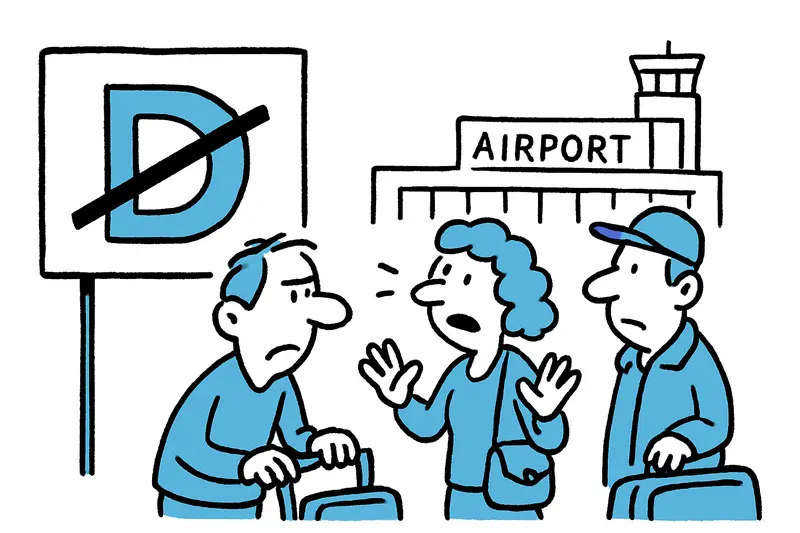
Palma Airport: Module D Closed – Between Modernization and Morning Chaos
From November, Module D at Palma Airport will remain closed until April. The modernization is necessary, but the short-term bottleneck pushes travelers, staff and neighbors to their limits. Why this needs more than barrier tape.
Module D closed – what Palma's airport really has to balance now
From the beginning of November, an entire section of Palma Airport will be taken out of operation: Module D will remain closed until April. On paper it sounds like a sensible winter construction project – new climate control systems, modern ceilings, LED lighting. In practice, however, it means: more people in less space, longer walking distances, tighter security checks and a lot of small adjustments that together can quickly lead to major congestion.
The central question
How well is Palma's airport prepared for this bottleneck, and who will pay the price? It's not about pretty press photos of lifts, but about details that rarely appear in official statements: accessibility for passengers with reduced mobility, coordination of ground handling, shift schedules for security staff and the capacity of the baggage belts. If these points are not properly managed, a winter of renovations can turn into a logistical winter nightmare.
What is happening specifically
Outdated systems in Module D will be replaced: air conditioning, suspended ceilings, lighting. Flights that are normally handled there will mostly move to Module C, while Module A will remain open – unusually – and act as a small wildcard. But this relocation also means: longer walks from check-in to the gate, more intersections at security checkpoints and more crowded waiting areas. During peak times, instead of the sound of the sea you'll hear hammering and the clatter of trolleys over temporary floors.
The overlooked consequences
The bottleneck does not affect all travelers equally. Families with young children, people with reduced mobility, passengers with tight connections and ground staff are particularly affected. A delayed baggage belt or a technical problem where there is normally freedom of movement can immediately trigger chain reactions. And because the forecourt in front of the terminal often already feels like a market in the morning – taxis, coaches, tourists with coffee in hand – every backup here has a double impact.
What the operators say – and what they should really do
The official message is sound: in the long term the technology will be more efficient, the environmental balance will improve and the likelihood of disruptions will decrease. In the short term, however, concrete relief plans are often missing. The magic word is not just communication, but active relief: temporary waiting zones, clear diversions, extra staffing reserves and close coordination with airlines and ground handling agents. Local coverage highlights proposals such as elevated connecting walkways to reduce forecourt congestion, see Palma: Elevated connections at the airport aim to ease crowding.
Pragmatic proposals instead of political rhetoric
The situation can be mitigated if determined measures follow now:
1. Manage time windows: Airlines and the airport could stagger departures and check-in times in a coordinated way to smooth peak periods. A bit of timing can prevent a lot of crowding.
2. Increase staff: Visible security teams, additional baggage handlers and temporary guides to show the way are not expensive compared with the consequences of delays and upset customers.
3. Mobile infrastructure: Temporary ramps, clearly marked wheelchair routes and assistance points must be prioritized now. Accessibility is not a luxury – it is an obligation, especially during a transition phase.
4. Digital and analog signals: Real-time displays, push notifications in travel apps and clearly visible, weatherproof signs reduce uncertainty. When travelers know where to go, much of the stress disappears.
5. Cooperation on the forecourt: Taxi and bus traffic should be regulated in close coordination so that morning commuter and tourist density does not build up. Short pick-up zones and temporary stops could help.
How travelers can prepare
Small preparations reduce frustration: check in online, drop off luggage as early as possible, and allow generous time buffers. Regular airport users know the sounds: drills, announcements and the rattle of suitcase wheels. Staying calm helps – and leaving ten to fifteen minutes earlier certainly does, too.
The neighborhood feels it too
The cafés on Passeig Mallorca and the bars around Plaza d'Espanya are already seeing increased demand: travelers seeking quiet before departure, taxi drivers reporting longer idle times, bus drivers reporting crowded stops, as reported in Construction at Palma Airport: Taxi Rank Relocated, Terminal D Closed – What Travelers Need to Know. Residents hear more construction noise than usual – not just once when the Tramuntana blows, but daily as the work picks up pace.
Conclusion: modernize, but with moderation
Renovating Module D makes sense in the long run. In the short term, however, it presents Palma with an organizational challenge. If the airport operators, airlines and local authorities work together pragmatically and concretely now, the hardships can be cushioned. If it remains all flowery press releases without visible relief measures, travelers, staff and the neighborhood will pay the price in lost time, stress and bad mood.
My advice: pack some patience, plan extra time and check whether your flight can be checked in earlier. Mallorca remains charming – even if the airport gets a bit louder for a few months.
Frequently asked questions
Will Palma Airport be busier than usual while Module D is closed?
How much extra time should I allow for flights from Palma Airport in winter?
Is Palma Airport still suitable for families and travelers with reduced mobility?
What should I do if I have a tight connection at Palma Airport?
What part of Palma Airport is closed and what is being renovated?
Will the taxi rank at Palma Airport be affected by the Module D closure?
What can I do to make my departure from Palma Airport less stressful?
Will the renovation at Palma Airport affect the surrounding area too?
Similar News

Release after bloody attack in Palma: Why the court's decision raises questions
An 18-year-old who allegedly inflicted a serious neck injury on a man at Plaza Gomila using a wristwatch wrapped around ...
Kidnappings in Inca: Three young men forced into car trunks and abused in the forest – a reality check
In Inca, three 18-year-old men were forced into car trunks by masked assailants at the Plaça des Bestiar, taken to a for...
Spreading Massification: The Brake That Still Has Much Work to Do
Marga Prohens announces limits on volume tourism. The measures sound harsh — but are they enough to save everyday life, ...

Through the Keyhole onto the Party Yacht: How Daniela Katzenberger Is Planning Her 40th on Mallorca
Daniela Katzenberger turns 40 and wants to celebrate it on the island — likely with a boat, cake and her mother. A relax...
By Boat Instead of the Road: Palma's Water Bus — a Reality Check
The 'Bus Nàutic' launches in two stages — but questions remain over interim operations, fares and environmental requirem...
More to explore
Discover more interesting content

Can Cap de Bou

Townhouse Lleo 72
