
Mallorca Through American Eyes: Luxury Purchases, Reality and What's Missing
Mallorca Through American Eyes: Luxury Purchases, Reality and What's Missing
US buyers now appear in the upper price segment — but what does their arrival mean for locals, prices and spatial planning? A critical look with a local everyday scenario and concrete proposals.
Mallorca Through American Eyes: Luxury Purchases, Reality and What's Missing
Key question: How does the increased arrival of wealthy US citizens change the local real estate landscape — and what are we overlooking in the public discourse?
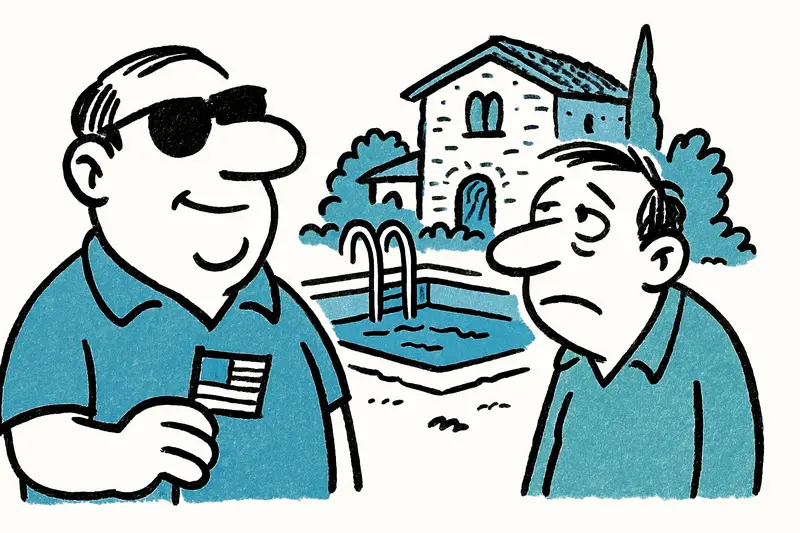
The numbers are clear: US-Americans now make up around 3.22 percent of all foreign buyers in the Balearic Islands, ranking eighth, as shown in Balearic Islands in the Price Squeeze: Who Can Still Afford Mallorca?. What stands out is not the volume but the profile: many of these buyers are looking for properties beyond the €3–4 million mark, preferably in the Serra de Tramuntana (places like Deià, Valldemossa, Pollença) on expansive plots of natural stone with maximum privacy. More than 60 percent apparently choose not only holiday stays but register their residence on the island — a statement that goes beyond holiday homes.
Critical analysis: At first glance that sounds like luxury, à la carte tourism and international headlines; for broader context see Reality Check: Why Mallorca Can Hardly Escape Massification. In detail the situation is more complex. Such transactions affect a very limited segment of the market; the vast majority of sales in the Balearics are still directed at other Europeans (Germans at around 39.06 percent in the lead, followed by Britons 10.77 percent and Italians 8 percent). This aligns with analysis in Fewer Foreign Buyers — Mallorca between Price Boom and a Breather. Nevertheless, the entry of American buyers sends signals: large investment sums, demand for discrete estates and frequent conversion from holiday to permanent residence status.
What is often missing in the public debate: transparency about the follow-up effects in municipalities, clear figures on use (owner-occupancy vs. rental), and above all a debate about how these purchases affect local infrastructure, affordable housing and land-use planning. There is also a lack of reliable data on the origin of funds, the role of tax advice and possible consequences for local rental markets when older fincas are converted into exclusive second homes.
An everyday scene from Deià: In the morning, when the Tramuntana wind whistles through the alleys, the small baker delivers bread. On the Carrer Major neighbors talk about the new garden adjoining a restored natural stone house — the property was sold recently, they say, to buyers from overseas. The church bell rings, a delivery van rumbles by, and worry mixes with curiosity: Will young families still find affordable houses? Or will pools and privacy walls dominate the view in the future?
Concrete approaches that can be tackled here and now:
1. More transparency: Municipal registers for owners with aggregated data (not linked to individuals) showing how many luxury properties are registered as primary residences and how many are rented out.
2. Use restrictions and funding guidelines: Support programs and tax incentives for renovations that create housing for locals, combined with requirements for large projects (e.g. a share of tenant-protecting units).
3. Land and planning policy: Stricter rules on parcel size and use in sensitive zones of the Tramuntana so that natural-stone estates do not lead to further fragmentation of agricultural land.
4. Cooperation with airports and transport planning: Direct flight connections are a strength — this should not become an argument to promote unlimited immigration without social balance. Transport and environmental assessments must be mandatory for luxury developments.
Pointed conclusion: American buyers are not a mass phenomenon, but they spotlight the top price segment; this spotlight mirrors cases such as When luxury addresses come into focus – Son Vida and Andratx on Spain's top list. That alone is not a drama. It becomes problematic when attention, influence and purchasing power lead to less space for locals — without municipalities countering it. Mallorca therefore does not need a campaign against particular nationalities, but a smart combination of transparency, planning and funding policies that protects the character of the island and the everyday needs of its residents. Otherwise the shining money will leave only one thing behind: beautiful walls and empty streets when the next generation has to move away.
Frequently asked questions
Are wealthy American buyers changing Mallorca's property market?
Why are luxury homes in Mallorca's Serra de Tramuntana so sought after?
Do most foreign property buyers in Mallorca come from the United States?
Why do some Americans register residence in Mallorca instead of just buying a holiday home?
What are the main concerns about luxury property purchases in Mallorca?
How do luxury second homes affect affordable housing in Mallorca?
Is Deià becoming more exclusive because of foreign buyers?
What could Mallorca municipalities do about luxury property pressure?
Similar News

Are the Balearic Islands the Southern Border of Europe? A Reality Check on Immigration
The Balearic Islands are again calling for EU aid after a sharp rise in arrivals by sea. Conflicting priorities between ...

"Expensive chaos" and many open questions: What clients can do when a lawyer suddenly stops responding
Several clients complain that a well-known German lawyer in Mallorca has been unreachable for months. Key question: What...

TV tip: 'The Last Problem' — Mallorca as the setting of a classic crime
A classic whodunit on Mallorca: A new miniseries set in spring 1959 brings storm, an isolated hotel and a dense web of s...

Nipping Sea Creatures: Why Bathers in Cala Major and Elsewhere Should Be Cautious
In Cala Major, bathers have reported being nipped by small fish. What is behind it, how can problems be avoided — and wh...
Forced eviction in Santa Catalina: When a 65-year-old slept in her car and showered on the beach — a question of responsibility
The story of Pilar López from Santa Catalina represents a problem affecting many Mallorcans: How can an island with a bo...
More to explore
Discover more interesting content

Can Cap de Bou

Townhouse Lleo 72
