
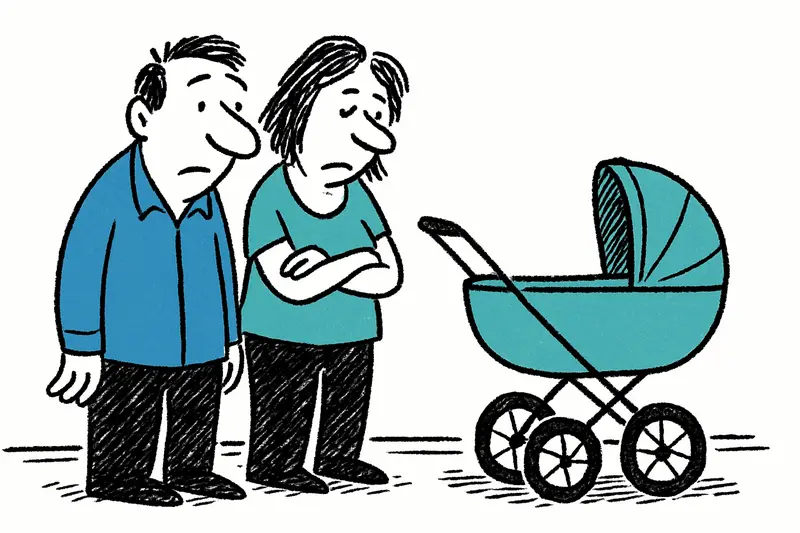
When the strollers are missing: Mallorca's quiet demographic wake-up call
Between January and July around 4,900 newborns were registered on the Balearic Islands — about five percent fewer than the previous year. What does this mean concretely for Mallorca, its schools, housing and future?
The strollers are missing — and this is more than just a statistic
At the Plaça del Mercat in Palma, on windy, hot afternoons, some café chairs now remain unoccupied for longer. The swing on the small playground in Santa Catalina creaks less often, and a new, quiet routine has settled in the waiting rooms at the pediatrician's. Between January and July this year around 4,900 newborns were registered on the Balearic Islands — about five percent fewer than in the same period last year, as reported in Cuando faltan los cochecitos: la silenciosa llamada demográfica de Mallorca. The islands therefore lag behind every other region of Spain, a trend examined in Crisis de natalidad en las Baleares: ¿Qué significa la caída para Mallorca?.
Key question: What does this decline mean for Mallorca's everyday life and future?
The answer has several layers. First: Mallorca is an island with short distances and many close relationships. Family networks matter, housing is scarce, and jobs are often seasonal or poorly paid. Young couples postpone having children because a real children's room or a second rent simply isn't affordable. A mother I met at the market yesterday put it succinctly: "The rent eats us up, a children's room is a luxury." This is not an isolated experience; it's a pattern.
Analysis: Why are the numbers so pronounced?
In addition to high rents, several factors coincide: precarious employment in tourism and gastronomy, long commutes in rural communities, and the increasing use of housing for short-term rentals instead of for families. At the same time, deaths are rising — which worsens the difference between births and deaths, according to Spanish National Statistics Institute (INE) demographic data. Without in-migration or significantly more births, a demographic standstill looms in the long term.
This has concrete consequences: some smaller schools are considering combining classes, day-care centers report fewer new enrollments, and demand for elderly care will grow. Public services must be replanned. A village that used to be filled with children's voices every week can look different within a few years: quieter, older, with fewer volunteers at festivals and in sports clubs.
Some rarely discussed aspects
Public discussion often focuses on birth rates, but rarely on the structural causes that make Mallorca particularly vulnerable: the conversion of housing into holiday apartments, the lack of infrastructure for home office in many municipalities, and working hours that do not align with childcare. The psychological effect should not be underestimated either: anyone who knows their childhood from a lively neighborhood notices immediately when the bench at the park is emptier. People also decide emotionally whether to stay.
Concretely: What could help?
There is no miracle cure, but a combination of measures could have an impact:
- Affordable housing: Priority for families in municipal housing projects, quotas for long-term tenants instead of short-term rentals.
- Childcare: More day-care centers with flexible hours, adapted opening times to tourist seasons and reliable care offers for shift workers.
- Work models: Promotion of home-office infrastructure, co-working spaces in small communities, tax incentives for businesses that remain family-friendly; this aligns with OECD research on work–family balance.
- Financial incentives: One-off payments or tax breaks for the first child, linked to proof of permanent residence on the island.
- Local planning: Municipalities can reserve plots for family housing and promote partnerships with cooperatives.
Outlook
It would be wrong to panic. Mallorca has energy, ideas and people who want to stay. But concrete policies, private initiative and a different way of thinking about housing and work are needed now. Otherwise the playgrounds could indeed seem stranger in five to ten years than they do today. That would not only be a statistical phenomenon — it would be a tangible loss of vitality for the island.
In short: It's about more than births. It's about housing, work, community — and the question of whether Mallorca will remain a home for families.
Frequently asked questions
Why are fewer babies being born in Mallorca?
What does a lower birth rate mean for everyday life in Mallorca?
Is it still expensive to raise a family in Mallorca?
How do tourism jobs affect family life in Mallorca?
What changes could help families stay in Mallorca?
Why are some schools in Mallorca worried about fewer children?
What is the situation in Palma’s neighbourhoods like for young families?
Is Mallorca becoming an older island?
Similar News

When coercive fines aren't enough: Could holiday rental owners soon face prosecution?
The island administration is stepping up action against unauthorized holiday rentals: high daily coercive fines up to €5...

Palma Airport on an Expansion Course — Who Decides How Much Growth the Island Needs?
Aena and Madrid are planning multi-million euro investments for Son Sant Joan and project higher capacities. Concern is ...
Who Gets Left Out? Why Overbookings Will Hit Many Mallorca Travelers This Summer
On hot check-in days at Son Sant Joan, frustrated travelers pile up. New figures from Reclamador.es show that a large sh...
When the Handyman Came: How an Engagement Ring Disappeared in Mallorca and What It Says About Trust
During a repair in Andratx a highly personal engagement ring went missing — a case that calls not only for punishment bu...
How Burglars Test Fincas in Mallorca — and What You Can Do About It
The Spanish National Police warn of a simple but effective trick: small markings on doors reveal whether a finca is occu...
More to explore
Discover more interesting content

Can Cap de Bou

Townhouse Lleo 72
