
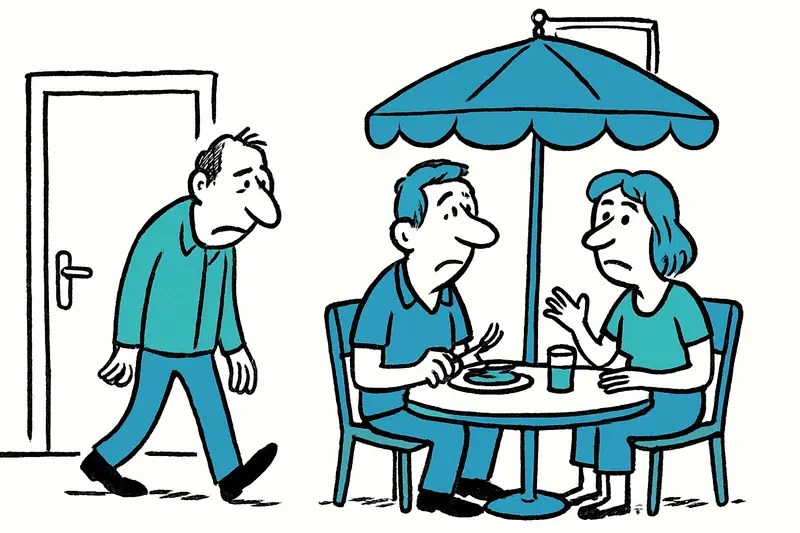
When a Beloved Local Spot Moves: What Remains of the Old Place?
A restaurant can take its kitchen with it. The routes, rituals and encounters around its old front door cannot simply be moved—especially at Playa de Palma, where this is more than a nostalgic question.
A beloved local spot can move. Its place in the neighborhood cannot.
What makes a place a part of Mallorca? Is it the recipe that has been on the menu for years? The table by the window where you end up after work? Or perhaps the short walk there that, over time, you stop noticing altogether? When a long-established business changes location, the question of its new address therefore involves more than simply finding your way there.
At Playa de Palma in particular, a business rarely serves just one group of people. The same doorway brings together residents, seasonal workers, holidaymakers and regulars who have been coming back for years. Some remember the place from a time when the area looked different; others have only recently arrived on the island. A menu can travel with the business. This mix of everyday life, habit and chance encounters cannot be packed into boxes.
The key question: Can a familiar place be the same somewhere new?
The honest answer is: partly. An owner can preserve the dishes, routines and way of treating guests. But a restaurant is also its surroundings. Anyone who used to drop in spontaneously after a day at the beach has to find a new place for it in their routine. The distance can suddenly matter to older guests; for others, the new location may even be more convenient. But the same doorway, the same neighborhood and the same little chance encounters cannot be recreated.
That is no reason to automatically treat a change of location as a loss. A business can continue somewhere else, gain new neighbors and still retain its distinctive character. But we should not pretend that moving is just a change of address. Employees face a different commute. Suppliers have to work out new arrangements. And the former neighborhood may lose a place where people would run into one another without making plans.
What often gets overlooked in the debate
Stories about popular local spots tend to focus on what will stay familiar: Will the menu remain? Will the customers follow? Will the food taste the same in the new place? These are understandable questions. Less often do people ask what the old location meant to the street and who will move in next. Practical details matter, too: Is the new place within walking distance? Is there a safe route by bike or bus? Is it accessible to people with limited mobility? For many guests, loyalty is decided not by grand promises but by these small details.
A short evening walk at Playa de Palma shows just how much routes shape a neighborhood's character. Scooters hum past, dishes clatter somewhere, and the smell of fried food drifts out through an open door. People stop, greet one another and move on. This is not a postcard scene but the everyday rhythm of a place. You often notice a familiar meeting spot is gone only when you automatically start walking in the wrong direction.
What business owners and the town can do
Anyone continuing a business in a new location can make the transition easier: explain the move clearly and well in advance, describe how to get there, communicate opening hours reliably and involve employees in the planning. A few open-house days or a neighborhood walk-through can achieve more than grand words. The former location should not be forgotten either. Property owners and the municipality can be transparent about what is planned for the site and how to prevent it from being left vacant or disappearing from the neighborhood without warning.
Guests, for their part, do not have to prove that they are “loyal.” A new place can change and still feel familiar, but it can also become something different. The important thing is not to let memories turn into an expectation that every detail must remain the same forever. Hospitality is work, shaped by rent, staffing, delivery routes and long days—not just fond stories about regulars.
A move is therefore neither automatically a happy ending nor a goodbye forever. It is a test: Can a business bring its people along without seeming like a stranger to its new neighbors? In Mallorca, the answer is not found in a nostalgic name, but in everyday details—the walk to the door, a willingness to listen and whether a new place takes shape in the neighborhood where people are glad to stop for a while.
Frequently asked questions
Can a restaurant in Mallorca feel the same after moving to a new location?
How can I find the new address of a restaurant that has moved in Mallorca?
What should I check before visiting a restaurant that has moved in Mallorca?
Why does a familiar local business matter to a Mallorca neighborhood?
What happens to the old premises when a Mallorca business moves?
Do regular customers follow a restaurant when it moves in Mallorca?
How does a restaurant move affect its employees and suppliers in Mallorca?
How can a business settle into a new neighborhood in Mallorca?
Similar News
Mallorca’s Affordable Properties: Why the Price per Square Meter Isn’t Enough
A low average price sounds tempting. But for homes in the island’s interior, condition, additional costs, everyday life ...
Mallorcan on the Menu: What Does It Really Mean?
“From Sóller,” “from the island farm,” “Mallorcan”: origin claims create expectations. But not every phrase means the sa...
Sa Calobra: The Bar Stays Open – Its Future Is Secured for Just One Year
The lease for the bar at the Nus de sa Corbata hairpin bend has been extended through the end of October 2027. This keep...

Burrata, Truffle and Chips in a Sandwich: An Unusual Snack Is Making the Rounds
A sandwich with bread, steak tartare, burrata, truffle and potato chips might sound like a fridge-clear-out gone wrong. ...
Cave near Llucmajor: What the Discovery Reveals—and What Remains Unresolved
At Cova de Son Fosquet, traces from different periods lie close together. The discovery is exceptional—but its value now...
More to explore
Discover more interesting content

Can Cap de Bou

Townhouse Lleo 72
