
Mallorca closes bank counters — how tourists and residents can access their money now
Mallorca closes bank counters — how tourists and residents can access their money now
Since 2008 more than two-thirds of bank branches in the Balearic Islands have disappeared. People without smartphones or with limited mobility are often left on their own. An analysis with everyday scenes and concrete proposals.
Mallorca closes bank counters — how tourists and residents can access their money now
The numbers are plain: of 1,256 bank branches before the crisis, only 403 remained by the end of 2025. Since 2008, 853 counters were lost — eleven branches in 2025 alone. At the same time there are 2,316 ATMs in the Balearic Islands, but 1,413 of them belong to independent operators, not to banks. This changes how we pay on the island; as local reporting shows, payment habits and cash use are influenced by wider trends such as Why so much property buying in Mallorca is paid in cash — and what that means for the island, how advice is given and how trust in everyday financial organisation is maintained.
Key question
How can a tourist-oriented Mediterranean island ensure fair, barrier-free and reliable access to cash and banking services without excluding people — especially the elderly and those with limited mobility?
Critical analysis
The shift from branches to machines is not a purely technical issue. Machines fill gaps for quick cash withdrawals, but they are not advisory centres. A device does not explain pension payments, it does not help with transferring money to relatives on the mainland and it does not speak to anyone when a debit is unclear. Added to this is the cost trap: independent ATMs incur fees that often only become visible at the last moment. Such machines are lucrative for tourist centres but bring little benefit to remote villages. The consequence: anyone who does not use online banking, has no car or has poor eyesight loses convenience and sometimes even security.
What is missing from the public debate
The debate too often remains technical: branch numbers, ATM statistics, profitability. Missing topics are everyday suitability, accessibility and social costs. There are hardly any reliable figures on how far older people or people with disabilities will have to travel for banking in the future. Also rare are clear, binding rules for fees at private ATMs and an overview of which shops or town halls offer permanent cash services. And the question of what role the island government can play is rarely asked, even as coverage highlights concerns about whether Balearic Islands over 1.25 million — How prepared is Mallorca really?.
Everyday scene
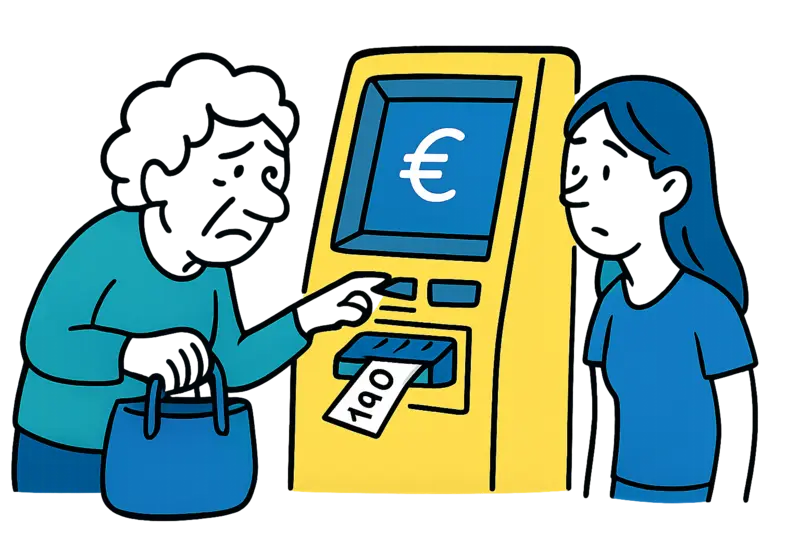
A Tuesday in Palma: buses hum past Passeig Mallorca, two taxi drivers argue quietly, an older woman with a shopping bag waits in front of a yellow ATM. She presses the buttons too slowly, the display changes too quickly, and finally a fee notice appears. She breathes deeply, studies the screen, and then withdraws only 40 euros — because she feels uncertain. A student coming from university glances over, luckily types faster, but for the woman the experience remains frustrating. This is not an isolated case; you can see it at Mercat de l'Olivar, on the Plaça Major in Inca or in front of small banks in Sineu.
Concrete solutions
1) Mobile branches and community days: Banks could offer fixed weekly schedules for smaller towns — a mobile service vehicle or a pop-up counter in the municipal office once a week would ease many problems. 2) Partnerships with retailers and municipalities: Shops, pharmacies or town halls can provide cash services and accept simple forms in coordination with banks. 3) Transparency requirement for ATMs: Fees must be displayed clearly and mandatorily before any input; an automatic cancellation option without cost should be standard. 4) Low-threshold digital help: Banks and community centres must offer regular in-person courses for online banking and expand personal telephone hotlines for older customers, particularly in light of incidents such as Hotline Out of Service: When Doctor Phones on Mallorca Go Silent. 5) Regional coordination office: The island government or a consortium of municipalities, banks and consumer protection groups should maintain a map of fee-free partner ATMs, mobile counters and accessible services, and link this to initiatives like a unified travel-payment system such as One card for all of Mallorca: From October less paper clutter in your wallet. 6) Subsidies for accessible advisory points: Municipal grants could create incentives to keep existing branches in sparsely populated areas or for citizens' offices to take on simple banking services.
Conclusion
The withdrawal of banks is real — but it should not be portrayed as an inevitable social collapse. What matters is how the gaps are filled: with bare machines or with a network of transparent fees, mobile offers and tangible help on site. Mallorca needs pragmatic solutions that do not treat people with small wallets, limited mobility or without a smartphone as collateral damage. Otherwise a short trip to the bank will become a day of long waits, costs and frustration for many — and every neighbourhood will feel it in the end.
Frequently asked questions
What is Mallorca's weather like and when is the best time to visit?
Is it safe to swim in Mallorca and what should I know about beaches?
What should I pack for a trip to Mallorca?
What’s the best way to explore the Serra de Tramuntana in Mallorca?
Which beaches near Palma are good for families?
Which is a good base for exploring Mallorca's north like Alcudia?
What should I know about Es Trenc Beach in Mallorca?
How do wind and sea conditions affect swimming in Mallorca?
Similar News
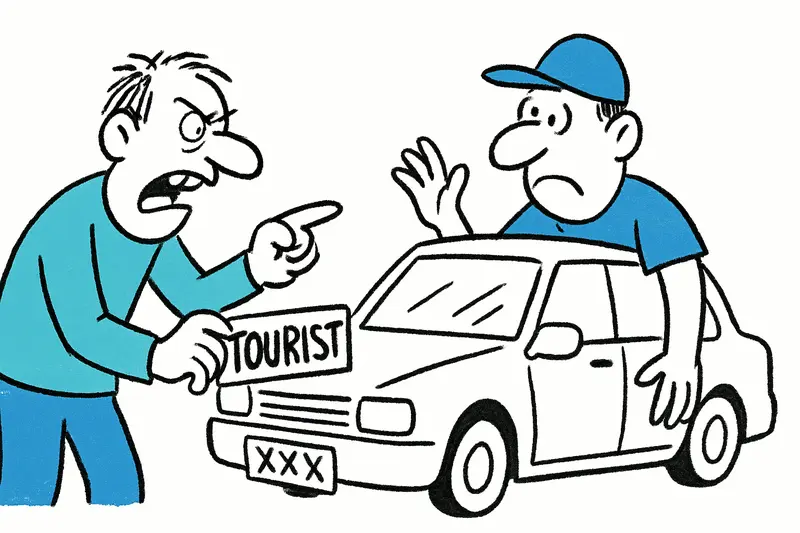
Sticker Attack in Port d'Andratx: When Trouble Lands on Wheels
In Port d'Andratx, cars with foreign license plates were covered with anti-tourism stickers overnight. Why is the confli...
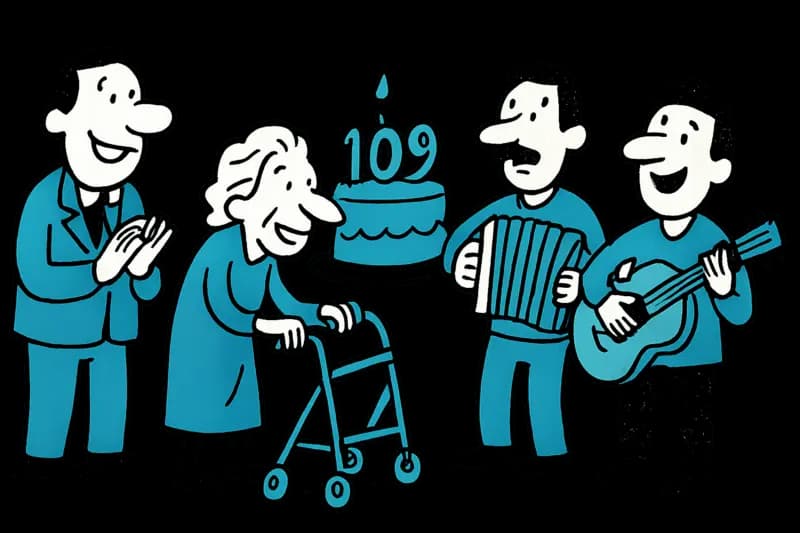
Madò Jerònia turns 109: Campos celebrates its sprightly great-grandmother
There is a celebration in Campos: Jerònia Coll Mesquida is 109 years old and is considered the oldest resident of the Ba...

Mites on Eggs, Cadavers Next to Living Chickens: Reality Check on the Poultry Farm near Manacor
Animal welfare advocates report hygiene deficiencies, earlier Salmonella findings and repeated fines. A critical analysi...
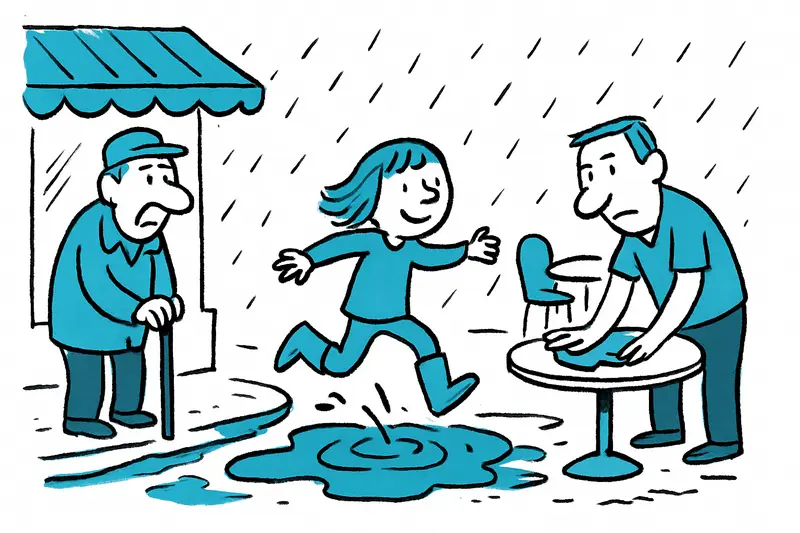
Dana 'Adam' Lets the Puddles Speak – A Reality Check After the Heavy Rain
Heavy rain in Palma and parts of Mallorca frayed nerves again. Key question: How effective are warning systems, drainage...
Dana 'Adam': Why the Spanish mainland was hit harder — and what Mallorca must learn
Four dead, flooded towns and locked-down municipalities: Why did Dana 'Adam' cause more damage on the mainland than in M...
More to explore
Discover more interesting content

Can Cap de Bou

Townhouse Lleo 72
