

Mallorca holiday at a bargain price: Who really pays the discount?
Mallorca holiday at a bargain price: Who really pays the discount?
Flight and hotel prices will more often drop at short notice in 2026 – but discounts like last-minute deals or cashback have two sides. An analysis: who benefits and who bears the costs?
Mallorca holiday at a bargain price: Who really pays the discount?
Key question: If last-minute offers and cashback campaigns fill booking sites again in 2026 – who profits and who loses out?
What is happening now
There is movement in travel agencies and on booking platforms, even as reporting points to Fewer Flights, More Uncertainty: How the Residents' Discount Thins the Winter Flight Schedule to Mallorca. Airlines and hotel groups are calculating more tightly, booking numbers are shifting, and providers are trying different pricing tactics to get beds and seats filled, as seen in Black Friday: These airlines offer cheap Mallorca flights — what you need to know. For travelers this can mean: a week in Palma in spring suddenly becomes cheaper, making a Mallorca trip more tempting as a spontaneous purchase. That is the other side of shrinking travel enthusiasm or a reallocation within household annual budgets.
Critical analysis
The increased use of last-minute offers is at first sight pure market economy: empty capacities want to be sold. It becomes more problematic with so-called cashbacks, i.e. reimbursements to customers after booking. Formally, the official travel price does not fall; instead the intermediary returns part of its commission. At first glance the traveler wins, but the mechanism has downsides: it distorts price comparisons, makes short-term savings dependent on payment processing, and strains the liquidity of small intermediaries. It also creates incentives to make prices more complex and less transparent.
What is missing from the public debate
People talk a lot about low final prices, but hardly anyone asks how stable these prices are and what the long-term consequences of these practices are for the market; coverage like Autumn Holidays in Mallorca: Expensive Flights, Affordable Hotels – How Does That Fit Together? illustrates the tension between flight and hotel costs. Missing points include: the tax treatment of reimbursements, whether consumer rights are sufficiently protected in case of delayed payouts, and the competitive effect when large platforms can operate with lower margins than small travel agencies. Also rarely heard is the perspective of seasonal workers on Mallorca, whose shifts fluctuate with short-term demand.
An everyday scene from Palma
On the Paseo del Borne the tram clatters in the morning, suppliers carry crates of fruit into small hotels. At the reception of a family-run house in Santa Catalina a young woman asks for the best price for next week. The manager frowns: the rate is cheaper online - but only with cashback that is transferred after departure. 'And if it doesn't come?', the customer asks. The manager shrugs and enters the booking anyway. This is how uncertainties arise in places where a holiday should really bring relaxation.
Concrete approaches
Transparency obligation: Intermediaries should clearly indicate whether a discount is included directly in the final price or granted later as a reimbursement, including a deadline for payment.
Better consumer protection: Payment dates and procedures for reclaiming money should be regulated by law so that customers are not dependent on later payments to plan their budgets.
Fair competition rules: Regulators could examine whether cashback systems from large platforms disadvantage smaller providers and thus promote market distortions.
Seasonal stability: Hotels could increasingly introduce models with flexible rates and guaranteed minimum hours for seasonal staff so that sudden fluctuations in booking behavior do not immediately disrupt work schedules.
Concrete tips for travelers
If you see a supposed bargain: read the small print. Check whether a reimbursement is really guaranteed or depends on conditions. Ask about payout dates. If in doubt, book directly with the hotel if you prefer discounts applied immediately rather than delayed cashbacks.
Conclusion
Cheaper Mallorca holidays are realistic and in many cases an opportunity for spontaneous travelers. But the market mechanics that make such prices possible have two sides: short-term advantages for customers and long-term risks for market transparency and employees. Those who know the island understand that a good deal is measured not only by price but also by reliability. Providers, consumers and regulators are called upon: more openness and clear rules would prevent cheap prices from causing confusion or unfair situations.
Frequently asked questions
Why are Mallorca holidays getting cheaper on some booking sites?
How do cashback deals work when booking a Mallorca holiday?
Are last-minute Mallorca holiday deals actually a good bargain?
What should I check before booking a cheap Mallorca holiday?
When is Mallorca cheaper to visit for a spontaneous trip?
Why can cheap Mallorca offers be a problem for small travel agencies?
Is it better to book a Mallorca hotel directly or through a cashback platform?
What does cheaper Mallorca tourism mean for local workers?
Similar News

More water than last year: Mallorca's reservoirs breathe easier
September rain refilled the Tramuntana's reserves: overall fill around 35 percent, Cúber at 40.42 percent, Gorg Blau at ...
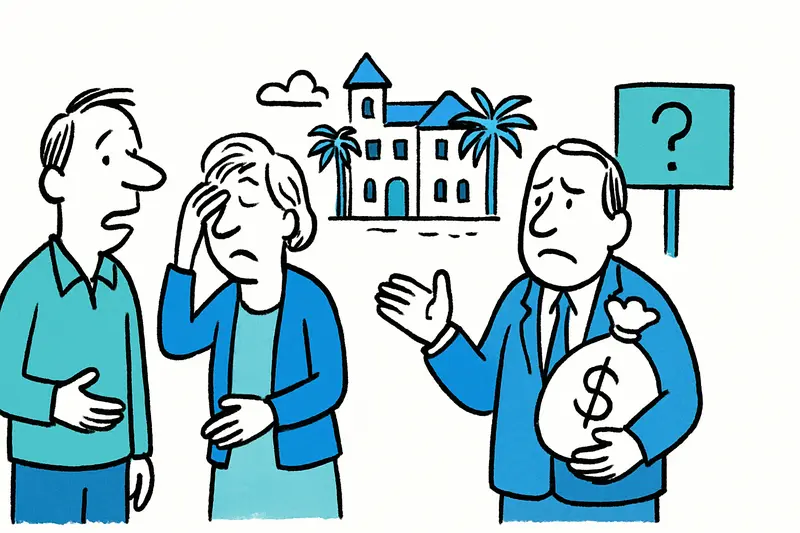
Three Luxury Hotels in Banyalbufar: Lots of Money, Many Questions
A Danish investor plans three exclusive accommodations in Banyalbufar — including the historic Son Valentí. The announce...
2.1 tonnes of cocaine on sailing yacht off Spain's coast – a reality check for the coastguard
A 14-metre yacht was seized with 2.1 tonnes of cocaine. Who monitors the ports, how does the international hunt succeed ...

Heat Bonus in Mallorca: 100 Euros Extra for Outdoor Staff at MarSenses
MarSenses pays employees who worked outdoors in August an extra €100 as recognition. Lighter uniforms, reduced hours for...
Renovating in Mallorca: What You Really Can Do Without Neighbour Consent
Many think they can do whatever they want in their apartment. That's partly true — but only as long as structural elemen...
More to explore
Discover more interesting content

Can Cap de Bou

Townhouse Lleo 72
