
Mallorca on the Edge? A Sober Reality Check
The island seems magnified: tourism, construction, water scarcity and rising rents — what's missing from the public discourse and which steps would truly help?
Mallorca on the Edge? A Sober Reality Check
Key question: Can an island that attracts so much remain sustainably livable — for locals as well as newcomers?
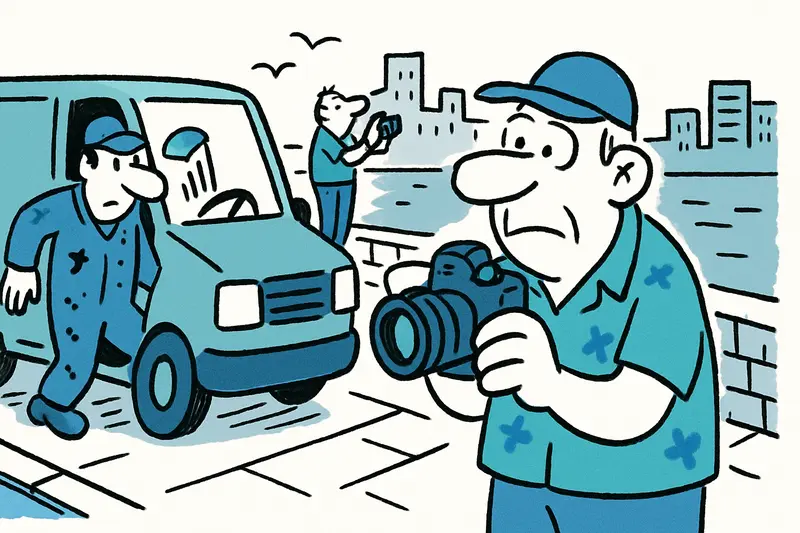
On a cold morning you stand on the Passeig Mallorca, the harbor lies calm, seagulls circle, and yet the city hums. Delivery vans stop faster than the traffic lights cycle, a craftsman in a muddy overall climbs out, a tourist photographs the stone quay. This small scene sums up the issue: cramped spaces, conflicting needs, little room for the future, a point explored in Reality Check: Why Mallorca Can Hardly Escape Massification.
Critical analysis: The problem is not a drama of the future, it is everyday life. Too many people in too limited a space put pressure on housing, traffic, water and nature. In Palma and the coastal towns rents have risen; families move closer together, young people relocate to the mainland or commute, and craft businesses complain about lost skilled workers, a dynamic examined in Sky-high prices, tents, empty promises: Why Mallorca's housing crisis is no longer a marginal issue. At the same time tourist demand remains unbroken — more flights, more short-term rentals, more seasonal jobs that often offer no long-term prospects. Infrastructure like roads, sewage systems and power grids is aging and locally overloaded. The consequences are tangible: full supermarkets in high season, traffic jams on the Vía de Cintura, occasional drinking water warnings in dry summers, as described in When the Tap Runs Scarcer: Mallorca Between a Tourism Boom and a Dwindling Water Source. All this adds up to a gradual erosion of quality of life.
What is missing from the public debate: Discussions mostly revolve around assigning blame — "too many holiday apartments," "too much construction," "politicians do nothing" — and therefore remain fragmented. Important questions are rarely asked: How much land can be developed permanently without irreversibly damaging natural resources? What binding contracts does a labor market need to cushion seasonal fluctuations? How do we measure the true value of coastal areas when short-term revenue conflicts with long-term preservation? These structural questions require data, long-term scenarios and the willingness to make uncomfortable decisions.
Everyday scene: At the Santa Catalina market you meet a baker who has worked there for 30 years and young waiters rushing from job to job. They share the same bus stop, the same small kitchen in an apartment, sometimes the same room. On the way back you pass a fisherman at Moll Vell who leaves his boat idle longer because fuel prices have risen and catches have declined. Such individual images reflect the bigger picture: people adjusting their way of life because the conditions change faster than the administration's responses.
Concrete solutions that should be discussed: First, revise land-use plans and set binding limits for new construction — no blanket building along sensitive coastlines. Second, strictly regulate short-term rentals and link them to trust or escrow models so revenues flow into social housing. Third, labor-market policies that stabilize seasonal work — for example qualification programs, regional wage subsidies in the low season and partnerships between businesses and vocational schools. Fourth, modernize water and wastewater management; targeted investments in rainwater storage, efficient irrigation in agriculture and treatment capacities for urban water. Fifth, rethink mobility — more dedicated bus lanes, park-and-ride facilities at the city edge, and a fare model that makes commuting and short trips more attractive than single-occupancy car journeys. Sixth, make climate impacts mandatory in planning — heat maps and risk zones for droughts and floods must be integrated into development plans.
Why this is feasible: No single proposal is revolutionary; many island municipalities worldwide have already tried similar steps. What matters is political coherence and transparency — binding targets, timelines and responsibilities. The money is there: EU funds, state programs and private investments can be pooled if projects demonstrate measurable impact, a point discussed in Balearic Islands in the Price Squeeze: Who Can Still Afford Mallorca?. One example: designated revenues from tourist infrastructure could be earmarked for municipal housing instead of general budgets.
What needs to happen quickly: In the short term a communicative shift is needed — clear rental rules, rapid fixes to water infrastructure and an emergency plan for overload peaks. In the medium to long term land strategy, labor measures and climate adaptation must go hand in hand. Without that sequence much will remain patchwork.
Concise conclusion: Mallorca is not a tragedy, but it is not an infinite space either. Treating the island only as a stage for short-lived profits gambles with its substance. The alternative is politics with backbone, neighborhoods where children can grow up, and a tourism that does not have to be more profitable every year. That will require uncomfortable decisions — but none of it is technically or financially impossible. On the Passeig Mallorca you hear the sound of the sea and the honking of delivery vans. Both can be ordered at the same time if we stop lamenting symptoms and start tackling causes.
Frequently asked questions
Is Mallorca still a good place to live year-round?
Why are rents so high in Mallorca?
Does Mallorca have water problems in summer?
Is traffic in Palma and on the Vía de Cintura getting worse?
What is the biggest challenge for Mallorca’s tourism model?
What can be done about short-term rentals in Mallorca?
What is Santa Catalina like as a place to live in Palma?
Why is Moll Vell in Palma important in discussions about Mallorca’s future?
Similar News

When the Wallet Becomes a Danger: Attack in Peguera and Lessons for Mallorca
In Peguera, two women are said to have stolen the wallet from a 75-year-old German couple. When the victim intervened, t...
Plata stays Plata: Young people take over, Llonguets remain
A small bar on Carrer de l'Argenteria will continue: Tolo Serra hands the place over to young Mallorcans at the end of t...

Unnoticed in the Luggage Compartment: How a Boy Traveled More Than 100 Kilometers in a Team Bus
A minor traveled in the undercarriage of a team bus for more than 100 kilometers until his cries for help were heard. A ...

Cap Vermell Grand: Second Michelin Key – a Gift for the East
The Cap Vermell Grand in Capdepera has been awarded its second Michelin key. For the region this elevates the luxury off...

Eurowings lets four aircraft carry names – a friendly idea that also reaches Mallorca
Eurowings is launching a campaign: four Airbus A320s are to carry the first names of people who help others in everyday ...
More to explore
Discover more interesting content

Can Cap de Bou

Townhouse Lleo 72
