
When the reservoirs shrink: How Mallorca's water shortage affects Palma and the villages
Gorg Blau and Cúber are at around 29.5 percent — this has concrete consequences for cities, municipalities and agriculture. Why the situation is more serious than it sounds and which steps are now necessary.
When the reservoirs shrink: How Mallorca's water shortage affects Palma and the villages
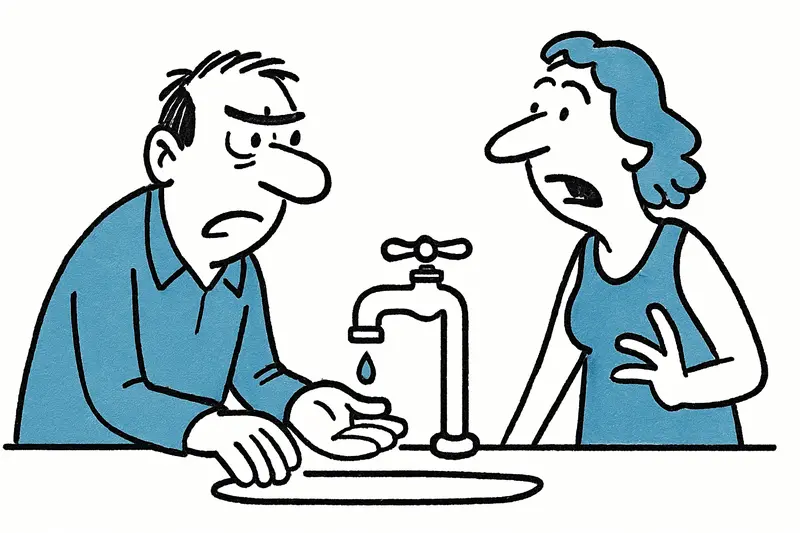
The numbers sound abstract until the tap only drips at half strength. At present the two large reservoirs Gorg Blau and Cúber together hold only around 29.45 percent of their capacity. Gorg Blau shows about 30.51 percent, Cúber just under 27.81 percent, as detailed in Water shortage in Mallorca: As Gorg Blau and Cúber shrink — is Palma really prepared?. The voice on Emaya's hotline does not sound unconcerned — and you can feel that on the streets: in Palma, in Sóller and in the small mountain villages.
Key question: Will the reserves last until autumn — or is scarcer water in daily life likely?
This question is not only rhetorical. The island needs the reservoirs as a buffer for hot weeks, for gardens, for agriculture and for the high tourist season, which never fully pauses here. Meteorologists speak of a slightly dry August and measure on average only about 13.1 liters of rainfall per square meter — roughly 38 percent below the long-term average. Isolated showers are not enough to make up the deficit.
More than numbers: where it already hurts
You can see it in small everyday things: crusted lawns, gardeners thinning watering schedules, farmers pouring drinking water into tanks or hoping for unpredictable weather. Some municipalities already have restrictions on large irrigation projects, as noted in Water Emergency in Valldemossa: When the Wells Whisper. And yes, the old springs from the Serra de Tramuntana continue to feed water pipes through centuries-old limestone formations — but when reservoirs fall, this additional supply suddenly becomes extremely important.
What is often overlooked
Public debate usually revolves around rain and reservoirs. Three points receive less attention: first, the condition of the pipe network. Leaks can in total swallow enormous quantities. Second, unequal distribution: Palma has supply systems and reserves, small villages are often more vulnerable, highlighted by Palma's water at the limit: reservoirs almost empty — how should we react now?. Third, tourism demand: pools, hotels and golf courses consume large amounts, often at the times when it is driest.
Concrete opportunities and measures
In the short term, joint savings help most: fixing dripping taps, showers instead of baths, night-time garden watering, efficient drip irrigation in agriculture. Emaya recommends such steps, but they are only a first building block.
In the medium term, technical and regulatory solutions must gain momentum: leak detection in the supply network, smart meters, incentives for rainwater tanks at private homes and hotels, expansion of greywater recycling for irrigation and cleaning. For agriculture, more water-saving irrigation methods and a fairer allocation during dry periods are worthwhile.
In the long term the question remains: do we want to invest massively in desalination plants — with high energy demand — or rather focus more on storage, efficiency and renewables? Small solar-powered desalination units for municipalities and agriculture are an option today; investing in larger retention and storage systems in valleys where rain can be held deliberately is equally important.
Politics, pricing and social issues
Water policy is always also distribution policy. Higher prices can curb consumption but hit socially weaker households harder. A combination of block tariffs, subsidies for water-saving technology and targeted grants for municipalities would be more sensible than blanket price increases. And: those who prioritize agriculture and tourism should offer clear rules and compensation.
A local conclusion
The island stands at a point where small measures can quickly bring big benefits — and where long-term planning must begin now. When the cicadas get louder in July and the dust on the stone walls thickens, people here intuitively notice that water is becoming scarcer. The conversation about storage techniques, fair distribution and modern irrigation must not begin only when the tap runs dry.
So: short-sighted avoidance does not help. Pragmatism, money and a bit of Mallorcan ingenuity are needed — and all before we learn how dry the summer without buffers really can be.
Frequently asked questions
Is Mallorca likely to face water restrictions this summer?
Why are the reservoirs in Mallorca so important for daily water supply?
What can residents do in Mallorca to save water at home?
Why are small villages in Mallorca often more vulnerable to water shortages than Palma?
How is the water shortage affecting Palma right now?
What role do rainwater tanks and greywater systems play in Mallorca?
Is Mallorca relying more on desalination because of the water shortage?
What can farmers and gardeners in Mallorca do during dry periods?
Similar News

Release after bloody attack in Palma: Why the court's decision raises questions
An 18-year-old who allegedly inflicted a serious neck injury on a man at Plaza Gomila using a wristwatch wrapped around ...
Kidnappings in Inca: Three young men forced into car trunks and abused in the forest – a reality check
In Inca, three 18-year-old men were forced into car trunks by masked assailants at the Plaça des Bestiar, taken to a for...
Spreading Massification: The Brake That Still Has Much Work to Do
Marga Prohens announces limits on volume tourism. The measures sound harsh — but are they enough to save everyday life, ...

Through the Keyhole onto the Party Yacht: How Daniela Katzenberger Is Planning Her 40th on Mallorca
Daniela Katzenberger turns 40 and wants to celebrate it on the island — likely with a boat, cake and her mother. A relax...
By Boat Instead of the Road: Palma's Water Bus — a Reality Check
The 'Bus Nàutic' launches in two stages — but questions remain over interim operations, fares and environmental requirem...
More to explore
Discover more interesting content

Can Cap de Bou

Townhouse Lleo 72
