
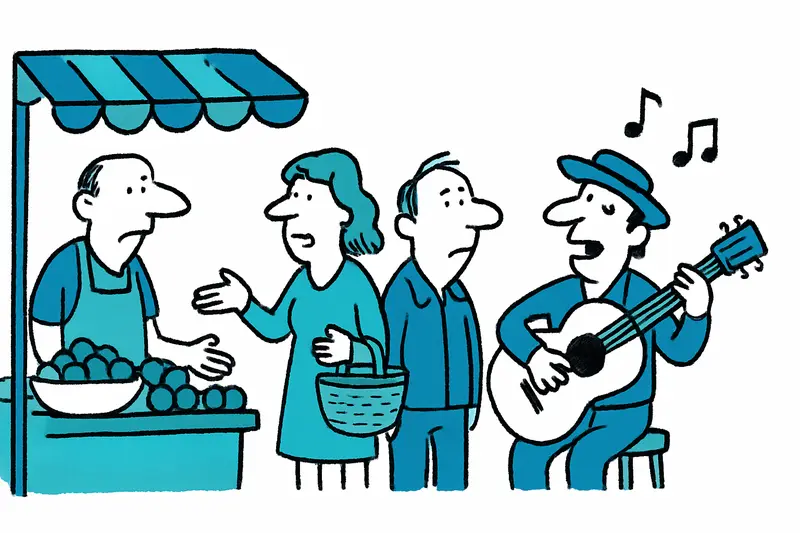
Mercat de l’Olivar in Palma: When the Market Is Both a Neighborhood Hub and a Stage
Since 1951, Mercat de l’Olivar has supplied Palma with food. As it celebrates its 75th anniversary, the question is how a market hall can serve locals and visitors alike.
A Market Hall with Two Different Rhythms
At Mercat de l’Olivar, you can read the story of Palma’s transformation not in a grand slogan, but in very different shopping lists. There’s fish for lunch at home. And there are oysters, champagne, or caviar that make a visit to the market feel more like a little outing. Both take place under the same roof. The key question is this: Can the Olivar remain a lively place where the city shops for essentials while increasingly functioning as an experience for visitors?
The hall opened in 1951. It was designed by Vicent Valls Gadea, with plans drawn up about ten years earlier. The building is L-shaped, and the fish section was separated from the larger part for hygiene reasons. As it celebrates its 75th anniversary, the building represents not only a long history as a market but also a very current tension: Palma’s center is no open-air museum, but it is not merely a backdrop for the next snack, either.
Everyday Shopping Alongside a Special Treat
The market is now home to 115 shops and bars. That’s an impressive mix, and it explains why several kinds of visitors cross paths here. People from Palma come to shop, visitors come for the market experience, and others stop at a counter. A morning in the fish hall can sound like ice, the sea, and voices; a few steps away, there are vegetables, shoes, or a quick coffee. The market’s everyday purpose hasn’t disappeared. It simply has to share space with a much more tourist-oriented use.
Anyone who walks through the aisles on an ordinary weekday knows that feeling of having to weave around: a basket briefly in the way, a delivery van unloading something, someone pausing to consider what’s in the display. Nearby, people share plates and take out their phones. It’s not a disaster, just an everyday coexistence. But it changes what a market is for and who feels naturally at home there.
The range of expensive seafood products is not a scandal in itself. Traders can respond to demand, and oysters don’t suddenly become illegitimate just because they cost more than a weekday grocery shop. It becomes more difficult when the market’s conspicuous, tourist-facing side comes to define the place as a whole. Then ordinary errands fade from view: the regular customers who care about price, quality, and reliability, and the small businesses that don’t need to turn every visit into an event.
What Can Get Lost in the Debate
It’s easy to talk about visitor numbers and new offerings. Less visible are the questions behind them: How are rents and operating costs changing for stallholders? What kinds of services do people in the surrounding neighborhoods need? Is the hall actually convenient to reach at the times when many working people could shop? And how much room is left for everyday essentials when restaurants and tastings take center stage? Without answers to questions like these, “tradition” can easily become a decorative word, while the conditions that make ordinary shopping possible barely get discussed.
The distinction between locals and visitors isn’t as clear-cut as it can sometimes appear from the outside. Visitors can bring revenue to a market; at the same time, it’s the customers who live here year-round who give it a rhythm even outside peak season. And nobody has to choose whether they’re the “right” kind of person for a fish stall or a glass of wine. The place feels more restrictive when one group is quietly treated as more important than another.
Ways to Support the Market in Everyday Life
A first step would be to make the mix easy to see: clear directions to stalls and everyday products, with information in Catalan and Spanish and, where useful, other languages too. That helps visitors find their way without turning the market into a tourist stage. To help people keep an eye on prices, traders could display their offers clearly; customers should be able to see at a glance what a quick snack costs and what’s suitable for shopping to take home.
The operators and the city could meet regularly with stallholders and residents to discuss opening hours, delivery routes, cleanliness, and how space is allocated. Not as a one-off anniversary gathering, but in a way that leads to decisions people can understand. It would also make sense to publish a straightforward overview of how the hall’s use is changing: What kinds of businesses are there? What needs are residents raising? Where are bottlenecks emerging? This doesn’t require a major advertising campaign, just an ongoing forum for discussion and goals that can be measured.
And visitors can follow a simple rule that is useful almost everywhere in Mallorca: don’t just take a quick photo—buy something, ask questions, and make room for others. A market isn’t a stage set; it’s a workplace. Waiting patiently, not treating every display as a photo backdrop without asking, and trying a stall beyond the best-known counters all help ensure that more than just the most spectacular corner gets seen.
An Anniversary Without Nostalgia
Mercat de l’Olivar doesn’t have to pretend that nothing has changed since 1951. Palma has grown, visitors come from many countries, and new businesses are part of a changing city. The question isn’t whether oysters and everyday shopping can coexist. It’s whether there’s room for both without one pushing the other aside.
A market hall doesn’t thrive by looking as old as possible. It thrives when people return because they can do their shopping there, meet someone, or eat something they enjoy. As the Olivar celebrates its 75th anniversary, the focus shouldn’t be only on its beautiful architecture. What matters is whether the hall will still be a market for Palma tomorrow—and not merely a popular backdrop for visits to Palma.
Frequently asked questions
What can I buy at Mercat de l’Olivar in Palma?
When did Mercat de l’Olivar in Palma open?
Does Mercat de l’Olivar in Palma have a fish market?
Do Palma residents still shop at Mercat de l’Olivar?
Can I buy food to take home as well as eat at a market in Mallorca?
How can visitors support local markets in Mallorca?
Is it okay to take photos at food markets in Mallorca?
How can I check prices at food stalls in Mallorca?
Similar News

Carry-On Luggage on Mallorca Flights: Why Pillow Tricks Can Get Expensive at the Gate
Stuffing extra clothes into a pillow, neck cushion or jacket sounds like a free solution. But at Palma Airport, what mat...

Violence in Mallorca: What Visitors Should Know
Visitors can also seek help after an assault in Mallorca. Here’s what matters now, which services are available, and whe...

Tanker Sinks off Ibiza: The Crucial Question Lies Beneath the Surface
A tanker accident off Ibiza raises an uncomfortable question: How quickly can authorities determine whether fuel has ent...

A Passageway Full of Plush: Palma’s Ale-Hop Turns Shopping into a Little Excursion
A passageway lined with cuddly toys and mirrors has been given a makeover at the Ale-Hop store on Calle Oms. Between Pla...

Black Suitcase at the Baggage Carousel: How to Spot Your Luggage More Easily in Mallorca
Many suitcases look almost identical. A distinctive marker makes yours easier to recognize—but it cannot prevent your lu...
More to explore
Discover more interesting content

Can Cap de Bou

Townhouse Lleo 72
