
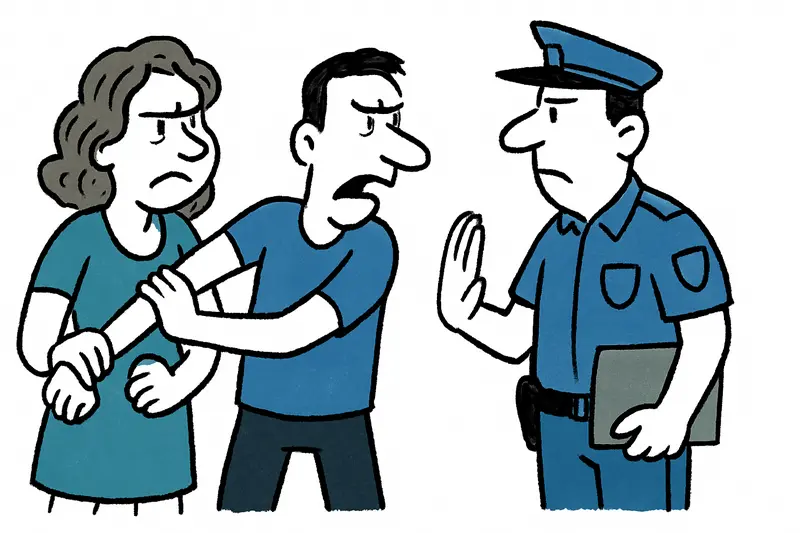
Violence in Mallorca: What Visitors Should Know
Visitors can also seek help after an assault in Mallorca. Here’s what matters now, which services are available, and where the public response to the issue falls short.
Violence in Mallorca: What Visitors Should Know
What can a woman do if she experiences violence in Mallorca—and perhaps is only here for a week, doesn’t speak Spanish, and doesn’t know whom she can trust? The short answer: She can contact the Spanish authorities and seek medical and counselling support. Her nationality or visitor status does not take away that right. The longer answer is less simple: In an unfamiliar place, shock, language barriers, and worries about flights, accommodation, or travel companions can make it difficult to know what to do next.
Violence does not happen only in dark alleys or at the hands of strangers. It can happen in a relationship, with someone met on holiday, in accommodation, or after a night out. A no does not have to be spoken loudly. Silence, freezing, or a lack of resistance are not reliable signs of consent. In Spain, the law on the comprehensive guarantee of sexual freedom places voluntary consent at the centre. What matters is whether the person’s will was freely and clearly expressed under the circumstances. A previous relationship, flirting, or having drunk alcohol together does not change that.
Getting help without having to decide everything first
In immediate danger, call the emergency number 112, which is available throughout Europe. Anyone who is injured or fears they may have been drugged should seek medical help. Even if there are no visible injuries, an examination may be important. If it feels safe to do so, it may help to keep clothing or messages and write down what you remember. But this is not required and should never be a reason to delay seeking help. Safety comes first; no one should be blamed for showering or changing clothes.
Making a police report is an option, but survivors do not need to have a complete plan for their future in the first few minutes. If you are unsure, you can first speak to a support service or ask someone you trust to join you. Spain’s 016 helpline provides information and support for violence against women; it is not the emergency number for immediate danger. The Balearic Institute for Women, IBDONA, can be reached at 900 178 989. If you have difficulty with the language, explicitly ask for support. Availability and the languages offered may vary; in an emergency, 112 remains the right first step.
Police can also be contacted about violence by a current or former partner. Spain’s 2004 law against gender-based violence provides protection in certain cases involving violence by a man against a current or former female partner. This includes more than physical assaults: threats, intimidation, and control can also be part of a pattern of abuse. Which legal protection measures apply in a particular case depends on the circumstances. A support service or legal professional can provide specific guidance.
Everyday life on the island is not always organised with safety in mind
After midnight, Palma sounds different: voices drift through the streets, a taxi pulls over, and somewhere a roller shutter rattles down. Someone who has just experienced violence is suddenly expected to decide whether to go to the police, travel to a clinic, or return to their holiday apartment. Navigating official services can already be complicated for local residents; visitors also have to contend with unfamiliar procedures and the fear of missing their flight home or being separated from their travel group.
This is exactly where public discussion often lacks practical information. It is not enough for laws to promise protection. Survivors need clear information in several languages, a discreet place to make a phone call, and a clear referral process linking the police, healthcare services, and support organisations. Hotels, bars, and event organisers should train staff to take survivors seriously, stay with them, and not demand proof before offering help. Information in accommodation and nightlife venues should also be easy to find—not buried somewhere in a long list of Wi-Fi rules.
If you are accompanying a friend, you can offer practical help: go somewhere safe, call emergency services, listen, and ask what she wants to do now. Don’t pressure her, ask what she was wearing or how much she drank, or confront the alleged perpetrator yourself if doing so could create danger. Responsibility lies with the person who commits the violence. It does not diminish because someone went out, flirted, or later regretted a decision.
What could be improved in Mallorca
Authorities and businesses could provide concise, multilingual emergency information at airport transport hubs, in hotels, and in nightlife venues. Clinics and support services need ways to welcome visitors without unnecessary barriers and connect them with specialist help when needed. Businesses would benefit from a simple response plan: Who takes charge? Where is there a quiet room? How can a safe journey home be arranged? This cannot replace public services, but it can help ensure that a survivor is not left alone between the bar and the street at a critical moment.
An assault is never the survivor’s fault. And access to help should not depend on whether she immediately files a police report, speaks perfect Spanish, or can recount every detail of her holiday. In an emergency in Mallorca, the priorities are clear: get out of danger, seek medical or police help, and bring in someone you trust. The true measure of an island’s commitment to safety is not how welcoming its nights seem—but whether someone is left alone after an act of violence.
Frequently asked questions
What should I do if I experience sexual violence while visiting Mallorca?
What number should I call in an emergency in Mallorca?
Can I get help in Mallorca if I don’t speak Spanish?
Do I have to report an assault to the police to get help in Mallorca?
What counts as consent under Spanish law?
How can I help a friend who has experienced violence in Mallorca?
Should I keep evidence after an assault in Mallorca?
Can I get protection in Mallorca from an abusive current or former partner?
Similar News
Tanker Sinks off Ibiza: The Crucial Question Lies Beneath the Surface
A tanker accident off Ibiza raises an uncomfortable question: How quickly can authorities determine whether fuel has ent...

A Passageway Full of Plush: Palma’s Ale-Hop Turns Shopping into a Little Excursion
A passageway lined with cuddly toys and mirrors has been given a makeover at the Ale-Hop store on Calle Oms. Between Pla...
Black Suitcase at the Baggage Carousel: How to Spot Your Luggage More Easily in Mallorca
Many suitcases look almost identical. A distinctive marker makes yours easier to recognize—but it cannot prevent your lu...
Drone Alert on Approach from Palma: Why Aborting the Landing Was the Right Decision
A flight from Palma had to abort its approach to Hamburg after a drone alert was issued. The incident shows how quickly ...
Inca Adds 133 New Parking Spaces—but Less Traffic Won’t Happen Automatically
Three additional parking areas are intended to ease pressure in Inca. Two are already open, and a third has been announc...
More to explore
Discover more interesting content

Can Cap de Bou

Townhouse Lleo 72
