
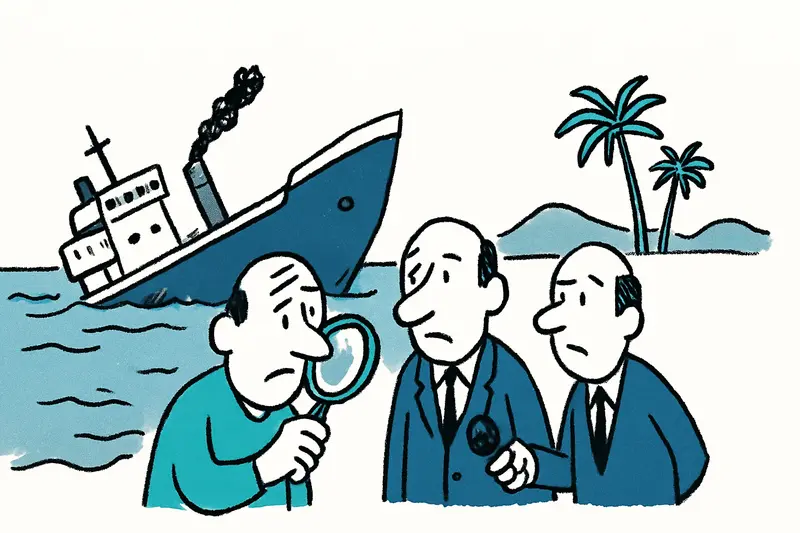
Tanker Sinks off Ibiza: The Crucial Question Lies Beneath the Surface
A tanker accident off Ibiza raises an uncomfortable question: How quickly can authorities determine whether fuel has entered the sea—and who is keeping the public informed?
A Sunken Tanker, Many Unanswered Questions
A tanker has sunk off Ibiza. In an accident like this, it is not only what was on board that matters. What is happening beneath the surface now is crucial: Has fuel leaked? Where is it drifting? And how quickly can this be reliably assessed? Until those questions are answered, declaring the situation under control is just as premature as calling it an “environmental disaster.”
That may sound clinical, but it has very real implications for the islands. Between Ibiza and Mallorca, there are no abstract lines on a map, but a shared sea crossed by ferries, cargo ships and supply vessels. Wind and currents do not respect administrative boundaries. Any pollution would therefore not simply be a problem “off Ibiza” that ends there.
What the Public Needs to Know Now
The first report after a maritime accident is rarely the whole story. Three details are especially important for residents and coastal businesses: Has pollution actually been detected? If so, where and over what area? And when will the next reliable situation report be published? A clear answer can also be: We do not know yet. Clearly stating what is unknown is better than offering reassuring speculation.
When a ship sinks, fuel may reach the surface, disperse through the water or initially remain trapped in the wreck. What happens depends on factors including the ship’s condition and position, its cargo and sea conditions. This cannot be assessed from shore. It requires monitoring at sea and from the air, technical assessments and repeated measurements. A single image of calm water would not prove that everything is all right.
The amount of cargo alone also does not tell us how extensive any damage might be. It makes precaution more urgent, but it cannot replace measurements. Anyone making headlines with a large figure alone is leaving out the most important information: whether anything has leaked at all and how experts are checking. Conversely, it would be wrong to dismiss concerns simply because no visible trace has appeared yet.
A Maritime Emergency Does Not End with the Rescue
In a maritime accident, the crew’s lives come first. After that, a second, less visible phase of work begins: limiting risks to the sea, monitoring the wreck and tracking the situation over time. These priorities do not conflict. A sound response plan must address both without pitting the protection of people against the protection of the coast.
On Mallorca, people know the difference between a calm bay in the morning and a windy afternoon. From Palma’s Passeig Marítim, you can see ships on the horizon, but not what is happening far offshore beneath the surface. An oil slick does not have to start in a beach cove, and a clean shoreline on a particular day says little about conditions farther out. That is precisely why updates should not wait until a visible trace reaches land.
Public discussion often lacks a sense of the timeline. An initial survey may provide only a snapshot; currents and weather can change the situation. Regular updates are therefore needed, with a timestamp, the area surveyed and a clear distinction between confirmed findings and assumptions. If authorities use the same terms differently or updates are delayed, rumours quickly fill the gap. That helps neither residents nor emergency crews.
What Would Make Sense Now
The responsible authorities should publish monitoring results in an easy-to-understand format: Where did they search, what measurements were taken, what can be concluded from them, and what remains unknown? This should include a set schedule for new situation reports—even when nothing has changed. Municipalities and port operators need a direct channel for information so that questions from fishers, boat owners and coastal residents are not answered only through intermediaries.
People in the area should not touch suspected oil slicks or collect samples themselves. Observations should be reported to the official emergency and environmental services; call the emergency number if there is an immediate danger. Anyone who notices something unusual on the beach should report the location and time as accurately as possible. A photo can help, but it cannot replace a professional investigation.
The longer-term question also needs to be addressed: How well prepared are the islands for accidents involving hazardous cargo at sea? This includes the availability of specialist vessels, coordinated plans between administrations and exercises that test not only the alarm response but also communication. These answers may be less dramatic than an image of a sinking ship. But they will help determine whether an accident becomes a larger disaster.
The crucial measure now is not the volume of the first reports, but the quality of the facts that follow. For Ibiza and Mallorca, that means investigating carefully, reporting openly and making no attempt to gloss over the facts. The sea does not need premature all-clear announcements—and people on its shores do not need manufactured panic.
Frequently asked questions
Has fuel pollution from the sunken tanker off Ibiza been confirmed?
Could pollution from the tanker off Ibiza reach Mallorca?
Is it safe to swim in Mallorca after the tanker sank off Ibiza?
How do experts check whether a sunken ship is leaking fuel?
What should I do if I see an oil slick on a Mallorca beach?
Does calm water mean there is no pollution near Mallorca?
What information should authorities share about the tanker sinking off Ibiza?
Why does monitoring continue after a maritime rescue near Mallorca?
Similar News

A Passageway Full of Plush: Palma’s Ale-Hop Turns Shopping into a Little Excursion
A passageway lined with cuddly toys and mirrors has been given a makeover at the Ale-Hop store on Calle Oms. Between Pla...

Black Suitcase at the Baggage Carousel: How to Spot Your Luggage More Easily in Mallorca
Many suitcases look almost identical. A distinctive marker makes yours easier to recognize—but it cannot prevent your lu...

Drone Alert on Approach from Palma: Why Aborting the Landing Was the Right Decision
A flight from Palma had to abort its approach to Hamburg after a drone alert was issued. The incident shows how quickly ...

Inca Adds 133 New Parking Spaces—but Less Traffic Won’t Happen Automatically
Three additional parking areas are intended to ease pressure in Inca. Two are already open, and a third has been announc...

Water Main Break in Palma: 5,000 Households Without Water—and Many Unanswered Questions
A damaged pipe near Parc de sa Feixina disrupted water service in Santa Catalina, Es Jonquet and Son Armadans. The incid...
More to explore
Discover more interesting content

Can Cap de Bou

Townhouse Lleo 72
