
Miquela Cintes and the Quiet Work for Mallorca's Cats
Miquela Cintes and the Quiet Work for Mallorca's Cats
In Porreres, veterinarian Dr. Miquela Cintes volunteers around a simple principle: neuter rather than let them breed. Her clinic, the rehoming efforts and a relocation station in Vilafranca show that progress is being made.
Miquela Cintes and the Quiet Work for Mallorca's Cats
Why Neutering Here Is More Than a Medical Procedure
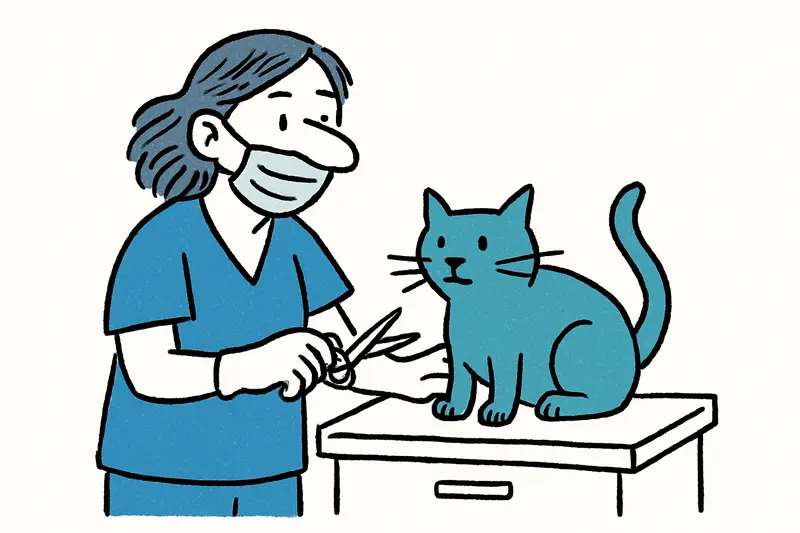
On a cool morning in Porreres, when the church bells still drift quietly across the Plaça and the market stall sets up oranges, the small veterinary clinic opens its doors. Dr. Miquela Cintes pulls open a drawer, takes out a pair of sterile gloves, and says with a half-mischievous, half-serious smile: animals are for her not just patients; they are everyday life, responsibility and feeling all at once.
Since 2018, Cintes has run her practice in the village center and in the same year founded the association Amics d'en Roc i na Bet. Since then she has worked daily with a group that at first glance seems inconspicuous: the feral cat colonies around communities like Porreres. There are officially seven colonies recognized by the town hall there, cared for by authorized volunteers who feed, observe and report new animals.
What is often described here as simple routine is in truth a small system of care and organization: volunteers report newcomers, animal welfare workers arrange transport, and in the clinic the animals are neutered as part of trap-neuter-return programs, microchipped and treated for parasites. Cintes explains: the legal requirement calls for neutering at around six months, together with inserting a pet microchip for tracking. Surgically it is done quickly—five to ten minutes—and many cats are out and about again the same day.
The result can be felt in the neighborhood: fewer territorial fights at dusk, fewer sick kittens, calmer nights for residents. At the same time the challenge remains large. Official figures mention 1,759 registered cat colonies in the Balearic Islands, but locally people say the real number is higher. Responsibility lies with the municipalities; some, 26 of 53 on Mallorca, have already started neutering programs. The regional authorities' goal is clear: only when over 90 percent of a colony is sterilized is it considered a controlled colony—a target that must be achieved step by step.
The financial aspects are as concrete as the human ones. A sterilization in Cintes' clinic costs between about €70 and €150 depending on sex; higher sums apply to female animals. Local charities often cover the bills, and recently in some places municipal coffers have also contributed. Nonetheless donations and grants remain important so routine treatments can continue.
A good example of practical help is the relocation station in Vilafranca: a small facility with acclimatization cages and a larger outdoor enclosure that offers shade in summer and shelter in winter. Such refuges give shy animals time to settle before they are released back into their territory. In Porreres the volunteers hope for a similar facility—a project that shows how a neighborhood initiative can become municipal infrastructure.
Cintes often talks about empathy and responsibility: whoever takes an animal on must carry the decision through hard times as well. At the same time she appeals to the community not only to help when something is acute, but to think sustainably. Adoptions are handled via her association: interested people can contact aarocibet@gmail.com by email or use the channels on Instagram (@amicsrocibet) and Facebook (Amics d'en Roc i na Bet).
What is emerging here is not a loud protest but a quiet change, similar to dialogues elsewhere on the island like Toni Font and the Fishermen: A Quiet Change in Sóller Harbor. Volunteers, a committed veterinarian, municipal support and small relocation stations—these form a network that improves the animals' living conditions and makes village life more relaxed, as seen in profiles of other quiet figures on the island like Gabriela Sabatini: The Quiet Force on Mallorca's Streets and Courts.
If you stroll through Porreres you might hear the soft purr of a neighborhood cat on the steps of the Plaça or see volunteers checking feeding stations. Such scenes are unassuming, but they tell how a piece of island tackles its problems with patience and expertise—without much fuss, but with noticeable benefits for people and animals.
Frequently asked questions
Why are cat neutering programs important in Mallorca?
How does trap-neuter-return work for feral cats in Mallorca?
When is the best time to neuter a cat in Mallorca?
What should I know before adopting a cat in Mallorca?
Are there feral cat colonies in Porreres, Mallorca?
How much does cat neutering cost in Mallorca?
What are cat relocation stations used for in Mallorca?
How can I support cat welfare work in Mallorca?
Similar News

Fewer Airlines, Fewer Destinations: What Palma's Winter Flight Schedule Means for Mallorca
Analysis shows: Winter at Son Sant Joan Airport will be quieter, with significantly fewer airlines and destinations. Who...

German tourist dies in Sa Calobra – a reality check for emergencies on Mallorca's beaches
A 40-year-old tourist died at the Torrent de Pareis. The emergency call, a doctor who happened to be present, a defibril...

Deadly Tractor Accident in Bunyola: What Needs to Be Done Now
In a work accident on an estate near Bunyola, a roughly 40-year-old man lost his life. His wife and a small child were o...
Head-first dive into the shallow part of Cala Fonoll: An accident and the unresolved question of responsibility
A young tourist dove into Cala Fonoll and was seriously injured. Key question: Why are clear warning signs missing at da...

Mistaken identity with fatal consequences: Brutal assault in S'Aranjassa — what's missing in the follow-up?
At S'Aranjassa a visitor to a finca was tied up, beaten and thrown out of a van. Three men have been arrested, including...
More to explore
Discover more interesting content

Can Cap de Bou

Townhouse Lleo 72
