
When the Money Disappeared: How Andrea Rebuilt Her Life in Mallorca with Spanish
A brief moment at a petrol pump — and suddenly nothing was the same. The story of a woman from Germany who on Mallorca not only learned vocabulary but through it found connection, work and a home.
A small mishap at the petrol pump, a big step
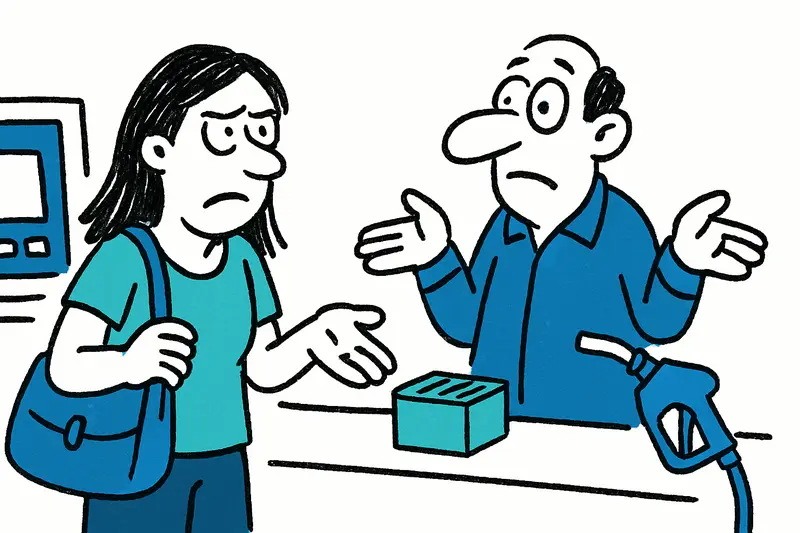
I still see Andrea's face in front of me: half asleep, slightly flushed from the wind, the bag with Pan y Sobrasada in the passenger compartment, as she stood at a petrol station on the Carretera. It was around half past ten, the air already warm, somewhere cicadas were chirping. She fumbled in her pocket and realized that about 20 euros were missing. The man behind the counter just shrugged. Andrea said "mi dinero", feeling the words stuck in her throat. No reaction, only the quiet hum of the pump and a register beep. That moment changed her.
From a year as a tourist to a life on the island
She originally came from Marktredwitz, in an old Twingo, planning to stay a year with a return ticket in her suitcase. Thirty sunrises later it was clear: the year had become decades. Her experience is one of many documented in Emigrants on the Island: Two Couples Start Anew – How Mallorca Benefits.
At first there were jobs in boutiques, moving clothing rails, serving coffee on the Plaça — always with the feeling of failing at the language. The episode at the petrol station, however, was not a drama but a wake-up call: If I don't stand up for myself, this will happen again. Not with confrontation, but with vocabulary.
Andrea signed up for an intensive course. Not a magic potion, but hard work combined with everyday life: speaking while shopping, listening at work, linking words to movement and experience. The teacher suggested simple tasks — a market visit, a bus ride, an evening in the neighborhood with tapas — so that language wouldn't remain abstract but would stick to sounds, smells and real people. For practical advice on settling in, see How Mallorca Really Becomes Your Home: A Practical Guide from Island Experience. And Mallorca offers plenty of those: the ringing of the neon sign at the harbor, the voices of the vendors at the Mercat de l'Olivar, the clatter of espresso cups.
Language as a bridge into everyday life
For Andrea, Spanish today is more than grammar. It is the key to cafés, neighbors and work. She laughs when she thinks of typical misunderstandings: once a man shouted "mi gato está en la maletera" — and immediately everyone pictured a trapped kitten in the trunk. Later it turned out that he meant the car jack. Mistakes like that become anecdotes, icebreakers at counters and market stalls.
She found friends at beach Pilates, conversation partners at the bocadillo stand and eventually work at the language center, and stories of putting down roots are similarly told in At the Finca near Llucmajor: How Talia Is Putting Down New Roots in Mallorca. There she now runs courses for newcomers, organizes tandems and patiently explains how to apologize or ask a neighbor for a favor. She knows both sides: German precision and Mallorcan ease. Her small mission is simple: those who dare are welcomed.
Tips for newcomers
If you've just arrived, you'll find practical hints in Andrea's everyday life: sign up for local courses, look for conversation partners in the neighborhood, visit markets instead of supermarkets and say your first clumsy sentences out loud. Mistakes are allowed — on the island you are more likely to be smiled at than judged. And one more tip: learn vocabulary with smells and sounds. The olive oil at the market, the clatter of plates in a bar, the shout of a bus driver — such impressions stay with you.
Today, when the sun shimmers slowly over Palma and the ferry comes and goes in the harbor, Andrea no longer stands at the petrol pump at a loss. She knows the people, she knows the words. And when someone sheepishly searches for their money again, she smiles, reaches out her hand and says, "Come, I'll show you a few useful phrases."
Conclusion: Language gives more than words. It gives access, community and the possibility to choose a home — even on an island that at first was only a Plan B. Those who dare will be surprised by how much Mallorca gives back.
Frequently asked questions
Is it easy to learn Spanish after moving to Mallorca?
What is the best way to practice Spanish in Mallorca?
Do you need Spanish to live and work in Mallorca?
Where can newcomers meet Spanish speakers in Mallorca?
What should I pack for a first move to Mallorca?
Is Palma a good place to learn Spanish in Mallorca?
What is Mercat de l'Olivar like for someone learning Spanish in Mallorca?
What helps most when you feel stuck with Spanish in Mallorca?
Similar News
Orange Alert over Parts of Mallorca: Are We Prepared?
Dark clouds and an announced wet spell have triggered an Orange alert in parts of Mallorca. A reality check: what's miss...

Sundair & Co.: Sale speculation and what it could mean for Mallorca
Rumors about a possible sale of the airlines Sundair and Fly Air 41, which belong to Schauinsland-Reisen — and whether b...
Anne Wünsche in Mallorca: A job offer with a catch — who fits the role of personal assistant?
Influencer Anne Wünsche has left Berlin and is urgently looking for a full-time personal assistant in Mallorca. Why the ...
Daily from New York: Palma Between Boom and Strain
United will increase the Newark–Palma route to daily flights in 2027 using Boeing aircraft (231 seats). What does the in...
Palma Gets a Welcoming Park: Tirador Goes Greener — and a Café Is Coming
A new green project in Es Fortí/Camí de Jesús will transform the old Voltadora into a city park with an experience fores...
More to explore
Discover more interesting content

Can Cap de Bou

Townhouse Lleo 72
