
More broken windows, more trouble: Why car break-ins on the Balearic Islands are increasing again
More broken windows, more trouble: Why car break-ins on the Balearic Islands are increasing again
The National Police warns: smaller thefts from cars are on the rise in the Balearic Islands. What's behind it, what gaps exist locally — and what can residents and visitors do concretely so their own car isn't targeted?
More broken windows, more trouble: Why car break-ins on the Balearic Islands are increasing again
Key question: Why are thefts from vehicles on the Balearic Islands rising, and what is missing from the debate so that those affected can be better protected?
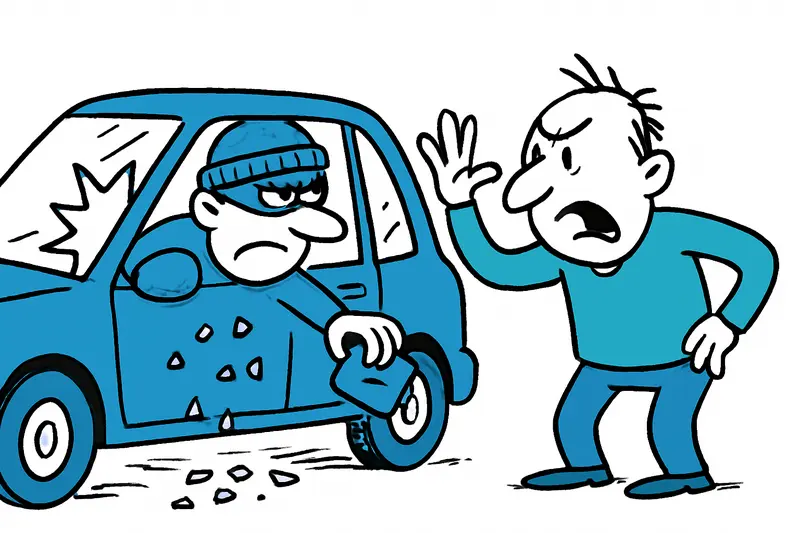
The National Police on the islands report a clear trend: minor offences, above all thefts and break-ins into cars, have recently increased. Police chief José Luis Santafé expects a slight rise in these incidents for the current year. At the same time he stresses: serious crimes have not increased, and often nothing is taken in the break-ins — yet the annoyance for those affected remains considerable.
On paper that sounds matter-of-fact. On the ground it is the small scenes that irritate: in the evening on the Paseo Marítim, where the streetlights flicker above the rows of parked cars, you hear glass shattering and see someone with a flashlight working on a trunk. The next morning ice-cream shop owners in Portixol and holidaymakers in S'Arenal stand at their cars and shake their heads — the window is smashed, the glove compartment empty, the mood ruined.
Critical analysis: More than just a snapshot
The official assessment that these are primarily minor offences aligns with one observation: many cases are opportunistic thefts. Visible valuables, cars parked at remote beaches or poorly lit parking lots, and the large number of changing visitors create opportunities. Structural factors also play a role: adequate lighting is not available everywhere, individual cameras are often not connected, and reporting systems for tourists are not always self-explanatory.
What is often missing is context: How are the cases distributed spatially and temporally? Which parking zones are particularly affected — near the airport, beach parking areas, train stations or shopping centers? Without these granular data, prevention measures remain piecemeal. The question of repeat offenders or organized groups is also rarely answered systematically. Local coverage has documented incidents in different locations, for example Mirador d'es Colomer: Three Arrests — How Safe Are Mallorca's Viewpoints Really?, Juveniles arrested: Palma car-theft series raises questions about prevention, Break-in in Deia: €50,000 in Jewelry — What Does It Say About Safety in Mallorca? and Nighttime Break-ins in Palma: Arrest Stops the Spree — But How Safe Is the Old Town Really?.
What is missing in the public discourse
Public discussion quickly focuses on assigning blame: tourists, carelessness, the drug scene. Two things get overlooked: first, the responsibility of the infrastructure (well-lit, monitored parking areas, clear signage) and second, the role of information and routine on the part of those affected. An informed holidaymaker who knows where to securely stow their luggage is often already half the battle against theft.
An everyday scene from Mallorca
Last Saturday, at the weekly market in Inca, a woman from Germany stood by her car in the parking lot behind the market hall searching for her papers while her dog pulled on the leash. Two rows over a young couple had just noticed a broken side window and were discussing with the vendor of the nearby kiosk whether he had seen anything. No one wanted to end the outing immediately, but conversations at the stall were from then on more about security measures than about almond pastries.
Concrete solutions — immediately implementable
1) For private individuals and visitors: Do not leave visible valuables in the car, store luggage in locked trunks, always lock the vehicle, even during short shopping stops, and use busy, well-lit parking areas whenever possible. Hotels should clearly communicate where guests can park safely and how to report incidents in an emergency.
2) For municipalities: Simple measures that are easy to implement often deliver a lot — better street lighting in known parking zones, clear signage with tips for theft prevention, cooperation with parking garage operators to offer discounted secure parking during peak times.
3) For the police and authorities: Create more transparent, locally broken-down statistics. Additionally: targeted visible foot patrols in affected neighborhoods, temporary video surveillance at hotspots with a clear legal basis and a data protection concept, and information campaigns in multiple languages at airports and ferry ports.
4) Technology and neighborhoods: Apps or local WhatsApp groups for neighborhood watches work when they are responsibly moderated. Parking sensors that report movement in parking zones are complex, but useful for particularly affected areas.
What we would like to see — and how to proceed
A central register with anonymized case numbers per street or parking zone would help to identify patterns. Equally important: easily accessible information sheets for tourists at check-in, short and clear: “What to do if you suspect something? Where to report?” The islands live off their reputation as a safe travel destination — that is why it is worth investing now, before petty offences become an annoying normality.
Conclusion: The rising number of car break-ins on the Balearic Islands is so far primarily an annoyance for those affected, not a wave of serious crime. That does not make the situation any less serious. More light, clearer information, networked statistics and a few simple rules of conduct would help a lot. And yes: next time you get out on the Paseo Marítim, take a look in the rear-view mirror — sometimes just being attentive helps to avoid trouble.
Frequently asked questions
Why are car break-ins increasing again in Mallorca and the Balearic Islands?
What should I do if my car is broken into in Mallorca?
How can I avoid car theft while parking in Mallorca?
Are beach parking areas in Mallorca more risky for car break-ins?
Is parking near the Paseo Marítim in Palma safe at night?
Is the Inca market car park safe for visitors?
Why are tourists often targets for car break-ins in Mallorca?
What kind of parking areas are safest in Mallorca?
Similar News

"Expensive chaos" and many open questions: What clients can do when a lawyer suddenly stops responding
Several clients complain that a well-known German lawyer in Mallorca has been unreachable for months. Key question: What...
TV tip: 'The Last Problem' — Mallorca as the setting of a classic crime
A classic whodunit on Mallorca: A new miniseries set in spring 1959 brings storm, an isolated hotel and a dense web of s...

Nipping Sea Creatures: Why Bathers in Cala Major and Elsewhere Should Be Cautious
In Cala Major, bathers have reported being nipped by small fish. What is behind it, how can problems be avoided — and wh...
Forced eviction in Santa Catalina: When a 65-year-old slept in her car and showered on the beach — a question of responsibility
The story of Pilar López from Santa Catalina represents a problem affecting many Mallorcans: How can an island with a bo...
New traffic rules from October 1: What Mallorca visitors and locals need to know
From October 1, 2026, Spain will implement far-reaching changes to traffic regulations. Important for Mallorca: greater ...
More to explore
Discover more interesting content

Can Cap de Bou

Townhouse Lleo 72
