
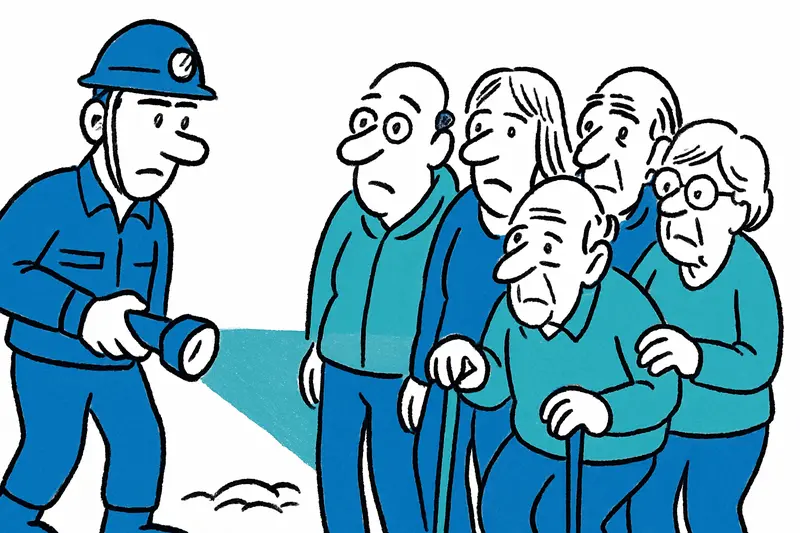
Nighttime Misadventure in the Torrent de Mortitx: What the Mountain Rescuers' Operation Reveals
Five retired hikers became lost in the Torrent de Mortitx and were found after a four-hour search. The incident raises questions about information, equipment and the organisation of tours in the Tramuntana.
Nighttime misadventure in the Torrent de Mortitx: Why five hikers lost their way in the Tramuntana
It was one of those evenings when the Serra de Tramuntana speaks a different language: the wind quiets, shadows fall like a cloth over the gullies and the paths suddenly feel narrower. On Sunday at around 9:20 pm a relative alerted the emergency centre – five hikers did not return to their car in Mortitx as planned. Shortly afterwards teams from the Guardia Civil and the GREIM mountain rescue set off into the Torrent de Mortitx on the territory of Escorca.
The search: radios instead of shouting
Searchlights, two all-terrain vehicles, the quiet radio calls of the rescuers and the occasional clinking of goat bells from the slope – that is how the night operation began. The missing people, two men and three women aged between 64 and 71, had apparently lost their bearings and wandered into difficult terrain, according to the authorities. After about four hours of targeted searching, the teams came across the group shortly after midnight near the starting point of the tour. Relief was audible: quiet sentences, a few harsh laughs, then a collective sigh.
The hikers showed clear signs of dehydration – dry skin, slowed movements – otherwise there were no serious injuries. An ambulance waited at the car park; water and brief examinations were enough and no one had to be admitted to hospital.
The central question: Why do such disorientations happen?
The incident in Mortitx is more than an anecdote. It raises a central question: is it due to lack of equipment, misjudged difficulty, missing information on site – or a combination of all of these? Public debate often offers simple explanations: "signposts are missing" or "tourists are careless." The reality is more complex.
Older groups often underestimate the impact of pace, the need for breaks and fluid loss. The Tramuntana cools down quickly, and a sunset can turn distances on the map into uncertainty on the ground. Added to that: mobile coverage is not complete, map apps only work if routes were downloaded offline, and many hikers skimp on headlamps or spare batteries.
Aspects that are rarely discussed
First: the social dynamics within groups. Older hiking groups tend not to "bother" each other – no one wants to criticise the person who planned the tour. This leads to delays or wrong shortcuts. Second: information deficits at starting points. Clear indications of walking times at a moderate pace versus a mixed-pace group are often missing. Third: the expectation that marked trails are always safe and unambiguous – in narrow torrent gullies can disappear behind rock faces or vegetation.
Concrete solutions – practical and locally implementable
A few measures would achieve a lot without restricting the freedom of hiking. At the Mortitx car park, information boards could be installed with realistic time estimates for different walking paces, guidance on the amount of water per person and emergency instructions with GPS coordinates. Municipalities and hiking associations could offer free short courses: quick orientation lessons, how to use a map and compass and basics on preventing dehydration.
Technically useful would be QR codes at trailheads that provide a route-related GPX file (GPS Exchange Format) which can be saved offline, as well as publicly accessible power banks in villages like Escorca. For older tourist groups, guided tours or the recommendation to walk in shorter stages are advisable. And: a simple checklist at the car park – phone charged, headlamp, enough water, eaten, route known – costs nothing but serves as a strong reminder.
A call for caution and common sense
The Guardia Civil appeals to visitors: communicate plans, stay on marked paths and avoid risky shortcuts at dusk. Locals in the bar in Escorca commented dryly: "People tend to underestimate the Tramuntana." They are right. The mountains are not an enemy, but neither are they furniture you move without instruction.
For the five French hikers the outing ended without major harm: a cold fright, plenty of water and a story they may later tell over an espresso in the sun. Hopefully with the headlamp within reach.
Frequently asked questions
What should I know before hiking in the Serra de Tramuntana in Mallorca at night?
How much water do you need for a hike in Mallorca’s mountains?
Why do hikers get lost in Mallorca’s Torrent de Mortitx?
Is it safe to hike in Mallorca after sunset?
What should I pack for a hike in Mallorca’s Tramuntana?
Where is Mortitx in Mallorca, and is it a difficult hiking area?
What are the signs of dehydration while hiking in Mallorca?
What should I do if I lose my way hiking in Mallorca?
Similar News
Masked Images, Real Panic: When Social Media Aesthetics Alarm Neighbors
Five German content creators filmed on a recently vacated detention site using deceptively realistic props. The result: ...
Why the Striped Breams in Cala Pí Should Be a Wake-up Call
Once again bathers in Cala Pí were surrounded while swimming by small, nippy fish — some wounds bled. Time for clear rul...

Daily from New York: How Palma's Air Traffic Is Growing — and What Must Change
United will increase the Newark–Palma service to daily flights in 2027 (Boeing, 231 seats). Strong tourist numbers clash...
When Love Ends in Shards: Destruction in Son Vida and the Questions That Remain
In Son Vida a relationship dispute escalated: a woman destroyed furniture in a luxury villa, later pressed a panic butto...
Who Bears the Burden? Mallorca Between Tenant Protection and Landlord Fears
Madrid's new housing decrees strengthen tenant rights — but on Mallorca concern is growing: will the law drive small lan...
More to explore
Discover more interesting content

Can Cap de Bou

Townhouse Lleo 72
