
Mysterious Shark Find Near Calanova: Who Will Clarify the Deaths at Sea?
Mysterious Shark Find Near Calanova: Who Will Clarify the Deaths at Sea?
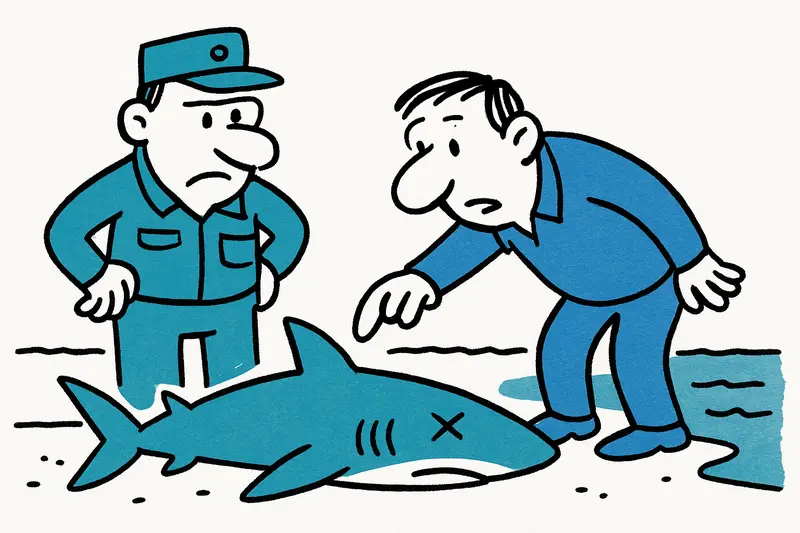
Two large dead sharks were discovered off Calanova. The Guardia Civil and biologists from Palma Aquarium secured the site. Who is responsible — nature or humans?
Mysterious Shark Find Near Calanova: Who Will Clarify the Deaths at Sea?
Late on Tuesday afternoon, emergency teams found two dead sharks off the coast of Calanova. Boats from the Guardia Civil secured the site while marine biologists from the Palma Aquarium initially examined the animals on location and then removed them for further analysis. Beyond the basic report lies a pressing question: why are two comparatively large sharks found dead in the water?
Main question
Was it an accident — entanglement in nets, a natural cause of death — or is human activity behind this, something we see and control too little of?
Critical analysis
Work on site proceeded routinely: cordoning off the area from the sea, taking samples and photos, then transporting the animals. But routine should not hide how little we often actually know. Ducks, seagulls and beachgoers arrive quickly, as do social media videos, as in Dead Shark at the Paseo: A Wake-up Call for Better Coastal Protection in Palma. A proper investigation takes time: laboratory tests, histology, toxicology and experience. Until these results are available, speculation circulates — from net entanglement to deliberate disposal.
Fact: sharks in the Mediterranean regularly come into contact with fishing gear. Commercial fishers are subject to reporting obligations, but observer programs are unevenly distributed, and on land there is often a lack of comprehensive, transparent data on bycatch and disposals. Even when a carcass is found, the cause does not resolve itself automatically: external injuries, internal damage or signs of poisoning must be carefully documented — and that takes time, as the case of pronounced bite marks reported at Playa Can Pere Antoni showed in Dead Shark at Playa Can Pere Antoni: Bite Marks Raise Questions.
What is missing from the public discourse
There is much talk about spectacular sightings, about "big sharks among yachts" or isolated beach finds. Rarely discussed, however, is the perspective of commercial fisheries: how often do captains report bycatch? Which species are affected? How quickly do samples reach laboratories? Equally invisible are the capacities of authorities and scientists: are there standardized protocols for strandings, a central register, sufficiently equipped labs? Recent local incidents add context, as noted in Dead shark on Palma's city beach: a sign of a bigger problem?.
Also little discussed is the question of enforcement: if someone deliberately throws dead animals back into the sea, how would that be proven? And how can we prevent economic pressure — for example related to quotas or market interests — from influencing reporting behavior?
Everyday scene from here
In Cala Major, a few kilometers away, retirees sit on the benches of the Passeig Marítim in the evenings, listen to the waves, occasionally see a patrol boat pass by and whisper about what is happening at sea. The smell of fried fish from a chiringuito mixes with the salt air; children point at the water, older women film with their phones. Scenes like these show: the sea is part of everyday life, and its problems are perceived here not only scientifically but also personally.
Concrete solutions
- Faster, standardized stranding protocols: a shared checklist for the Guardia Civil, environmental authorities and aquarium teams so that every dead animal follows the same investigation procedure. - Observers and reporting incentives: expand fisheries observer coverage, combined with anonymous reporting channels and financial or administrative incentives so bycatch is reported rather than swept under the rug. - Public register: an open database for strandings and finds including species, date, location and preliminary cause of death — creating transparency and comparability. - Local awareness: short information campaigns in ports, fish markets and tourist centers explaining how to handle found animals and why reporting matters. - Strengthen research capacity: rapid tests, sample logistics and laboratories with clear priorities for suspicious cases — so results don't arrive weeks later.
Concise conclusion
The fact that two large sharks were found dead off Calanova is more than a puzzling evening headline. It is a signal: our monitoring and reporting chains are full of holes. We need clearer rules, faster investigations and more transparency — not just for scientific reasons, but because the health of the sea is directly linked to the well-being of the island. Until experts report back, the question remains open: are we facing a problem of fisheries, an environmental issue — or both?
Frequently asked questions
Why were two dead sharks found off Calanova in Mallorca?
How do marine biologists investigate a dead shark found near Mallorca?
Can sharks in the Mediterranean die after getting caught in fishing gear?
What should you do if you find a dead marine animal on a beach in Mallorca?
Are dead sharks in Mallorca a sign of pollution or human activity?
Why does Mallorca need better reporting for marine strandings and bycatch?
What is the role of the Guardia Civil when a shark is found dead near Calanova?
Why do dead sharks worry people in places like Cala Major and Palma?
Similar News

Smoke over the UIB: Who is responsible for the fire on the roof?
On Saturday afternoon a fire broke out on the roof of the Arxiduc Lluís Salvador building at the University of the Balea...

Short Getaway with Sea View: Inmood Aucanada among Spain's Top Hotels for Dinner Breaks
A small hotel on the coast of Alcúdia was highlighted by a Spanish experience platform as particularly suitable for shor...
Cala Pi crowned Mallorca's most beautiful beach: A morning at the rocky cove
The travel portal Holidaycheck praises Cala Pi as Mallorca's most beautiful beach: a narrow, romantic cove, clear water,...
Injured captain, big plans: Germania Mallorca before the away match in Consell
The newly founded FC Germania Mallorca travels to Consell on Saturday. Captain Bastian Müller is out injured, but coach ...
Palma, Palma de Mallorca, Palma‑Mallorca: What is it really about?
The debate over the city's name is more than grammar: it concerns identity, law and branding policy. A sober reality che...
More to explore
Discover more interesting content

Can Cap de Bou

Townhouse Lleo 72
