
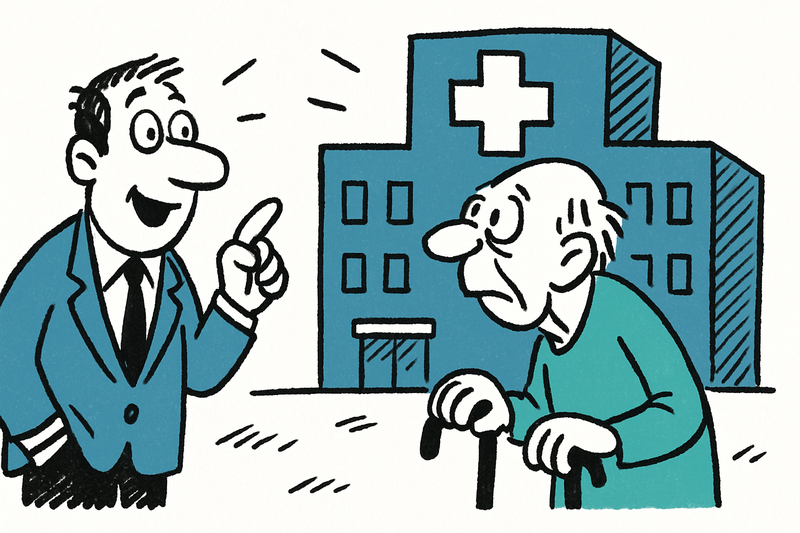
New Hospital in Felanitx: Opportunity with a Catch — What Matters Now
Felanitx is getting a new hospital for older people: €26 million, 100 single rooms, coverage for around 140,000 people. A major opportunity — but construction is only the beginning. Who will later provide staff, transport and networking? A look at gaps and solutions.
A new chapter for Felanitx — but is that enough?
On many days a quiet hum hangs over the Plaça in Felanitx: market sellers call out, the church bells ring, and occasionally you can hear tractors rolling in from the vineyards. Amid these everyday sounds, a loud piece of news has settled in recent weeks: construction of a new €26 million hospital in the east of Mallorca is to begin at the end of this year — with a budget of €26 million and a clear focus on older, chronically ill patients.
The facts at a glance
The project foresees 100 single rooms, intended for rehabilitation and palliative care as well as long-term nursing. The target group is residents from Felanitx and seven surrounding municipalities, a total of about 140,000 people. Construction time: around two years, so the opening will be no earlier than the end of 2027. These are figures that raise hopes — and questions remain.
The open question
The central guiding question is: Will the new facility really close the care gap, or will it remain a well-intentioned building without sufficient operational resources? Construction and equipping with beds are important, but they are only the visible part. Who will staff the rooms with qualified personnel, who will guarantee specialist services in geriatrics, who will secure the operation financially after the first years, as discussed in Felanitx Plans New Long-Term Hospital: Opportunity for Care — or Too Much for the Municipality??
Aspects that are often overlooked
First: Personnel. Mallorca already lacks skilled workers — especially nurses with geriatric training and physiotherapists, palliative care specialists and speech therapists. Second: Connectivity. Felanitx is well populated, but not all municipalities have fast bus connections or medically equipped emergency routes. Third: Long-term financing. The €26 million covers construction; the ongoing costs for staff, therapies and technology are another matter.
What matters now
A hospital is more than walls and beds. For the facility in Felanitx to become a success story, it needs a strategy for operations, recruiting staff and networking. In the short term this means: creating jobs, securing training positions and offering incentives so that young care workers stay. In the medium and long term it needs coordinated cooperation with the island's hospitals, telemedicine services and a well-developed transport network.
Concrete opportunities and solutions
1) Training and retention programs: The Balearic Health Ministry could offer scholarships, housing allowances or further training programs for nurses and therapists. This would strengthen local training paths.
2) Mobile health teams: For smaller communities, mobile rehab and palliative teams that organize home visits and accompany patients after hospital stays are worthwhile.
3) Cooperation instead of competition: Digital networking with the main clinics on Mallorca reduces duplicate examinations and enables telemedicine specialist consultations.
4) Public transport and emergency routes: Improved bus connections and more reliable patient transport are as important as the number of beds.
5) Transparent quality metrics: Open data on occupancy rates, waiting times and staffing ratios builds trust among the population.
What this means for the region
For families in Felanitx the hospital could mean enormous relief: shorter journeys, faster rehabilitation and a local point of contact in palliative situations. Economic effects are also to be expected — new jobs, contracts for local trades during the construction phase and permanent employment in healthcare. But: all of this depends on the operation not being strangled by staff shortages and lack of networking.
A down-to-earth outlook
If the municipality and the Health Ministry work hand in hand, if training paths and transport are improved and if telemedicine solutions are implemented quickly, Felanitx can gain more than a modern building: a lively care center that complements rather than overpowers the sound of the Plaça. If not, it will remain a beautiful building with high symbolic value — and the echo of that will be heard sooner than the first bell chimes in the morning.
Conclusion: The planned new building is a major opportunity for eastern Mallorca. But the start of construction is only the first step. What will be decisive is how the region shapes the framework conditions now: personnel policy, networking and mobility are the keys for the hospital to really become an asset for Felanitx.
Frequently asked questions
What is planned for the new hospital in Felanitx?
When will the new hospital in Felanitx open?
Who will the new hospital in Felanitx serve?
Will the new hospital in Felanitx solve the care shortage in Mallorca’s east?
What are the main challenges for the Felanitx hospital project?
Could the new Felanitx hospital create jobs in eastern Mallorca?
Will public transport be important for the new hospital in Felanitx?
What would make the new hospital in Felanitx work well in the long term?
Similar News

Masked Images, Real Panic: When Social Media Aesthetics Alarm Neighbors
Five German content creators filmed on a recently vacated detention site using deceptively realistic props. The result: ...
Why the Striped Breams in Cala Pí Should Be a Wake-up Call
Once again bathers in Cala Pí were surrounded while swimming by small, nippy fish — some wounds bled. Time for clear rul...

Daily from New York: How Palma's Air Traffic Is Growing — and What Must Change
United will increase the Newark–Palma service to daily flights in 2027 (Boeing, 231 seats). Strong tourist numbers clash...
When Love Ends in Shards: Destruction in Son Vida and the Questions That Remain
In Son Vida a relationship dispute escalated: a woman destroyed furniture in a luxury villa, later pressed a panic butto...
Who Bears the Burden? Mallorca Between Tenant Protection and Landlord Fears
Madrid's new housing decrees strengthen tenant rights — but on Mallorca concern is growing: will the law drive small lan...
More to explore
Discover more interesting content

Can Cap de Bou

Townhouse Lleo 72
