
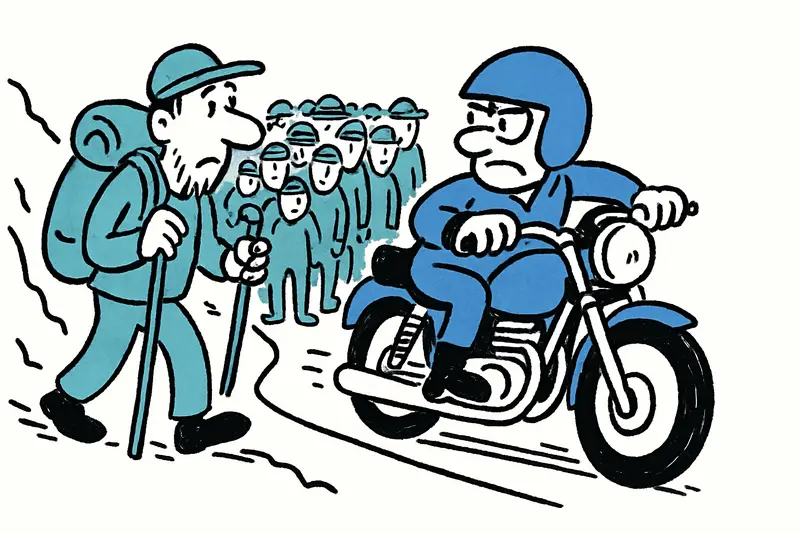
Night Pilgrims and Motorcycle Ride: When Festive Spirit Meets Traffic Bottlenecks
Around 5,000 pilgrims and a motorcycle ride are causing numerous road closures in Palma and the Serra de Tramuntana today. Why festive atmosphere is not the same as safety — and how it could be done better.
Night Pilgrims and Motorcycle Ride: When Festive Spirit Meets Traffic Bottlenecks
Tonight Mallorca will be moving differently: around 5,000 people are marching to Lluc, as reported in Pilgrim March to Lluc: Tradition Meets Traffic Chaos – How Does That Fit Together?, and at the same time a motorcycle ride crosses the Paseo Marítimo in Palma. The question that arises is simple and important: how can tradition, leisure activities and the everyday mobility of the island's residents be better reconciled, without villages and narrow mountain passes becoming bottlenecks?
Narrow Roads, Long Chains of Lights
The nocturnal pilgrimage leads over narrow mountain passes, tight hairpin bends and viewpoints in the Serra de Tramuntana, as described in Night Pilgrimage to Lluc: Tradition, Traffic and the Exposed Problems. More than 60 sections of island roads will be temporarily closed or reduced to single-lane traffic; particularly affected are the access roads to Escorca, the route to the Lluc hermitage and various stretches of the MA-10. Anyone driving towards the mountains this evening must expect jams, detours and unexpected holding loops — and the surprisingly loud rustle when groups with flashlights trudge through pine forests.
In Palma, from 4:30 pm the motorcycle ride adds to the situation: the Paseo Marítimo in front of the cathedral is closed in the direction of Andratx. The harbor promenade, engine noise and honking taxis together form a distinct acoustic panorama — familiar to residents, a test of patience for commuters.
The Less Visible Problems
Apart from traffic jams there are aspects that rarely make the headlines: parking chaos in small villages, blocked driveways for residents and the difficulty for emergency vehicles to reach accident or emergency sites quickly. Emergency services and the police are present, but especially in the dark sections of the Tramuntana there is often a lack of sufficient lighting and safe escape routes. Those who set out without a first aid kit and without warm clothing quickly underestimate the temperature drop around midnight and the risk of circulatory problems or slipping on wet rock.
A neighbor from Sóller dryly describes the situation: "The chain of lights looks beautiful from the terrace, but afterwards parking is a complete mess." Such voices show: festive mood and everyday life collide directly.
Concrete Approaches Instead of Feelings of Powerlessness
An outright ban would be pointless and politically difficult to enforce — the events have tradition and bring life to the villages. But there are practical solutions that can reduce the burden:
Better traffic coordination: staggered start times for pilgrim groups and clear priority signs for rescue routes. If groups start at different times, jams on narrow sections are reduced.
Shuttle concepts: shuttle buses from central parking areas (e.g. in Sóller or Inca) directly to starting points could reduce parking pressure in small towns and ease traffic on the MA-10.
Real-time communication: a combined information loop of signage, social media updates and radio announcements helps commuters choose alternative routes. The island council publishes information — it would only need to be more visible and earlier, as indicated by Night Pilgrimage: "Lluc a Peu" Connects Mallorca's Communities.
Safety infrastructure: more mobile first-aid points, highly visible light markers on dark paths and additional marshals who keep emergency access routes clear. Offering first-aid kits at information stands would also not be a huge effort.
Regulation of motorized events: for motorcycle rides on narrow coastal roads, speed limits and, if necessary, temporary closure windows should be considered to avoid peak times coinciding with pilgrim movements.
Why This Helps in Everyday Life
These measures would not only help this evening but would make the island more resilient in the long term against events that strain the traffic network. Better planning protects residents, facilitates rescue operations and preserves the quality of life in the villages — without destroying the festive atmosphere. Anyone who has once felt the cool Tramuntana wind at night and seen the chain of lights of the pilgrims knows: the atmosphere is magical. But magic and organizational chaos are two different things.
Practical Tips for Today
If you are on the move today: allow more time, avoid known bottlenecks, check the island council's notices before setting off and use public transport if possible. Cyclists and walkers should wear highly visible clothing and carry a decent flashlight. If you prefer peace and quiet: travel later or enjoy the evening at home — the island isn't going anywhere.
Finally, an appeal to all parties: a little consideration, some clear signs and discreet shuttle buses can turn an annoying night into a memory worth sharing — without annoyed residents and hectic rescue drives in the background.
Frequently asked questions
Will there be traffic delays in Mallorca tonight because of the Lluc pilgrimage and the motorcycle ride in Palma?
What roads in Mallorca are most affected by the night pilgrimage to Lluc?
What is the weather and temperature like for a night walk in the Tramuntana, Mallorca?
Is it safe to drive to Lluc in Mallorca during the pilgrimage at night?
How does the motorcycle ride affect traffic in Palma, Mallorca?
Where can I park if I’m going to the Lluc pilgrimage in Mallorca?
What should I bring for a night pilgrimage in Mallorca?
How can I check road updates for Mallorca events like the Lluc march?
Similar News
Failed before the first flight: How Fischer Air's plans for Palma were ground down
Announced routes, repeated postponements and now apparent insolvency: Why the Fischer Air project for Mallorca is not me...
Seconds in the Water: 19-year-old Fights Her Way Out of Flooded Car in Palma
A 19-year-old managed to rescue herself from her half-submerged car after sliding under the Verge de Lluc underpass. Res...

Between Dream and Reality: Thorsten Legat and the Challenges of FC Germania Mallorca
The former Bundesliga pro has assembled a colorful squad in a short time. But how realistic is the grand plan for promot...
Arrest warrant at check-in: Why two travelers at Cologne/Bonn Airport suddenly had to pay
At Cologne/Bonn Airport, federal police in mid-September found two German passengers subject to enforcement measures. Bo...
Balearic Islands as a New Route: A Reality Check on Rising Boat Migration
For the first time the Balearic Islands are ahead of the Canary Islands in boat arrivals. What do the numbers really say...
More to explore
Discover more interesting content

Can Cap de Bou

Townhouse Lleo 72
