
Nightly Patrols in Son Guells: When Neighbors Take Over the Streets
Nightly Patrols in Son Guells: When Neighbors Take Over the Streets
In Palma's Son Guells, residents have begun patrolling in groups at night: car thefts, attempted squatting and open drug problems have driven the neighborhood to self-help. What does this say about safety and the authorities' response — and what real solutions exist?
Nightly patrols in Son Guells: When neighbors take over the streets
Why residents patrol at night — and what follows?
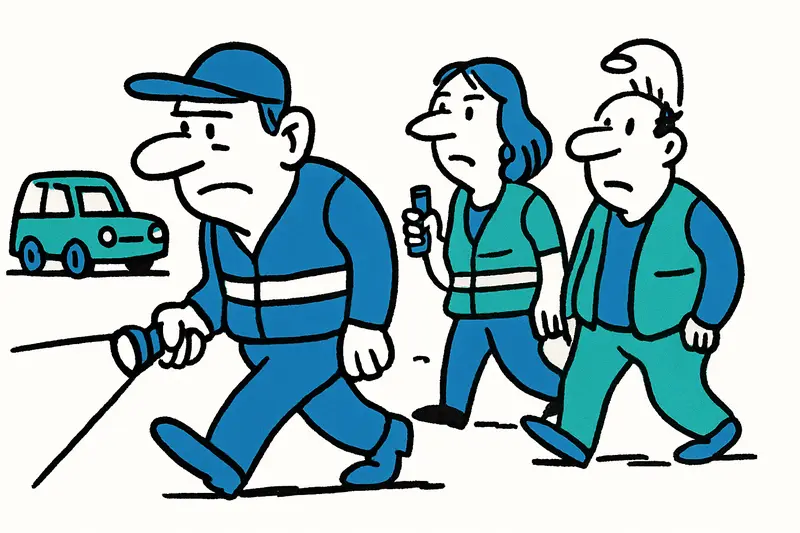
In Son Guells, at the end of the long access road Carrer de Manacor, neighbors have been out on foot and in their own cars in recent days. They coordinate via WhatsApp, wear reflective vests, and some carry pepper spray. The action began last weekend after numerous residents felt that break-ins of cars, attempted squatting and assaults had increased. According to the neighborhood association, there were already nights in which apparently no thefts were recorded — a success many see as a fragile victory.
Key question: What happens when local people close the security gap because they believe the state is doing too little? (see After Arrest in s'Arenal: Police Are Not Enough — Social Solutions Needed). This question is not only moral, it is legally sensitive and socially charged. Civic initiative can help — or end up in the grey area of vigilantism and liability risks.
In the short term the uprising is very direct: many residents report visible drug use on the street, occasional assaults and repeated break-ins of parked vehicles. The presence of numerous motorhomes additionally burdens the neighborhood: complaints range from illegal water connections to intimidation and alleged attempts to occupy vacant apartments. The sum of these problems has changed public space in Son Guells — for some the street no longer feels safe, neither during the day nor at night, an experience also documented in Sleepless Nights in Nou Llevant: When the Street Keeps You Awake.
The critical analysis: neighborhood patrols are a warning signal for failures on several levels. First, the purely local perspective points to an imbalance between police resources and the need on site. Second, the situation reveals a lack of low-threshold social services for people with drug problems: visible consumption on the street is a symptom, not an isolated offense. Third, apparently coordinated municipal measures against the misuse of public space are missing — from checks on illegal water connections to clear rules for stationary motorhomes.
What has so far been lacking in public debate: hard numbers on deployment figures, response times and reported offenses in Son Guells. Without these data much remains a matter of feeling. Media coverage such as Nighttime Break-ins in Palma: Arrest Stops the Spree — But How Safe Is the Old Town Really? illustrates how isolated incidents can shape perceptions. Also little considered is the issue of liability: when neighbors intervene, who bears legal responsibility in case of escalation? And finally: the psychological burden on residents is hardly discussed — the fear of going outside at night is a real intrusion on quality of life.
An everyday scene: It is just after midnight, the streetlights flood the curbstones with yellowish light, a moped slowly rides down Carrer de Manacor. A WhatsApp group keeps pinging with a location; two neighbors get out, quietly walk the small side streets, whisper, notice a parked van with its door open — they pull back, call the local neighborhood center and document what they saw. Dogs bark, a radio plays somewhere, and a sleeping bag lies on a park bench. This mix of the mundane and the unsettling is what people here have to cope with.
Concrete solutions: in the short term, citizen patrols should be integrated into a legally secure framework. That means: naming police contact persons, agreeing clear rules on keeping distance and avoiding conflicts, offering de-escalation and data protection training, and establishing fixed reporting channels so that suspicions do not fizzle out in a group chat. Technically, better lighting, staggered garage locks, lockable bike boxes and targeted checks on water connections help.
In the medium to long term, more social work is needed in the neighborhood: low-threshold services for people with addictions, mobile support teams and prevention work in schools. The city administration can provide short-term relief with targeted measures against illegal motorhome parking and by ensuring adequate park safety. A transparent data basis is also important: regularly published statistics on crime trends, response times and deployed resources build trust and enable a fact-based discussion.
What residents can do themselves without overstepping legal boundaries: structured neighborhood cooperation, clear documentation of incidents, jointly buying secure locks and lighting solutions, and forming an independent contact group that acts as an interface between neighbors, police and the town hall. Such networks not only protect property, they also strengthen community spirit and collective resilience.
Punchy conclusion: the nightly patrols in Son Guells are a warning sign. They show commitment and courage — but also that the existing provision of security and social work is insufficient for some neighborhoods. If politicians and authorities do not seriously engage in dialogue and take concrete steps, there is a risk that self-organized vigilance will become a risky substitute for professional help. A sustainable solution requires cooperation: trained neighborhood structures, clear legal frameworks and a tangible political programme that makes public spaces safe and liveable again.
Those who act now prevent people from roaming Palma at night with torches and pepper spray — and ensure that safety here is not left to chance.
Frequently asked questions
Why are residents in Son Guells patrolling the streets at night?
Is it legal for neighbors in Mallorca to organize their own patrols?
What problems are residents reporting in Son Guells, Palma?
What can Mallorca residents do if they feel unsafe in their neighborhood?
What role does social work play in problems like those in Son Guells?
Are there reliable crime figures for Son Guells in Palma?
Why are motorhomes becoming part of the conflict in Son Guells?
What long-term solutions are suggested for safer streets in Mallorca neighborhoods?
Similar News
More water than last year: Mallorca's reservoirs breathe easier
September rain refilled the Tramuntana's reserves: overall fill around 35 percent, Cúber at 40.42 percent, Gorg Blau at ...
Three Luxury Hotels in Banyalbufar: Lots of Money, Many Questions
A Danish investor plans three exclusive accommodations in Banyalbufar — including the historic Son Valentí. The announce...
2.1 tonnes of cocaine on sailing yacht off Spain's coast – a reality check for the coastguard
A 14-metre yacht was seized with 2.1 tonnes of cocaine. Who monitors the ports, how does the international hunt succeed ...
Heat Bonus in Mallorca: 100 Euros Extra for Outdoor Staff at MarSenses
MarSenses pays employees who worked outdoors in August an extra €100 as recognition. Lighter uniforms, reduced hours for...
Renovating in Mallorca: What You Really Can Do Without Neighbour Consent
Many think they can do whatever they want in their apartment. That's partly true — but only as long as structural elemen...
More to explore
Discover more interesting content

Can Cap de Bou

Townhouse Lleo 72
