
One Month Waiting Time: Why Mallorca's Auto Repair Shops Are Overloaded
One Month Waiting Time: Why Mallorca's Auto Repair Shops Are Overloaded
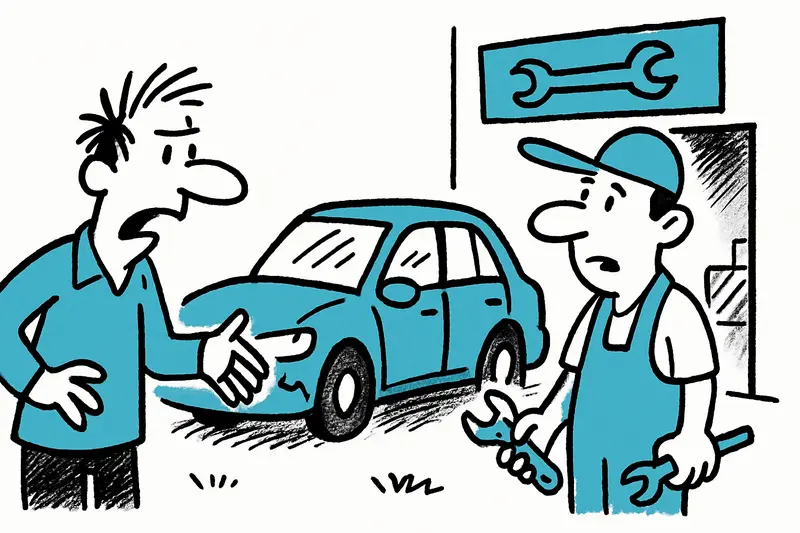
Anyone looking for a quick appointment at an auto repair shop in Mallorca often waits weeks. Key question: Why are the workshops so overloaded — and what is missing from the public discourse?
One Month Waiting Time: Why Mallorca's Auto Repair Shops Are Overloaded
Key question: Why do islanders and commuters have to wait for repairs even though the roads are full of cars?
If you stroll down Avinguda Jaume III one morning, you hear more than the clatter of plates in cafés: from a side street come metallic noises, the smell of oil mixes with fresh rain. In front of a small workshop, a car with flaking paint has been parked on the street for days — the owner has an appointment in three weeks. This is not an isolated case. Local reporting has covered related pressures at inspection stations, for example Less Waiting at the TÜV: Four Weekends, 4,000 Extra Appointments — Is That Enough to Get Below 15 Days?.
According to the industry association ABERAN, the Balearic Islands lack more than 1,000 automotive mechanics; around 400 workshops are organized in the association. The result is noticeable: short-term appointments are scarce, simple repairs are postponed for two weeks, and complex jobs for up to a month. At the same time, the number of older vehicles that require parts more often is increasing. All of this leads to a practical backlog in the garages and to cars standing on public areas for days.
The bottlenecks have several causes. First: a shortage of new talent. Young people leave vocational schools but need additional training time in workshops. Mandatory internships are easier to organize in large dealership groups; small businesses therefore lose apprentices. Second: market shift. Larger dealers concentrate training capacities and attract applicants, while independent workshops cannot retain skilled staff. Third: material and cost factors. Spare parts are becoming more expensive and are not always quickly available; operating expenses rise while profit margins remain tight. As a result, workshops often appear more expensive, even though their margins are narrow. Closures of inspection centres have also exacerbated bottlenecks, notably Vehicle inspection in Son Castelló closed for three months – who bears the gap?.
A critical analysis must ask: why doesn't local politics respond more precisely? Debates often focus on tourist numbers and hotels, while structural problems of the trades receive less attention. Rarely discussed are questions about storage space for defective vehicles, municipal coordination of parts logistics, or flexible support models for micro-enterprises that want to train apprentices.
What is missing in the public discourse is the connection between transport policy and labor market policy. If more people live in rural areas and commute, the network of small workshops in the communities needs relief — through training, but also through targeted infrastructure measures: parking spaces for waiting vehicles, collective orders from parts suppliers, and simplified administration for foreign skilled workers. Related reporting has also shown how driver and licence shortages affect services, see New ambulances, empty seats: How a drivers license shortage is slowing Mallorca's emergency services.
Everyday scene: At the market in Santa Catalina a mother discusses with her son why the 12-year-old car hasn't started for days. The boy scrolls on his phone, sees forum posts about long workshop waiting times and comments dryly: "That's normal here in winter." I hear such conversations often in cafés and at petrol stations; they show that the problem hits household budgets, because taking the bus is not always an alternative.
Concrete approaches can be formulated without making grand demands. Proposals that could work locally include:
Targeted training initiative: Support small workshops with subsidies for practical training places so that more mandatory internships can take place outside large dealers. A cooperation program between vocational schools and a network of small businesses would be conceivable.
Recruitment and debureaucratization: Faster recognition of foreign qualifications and simplified residence/work permits could alleviate the skills shortage in the short term. Accompanying measures: German, Catalan and Spanish language courses for employees, funded through support programs.
Logistics and parts management: Municipal shared warehouses or regional bulk orders by small businesses could reduce costs and shorten delivery times. Organized either through cooperatives or purchasing cooperations.
Intermediate storage for defective vehicles: Municipalities could provide spaces for temporarily parking cars in need of repair to relieve pressure on residents' parking and avoid fines disputes.
Promotion of mobile services: Subsidies for mobile mechanic teams that carry out simple repairs on site would take pressure off stationary workshops, especially in rural areas.
These measures do not require a miracle of funding, but they do require coordinated decisions between the island administration, town halls, vocational schools and trade associations. What matters is: those who adjust small levers today prevent bigger problems on the road tomorrow.
Conclusion: The empty slots in the calendar are not a natural event, but the result of structural problems — training gaps, logistics shortages and shifted market mechanisms. If the islands do not start to support the trades more systematically and reduce bureaucracy, engines will stop and residents will be left with lost time and money. A money problem? Yes. But above all an organizational problem.
Frequently asked questions
Why are car repair shops in Mallorca so busy right now?
How long is the waiting time for car repairs in Mallorca?
Why do car repairs take longer in Mallorca than many people expect?
What should I do if my car has to wait for repair in Mallorca?
Are spare parts harder to get for cars in Mallorca?
Why are older cars a bigger problem for workshops in Mallorca?
Can mobile mechanics help with repair delays in Mallorca?
Which areas in Mallorca are most affected by car repair bottlenecks?
Similar News
Are the Balearic Islands the Southern Border of Europe? A Reality Check on Immigration
The Balearic Islands are again calling for EU aid after a sharp rise in arrivals by sea. Conflicting priorities between ...

"Expensive chaos" and many open questions: What clients can do when a lawyer suddenly stops responding
Several clients complain that a well-known German lawyer in Mallorca has been unreachable for months. Key question: What...

TV tip: 'The Last Problem' — Mallorca as the setting of a classic crime
A classic whodunit on Mallorca: A new miniseries set in spring 1959 brings storm, an isolated hotel and a dense web of s...

Nipping Sea Creatures: Why Bathers in Cala Major and Elsewhere Should Be Cautious
In Cala Major, bathers have reported being nipped by small fish. What is behind it, how can problems be avoided — and wh...

Forced eviction in Santa Catalina: When a 65-year-old slept in her car and showered on the beach — a question of responsibility
The story of Pilar López from Santa Catalina represents a problem affecting many Mallorcans: How can an island with a bo...
More to explore
Discover more interesting content

Can Cap de Bou

Townhouse Lleo 72
