
Education Ranking 2026: Only one Mallorca school in Spain's Top 50 — what does that say about the island?
Education Ranking 2026: Only one Mallorca school in Spain's Top 50 — what does that say about the island?
The current ranking by the Micole platform lists only one school from Mallorca among Spain's top 50. Time for a reality check: which conclusions are justified, what goes unnoticed — and how could the island respond?
Education Ranking 2026: Only one Mallorca school in Spain's Top 50 — what does that say about the island?
Guiding question: Is Mallorca losing educational visibility — or is there more to it?
The platform Micole, founded in 2019 and publishing an annual list of Spain's best schools, lists only one institution from our island in the top 50 in 2026: the Agora Portals International School in Calvià (rank 47). Last year, two Mallorca schools were still in the top 100. At first glance this sounds like a setback. But what exactly does this ranking mean for students, parents and teachers on the island?
Critical analysis: Rankings measure something — but not everything. According to Micole's own statements, it evaluates academic results, facilities, community satisfaction, inclusion and institutional quality. This provides a useful overview, but schools are complex organizations: the index weights certain indicators that private, internationally oriented institutions can meet more easily. This explains why private schools from large cities often dominate; they frequently have more resources, specialized staff or an international curriculum like the International Baccalaureate, which Agora Portals offers. This concentration of wealth is reflected in coverage such as Once mallorquines en el Top 100 de España: lo que la lista realmente revela sobre la isla.
What is missing from the public debate: The discussion quickly reduces to “better” or “worse”. Three perspectives are missing: first, the regional distribution of opportunities — rural and urban schools face different challenges, as explored in Who Shapes Mallorca's Streets? A Reality Check on Island Demographics. Second: what role do social mobility and equal opportunity play? A top ranking of an expensive private school says little about the overall system. Third, it is rarely asked whether the evaluation logic reflects long-term educational goals, such as vocational education, social learning or local needs.
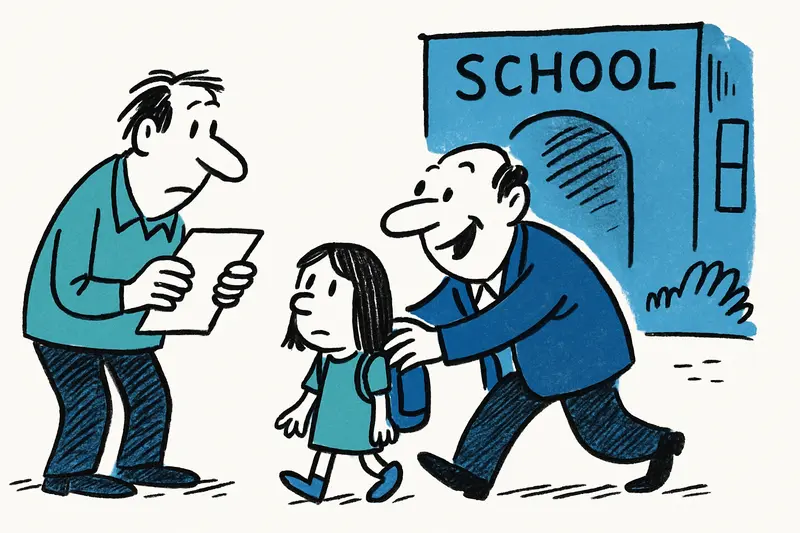
An everyday scene from Mallorca: On a rainy morning at Passeig Mallorca I hear the squeak of school buses, parents with umbrellas crowd at the traffic light, children argue about math homework. In Portals, parents see their children off in front of large glass facades, multilingual conversations mix with the smell of freshly ground coffee, echoing Mallorca's status as a culinary destination. Both images belong to reality — and both need different answers.
Concrete solutions: Instead of only lamenting rankings, policymakers and school communities should act concretely. Proposals that can be implemented quickly:
1) Transparency of indicators: The Balearic government should publish its own public dashboards with comparative data — not only results, but also resources, teacher-student ratios and special educational needs.
2) Steering investments purposefully: More funds for all-day programmes, digital equipment and training in schools outside tourist areas. Small schools in the island's interior often need different support than urban institutions.
3) Promote cooperation: Universities on the mainland and research institutions should form partnerships with Mallorcan schools (teacher training, internships, joint projects), especially in STEM fields where Agora Portals has strengths.
4) Rethink attitude towards private schools: Public-private partnerships can bring useful impetus, but must not lead to a parallel society. Grants and scholarships for high-achieving but financially disadvantaged students could strengthen social mobility in the long term.
5) Regional educational development: A roundtable with teachers, parents, municipal representatives and the Balearic Ministry of Education should formulate binding goals for the next five years — aligned with the island's labour market needs (crafts, tourism innovation, sustainable agriculture).
What experts and parents should ask: Which dimensions of a good school are missing in rankings? How do we measure life skills, mental health and employability? And how do we create pathways for good practices from private schools to be transferred to public institutions?
Concise conclusion: A single ranking entry is not a verdict on Mallorca's entire school system. It is, however, a warning signal: if visibility in national lists shrinks, it should awaken — not resign. We need transparency, smart investments and above all the courage to promote local solutions. Otherwise we will be left with beautiful school brochures while everyday classes on the island struggle.
And at the end of this rainy afternoon one image remains: a teacher in Palma folds his jacket, looks at the class list and goes through the blackboard. If the system supports him, a hundred children benefit. That is the measure that counts.
Frequently asked questions
How should Mallorca parents read school rankings like Micole?
Why is only one Mallorca school in Spain's top 50 for 2026?
Is a private international school in Mallorca always better than a public school?
What should parents in Mallorca look for beyond school rankings?
What makes Agora Portals International School in Calvià stand out?
Do school rankings reflect educational quality in rural Mallorca?
How can Mallorca improve education without focusing only on rankings?
What does the Mallorca school ranking say about equality of opportunity?
Similar News
Injured captain, big plans: Germania Mallorca before the away match in Consell
The newly founded FC Germania Mallorca travels to Consell on Saturday. Captain Bastian Müller is out injured, but coach ...
Palma, Palma de Mallorca, Palma‑Mallorca: What is it really about?
The debate over the city's name is more than grammar: it concerns identity, law and branding policy. A sober reality che...
Warning to Bathers: Nipping Fish in Cala Major and Other Coves — a Reality Check
In Cala Major and several beaches around Mallorca, bathers report painful “nips”. Who are the animals, why are they gett...

Rental Car Theft in El Arenal: What This Incident Reveals About Our Gaps
A teenager steals a running rental car in El Arenal, flees on foot, climbs over walls and is caught by the Guardia Civil...
Red Rope in Palma's Library: What Helps Against Selfie Tourism — and What's Missing
Palma's city library cordoned off an area with a red rope to keep selfie tourism away from reading and working activitie...
More to explore
Discover more interesting content

Can Cap de Bou

Townhouse Lleo 72
