
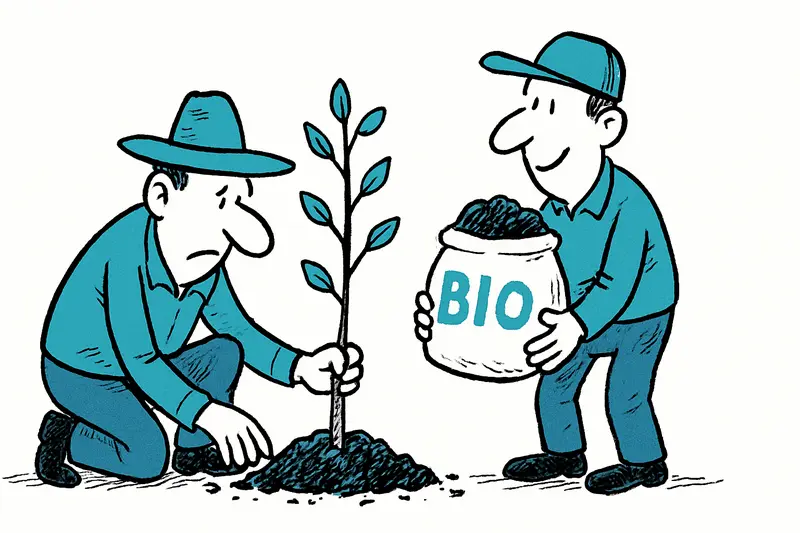
56 organic fincas plant over 2,400 new fruit trees – "Mallorca en Fruit" launches Round 3
56 organic fincas plant over 2,400 new fruit trees – "Mallorca en Fruit" launches Round 3
56 organic fincas have planted more than 2,400 trees in two years — mainly olives, carob and almonds. The "Mallorca en Fruit" project (APAEMA) enters its third round: organic fincas can apply again for funding (€30 per tree).
56 organic fincas plant over 2,400 new fruit trees – "Mallorca en Fruit" launches Round 3
More green on the fincas, more fruit for the island
In the early morning, when the road from Inca towards Sineu is still covered in the haze of the night and a tractor is turning over the first field, you see them more often now: small groups of freshly planted olive trees and young almond saplings, protected with stakes and nets. 56 organic fincas on Mallorca have together planted more than 2,400 new fruit trees over the past two years, themes also discussed in Fincas, not Deckchairs: Mallorca from Plant to Plate. The project is called "Mallorca en Fruit" and is run by APAEMA; it is financially supported by the Mallorca Preservation Foundation.
What's behind it? Most of the trees planted are olive trees, followed by carob trees (cerdenya) and almond trees. For many organic farms these are not merely ornamental plantings: the trees fit into the island's typical agricultural structure, strengthen soils and offer long-term income and shade for livestock or cover crops.
The good news for those interested in agriculture is: the program is starting its third round. Organic fincas can apply again for funding – €30 per planted tree are provided as support. For smaller farms this can make the difference when deciding to convert a field strip, green a dry embankment or carry out an initial planting after a recent dry spell.
Why is this important for Mallorca? In the lanes of Petra and on a walk through Felanitx it is easy to notice: the island needs more resilient greenery. More trees mean less erosion, better water retention in the soil and additional habitat for insects and birds. Olives and almonds are traditional crops here; carob trees are resilient to heat and drought and therefore suit the Mediterranean climate well, a topic also discussed in Emergency in Mallorca: Why Olive Trees Are Suddenly Banned — and Whether That's Enough. This local need is also reflected in municipal actions such as Capdepera launches comprehensive plan to refresh its tree stock.
A simple everyday scene makes this tangible: on the village square an older farmer sits with a cup of café con leche, looks at the young seedlings by the entrance to his finca and says quietly: "This will provide work for the family again in a few years." It's not a big promise, more a practical calculation – and that is exactly what makes the project valuable locally.
The program's structure is pragmatic: organic farms register their areas, receive support for planting and partly for material costs, and the financial link of €30 per tree lowers the initial hurdle. For many farms this is the necessary push to make areas usable again and to build climate resilience in the long term.
What does this mean for the coming months? If more plants are set now, you will see more care measures in the rural areas in spring: irrigation rings, wind protection and the first pruning measures on young olive trees. For the villages this also means a slowly growing attractiveness for small direct marketers and farm shops that can sell their fruit directly from the farm.
As a little inspiration: if you run an organic finca or know someone who does, take a look at APAEMA's calls for proposals. It is not a spectacular large-scale construction site that is being created here, but a quiet, down-to-earth contribution to the island's resilience – one that you will recognize in a few years in the trees and full baskets.
From the perspective of a walker or cyclist on Mallorca's country roads the feeling is simple and soothing: more trees, more shade, and on hot days a little less dust in the air. No big words, but with an eye to the next generations.
Frequently asked questions
What is Mallorca en Fruit and what does it do for organic farms?
How many new fruit trees have been planted on Mallorca so far?
Why are olive, carob and almond trees being planted on Mallorca?
Can organic fincas in Mallorca still apply for tree planting support?
Why do more trees matter for Mallorca’s countryside?
What happens after young fruit trees are planted on Mallorca?
Where on Mallorca is the impact of new tree planting easiest to notice?
How can small Mallorca farms benefit from planting more trees?
Similar News
Injured captain, big plans: Germania Mallorca before the away match in Consell
The newly founded FC Germania Mallorca travels to Consell on Saturday. Captain Bastian Müller is out injured, but coach ...
Palma, Palma de Mallorca, Palma‑Mallorca: What is it really about?
The debate over the city's name is more than grammar: it concerns identity, law and branding policy. A sober reality che...
Warning to Bathers: Nipping Fish in Cala Major and Other Coves — a Reality Check
In Cala Major and several beaches around Mallorca, bathers report painful “nips”. Who are the animals, why are they gett...

Rental Car Theft in El Arenal: What This Incident Reveals About Our Gaps
A teenager steals a running rental car in El Arenal, flees on foot, climbs over walls and is caught by the Guardia Civil...

Red Rope in Palma's Library: What Helps Against Selfie Tourism — and What's Missing
Palma's city library cordoned off an area with a red rope to keep selfie tourism away from reading and working activitie...
More to explore
Discover more interesting content

Can Cap de Bou

Townhouse Lleo 72
