
Emergency in Mallorca: Why Olive Trees Are Suddenly Banned — and Whether That's Enough
Because of invasive snakes, new import rules now apply to large trees. It's a start — but the key question remains: Are inspections, traps and €2.5 million enough to protect Mallorca's small natural treasures?
Why a ban on large olive trees? The central question
On a morning at the port of Palma the Tramuntana whistles across the deck, seagulls cry, and a dockworker just shrugs: Earlier it was only crates, now animals arrive too. That exact observation alarmed the authorities. The key question is: Are the new time windows, traps and €2.5 million enough to prevent introduced snakes and thus preserve the fragile balance on Mallorca's small islets?
What exactly was decided — and why trees?
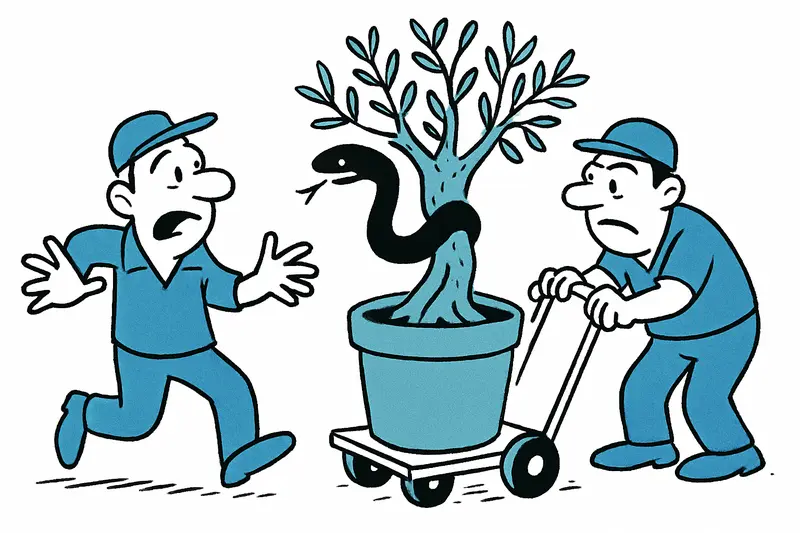
The government has restricted the import of olive trees, carob trees and holm oaks with a trunk circumference over 40 centimeters: outside of designated transport times they may no longer be brought in, as announced in Mallorca stops import of certain trees. The reasoning is practical: thick trunks, hollow roots and large root balls provide hiding places for snakes, geckos or their young. Fewer hiding places should mean fewer stowaways.
More money, more traps, more training — a first defensive line
About €2.5 million has been allocated to the measures. The money bought thousands of trapping devices, mobilized inspection teams and trained port staff. Quays and container yards are now searched more deliberately for signs of reptiles, shipments are photographed, and quarantine rules kick in when something looks suspicious. Surveillance boats patrol small islands, municipalities plan protected enclosures and breeding programs for threatened Balearic lizards.
Why this can only be the beginning — gaps in the system
The measures are sensible, but there are several underappreciated problems: Many plants are not moved through large ports but privately, by ferry or in transit via other islands. A 40-centimeter threshold helps with tree deliveries, but not with smaller potted plants with dense root balls — egg sacs or young animals can hide in them just as well. And while authorities check official landing points strictly, small fishing and pleasure yachts often go unchecked.
Climate change, trade and nurseries: the underestimated drivers
Another factor: milder winters and warmer summers make Mallorca increasingly attractive to subtropical species. At the same time the import of ornamental plants and old olive trees for private gardens is growing — a market where fast deliveries and light controls are often more important than quarantine protocols, as explored in Olives Instead of Concrete: Why a Plantation in Mallorca Is Now More Than a Dream. If nurseries or traders are not required to be certified, the best ban will do little.
What is missing: concrete, practicable solutions
The island needs more than time windows and traps. Practical proposals that should now be discussed:
- Mandatory quarantine and heat treatment: Every larger root ball should be inspected or thermally treated in a defined way before loading. Heat kills eggs and hidden young without poison.
- Certified supply chains: Nurseries and traders must provide proof of origin and inspection records. A simple digital registration at the port would make checks easier.
- Checks at small harbors and marinas too: Mobile teams for yachts and fishing boats, practical training for municipal staff, informed by Orange Alert in Mallorca: Are We Really Prepared?, and rewards for reports from the public.
- Preventive protected zones: For especially sensitive cliffs and rock islets, enclosure and observation zones should be established — including permanent boat posts during the season.
A local view — why this affects every aspect
I remember an early morning at Cala Ratjada, where fishermen with wet hair and strong accents told of an eerie, foreign snake on a boat. Scenes like that are not Hollywood but everyday life on an island whose cooks, gardeners and boatmen know how quickly an ecosystem can tip. If the Balearic lizard disappears from a small rock island, that is not only a loss of species — it changes insect populations, vegetation and ultimately the landscape sounds we love here.
Conclusion: A good start — but eyes and hands must remain
The ban and the budget are the right move, but the answer to our key question is still open. Without further measures in supply chains, more presence in small harbors and close cooperation with nurseries and municipalities the island remains vulnerable. We can set traps and define time windows — but real security needs a lasting culture of vigilance.
If you see anything unusual on beaches, quays or small islands: report it. A short call often helps more than you think.
Frequently asked questions
Why has Mallorca restricted the import of large olive trees?
Can you still bring olive trees to Mallorca?
Are Mallorca's new snake prevention measures enough?
What should I do if I see a snake in Mallorca?
Which trees are affected by the Mallorca import ban?
Why are small harbors and marinas in Mallorca a concern for invasive snakes?
How much money is Mallorca spending on snake prevention?
How do snake threats affect Mallorca's Balearic lizards?
Similar News
Bloody clash in Canòdrom Park: What is missing in addressing violence on Mallorca's streets?
At midday on October 23, an 18-year-old man was critically injured in Canòdrom Park in Palma. The attack raises question...
Palma raises bus fares: Who pays the bill for public transport?
Single tickets rise from €2 to €3, airport trips have a reference price of €4.50. It remains unclear whether residents w...
Palma's New Indoor Pool: Sea View, Sunbeds and Space for Everyone
At Aigua Dolça, near the Paseo Marítimo, Palma has a new municipal indoor pool. For a small fee people can now train, re...
How Four Burglars Emptied Ten Houses with a Simple Trick — and What It Means for Mallorca
Four men used the impressioning technique, posed as delivery workers and accepted two years in prison. A reality check f...
Bundles of Drugs, Containers and Open Questions: A Reality Check for Mallorca
3.3 tonnes of marijuana, 80 kilos hidden in golf-ball vending machines and a 44-year-old German released on conditions i...
More to explore
Discover more interesting content

Can Cap de Bou

Townhouse Lleo 72
