
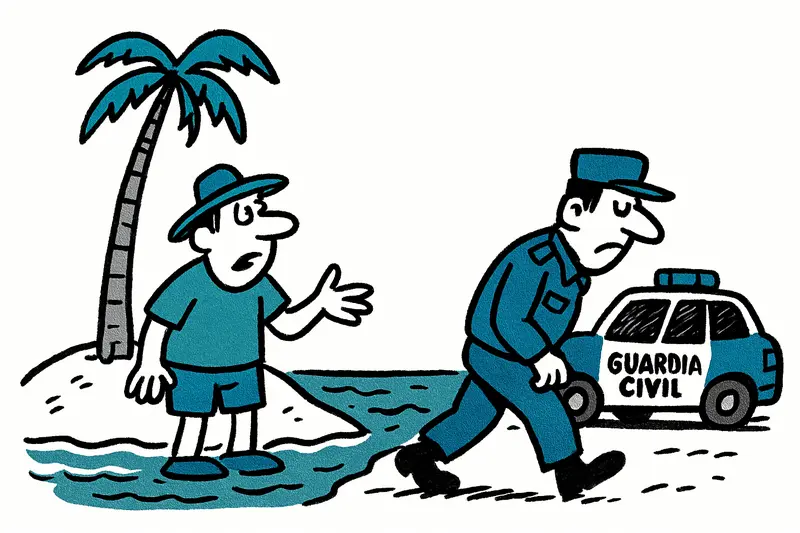
Who protects the island? Why Mallorca's Guardia Civil is losing personnel and what to do now
Who protects the island? Why Mallorca's Guardia Civil is losing personnel and what to do now
Police union JUCIL reports that after a round to fill 165 positions the Balearic Guardia Civil has a net loss of 70 on-duty officers; up to 450 further departures are possible. A reality check with everyday scenes, missing debate points and concrete proposals.
Who protects the island? Why Mallorca's Guardia Civil is losing personnel and what to do now
In Mallorca February hangs more grey over the coves than sunny over Passeig Mallorca, and in the city center you can hear the hum of delivery vans and the occasional creak of a Guardia Civil patrol car. At the same time, the police union JUCIL reports that the recent recruitment round to fill 165 posts across the archipelago did not lead to an increase but to a noticeable outflow: if you count 85 transfers to the mainland against only 15 newly arrived officers, five of whom are obliged to serve a year on the Balearic Islands, the result is a deficit of about 70 officers.
Guiding question
The clear guiding question is: How can Mallorca's security authorities maintain their presence when a personnel measure results in a withdrawal of operational forces and at the same time up to 450 further departures by the end of the year appear possible?
Critical analysis
The raw numbers are alarming and cannot be explained by formal procedures alone. In recent years Mallorca has seen population and tourist figures that especially in coastal towns create additional operational pressure. This operational pressure is reflected in reports such as More than 350 drivers without a driver's license in the Balearic Islands: Why the problem on Mallorca shouldn't exist. At the same time the cost of living and housing prices are rising; many officers can hardly find affordable housing on the island. The island allowance model, which is supposed to regulate supplements, was, according to JUCIL, not designed in its current form to take into account seniority scales or incentives for longer stays. One-off allowances that do not cushion the real extra costs or mobility demands act like a bandage on a gaping wound: soothing in the short term, ineffective in the long term.
What is missing in the public debate
Two aspects have been underexposed in the debates so far: first, the exact calculation for a viable daily service. What staffing capacities does a station in Cala Millor or Port d’Alcúdia really need when seasonal peaks occur? Second, there is a lack of perspective on logistics costs for families: why should an officer with three children and shift duties stay here if finding housing and calculating school costs on the mainland is easier? These everyday items are talked about too little; instead the discussion often revolves around abstract quotas and subsidy amounts.
Everyday scene from Mallorca
An early morning in Palma: a patrol car is parked in front of the island hospital, two colleagues are taking over shifts, the street smells of coffee stalls and the sea. A young officer who has just finished his third night shift says quietly that he has applied for a transfer — not because of the work itself, which he values, but because he cannot find an affordable rental contract for his young family. Such small conversations on the plazas and in the bars are no longer isolated cases; they are indicators that structural problems are reaching everyday life — incidents covered in local reporting, for example Mirador d'es Colomer: Three Arrests — How Safe Are Mallorca's Viewpoints Really?, reinforce this point.
Concrete solutions
The situation cannot be patched up with lip service. Three pragmatic steps could be implemented immediately: first, a transparent, income-related island allowance that also considers seniority levels and thus rewards longer stays. Second, a program for service-related housing: vacant municipal flats, discounted contracts or a housing assistance fund could increase retention. Third, seasonal personnel planning that anticipates peak times — for example through temporary reinforcements during the summer months and flexible shift models that take family responsibilities into account. In addition, negotiations with the Interior Ministry in Madrid should include binding commitments on staffing levels, not just recommendations.
Legal and administrative challenge
From a legal point of view the challenge is to design an island model that is compatible with existing framework agreements while not creating new inequalities. That means: clear, written commitments on pay components, transparent criteria for allowances and a monitoring system that maps departures and reinforcements in real time. Only in this way can waves of transfers be planned and kept under control.
Conclusion
The numbers cited by JUCIL are a wake-up call: personnel gaps do not arise in a vacuum but at crossroads, on night shifts and in family apartments. Recent arrests and investigations, such as Organized watch robbers in the Balearics: Why Mallorca must also stay vigilant, show what is at stake. If the island government and Madrid continue as before, they will open the door to the mainland for many officers. Those who take the security of the Balearic Islands seriously must create concrete incentives, improve living and working conditions and negotiate binding personnel guarantees. Otherwise all that will remain in the end is the sound of a departing patrol car on an empty promenade.
Frequently asked questions
Why is the Guardia Civil losing officers in Mallorca?
How does staff loss affect security in Mallorca?
Is it hard for Guardia Civil officers to find housing in Mallorca?
What would help the Guardia Civil stay in Mallorca longer?
How many Guardia Civil posts are affected in the Balearic Islands?
Why are places like Cala Millor and Port d'Alcúdia mentioned in the staffing debate?
Are seasonal reinforcements used to support police work in Mallorca?
What is the island allowance for Guardia Civil officers in Mallorca?
Similar News

Rental Car Theft in El Arenal: What This Incident Reveals About Our Gaps
A teenager steals a running rental car in El Arenal, flees on foot, climbs over walls and is caught by the Guardia Civil...

Red Rope in Palma's Library: What Helps Against Selfie Tourism — and What's Missing
Palma's city library cordoned off an area with a red rope to keep selfie tourism away from reading and working activitie...

Fort San Carlos: Museum, Harbor Dispute — and a Conflict That Demands Answers
The military museum at Fort San Carlos sits right on Palma's harbor, with unexpectedly quiet rooms filled with cannons a...

Old Town Under Pressure: When a Doorway Becomes a Sleeping and Shower Place
For months a woman has been living with a parasol, a clothes rack and personal belongings next to the social welfare off...

When Shopping Weighs Heavier: Mallorca Demands a Tax Pause on Food and Fuel
Rising prices are putting pressure on households and agriculture. The Balearic Islands are calling for temporary tax rel...
More to explore
Discover more interesting content

Can Cap de Bou

Townhouse Lleo 72
