
Orphaned Apartments in Mallorca: When Heirs Are Unreachable and Homes Stand Empty
Orphaned Apartments in Mallorca: When Heirs Are Unreachable and Homes Stand Empty
More and more apartments in Mallorca remain without reachable heirs. Who pays the community fees, who protects against squatters — and how can municipalities and neighbors respond?
Orphaned Apartments in Mallorca: When Heirs Are Unreachable and Homes Stand Empty
Key question: Who bears responsibility when owners die and the heirs are not reachable — and what consequences does this have for neighborhoods in Mallorca?
In Palma, on a warm morning, you can hear the clinking of coffee cups from the cafés on the Passeig and the distant beeping of a delivery van. In the courtyard of a typical apartment building, the nameplates on the doorbells are faded, and a door has been left unlocked for months. Such scenes are becoming more common: apartments whose owners have died without family members being found. Law firms report that they are specifically searching for heirs and sometimes offer rewards when tips lead to discoveries. The practice is symptomatic of a deeper problem; see When Living Rooms Become Bedrooms: How Mallorca Suffers from a Housing Shortage.
The analysis: Several factors converge. Many deceased owners had lost contact with relatives over the years, either because they moved to Mallorca from the mainland or abroad as young people, or because families have been divided over generations. At the same time, the number of foreign owners is growing, whose relatives often live abroad and know nothing about a house or apartment on the island. When formal inheritance processes do not take effect immediately, properties remain effectively homeless.
This has direct consequences for communities. Owners' associations (comunidades) rely on regular contributions. If payments stop, immediate budget gaps appear: repairs are postponed, insurance gaps emerge, and in extreme situations urgent work cannot be paid for. Neighbors report ongoing problems with rubbish, access, or noise because no one is responsible for the apartment.
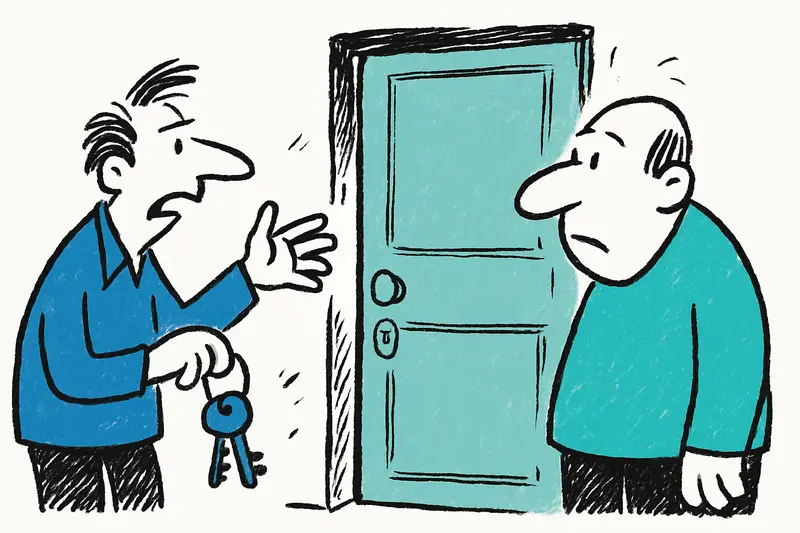
Another aspect: vacant apartments are more vulnerable to squatting. There are reports of attempts to occupy such properties; in individual cases access doors have been bricked up to prevent this, while lawyers search for heirs. Such measures do not solve the underlying problem — they only push it aside temporarily and raise questions about the rule of law and the right to housing. For background on related housing pressures see Mallorca's Streets Are Growing Longer: Why More Than 800 People Are Homeless and Nothing Solves It by Itself.
What is often missing from the public debate: The discussion concentrates on isolated cases and sensational images, not on systemic solutions. There is a lack of clear responsibilities at the municipal level, better interfaces between the cadastre, land registry and the population register (padrón), and comprehensive information services for elderly owners, their notaries and property managers. Municipalities are mostly overwhelmed, because the current law does provide instruments (e.g. entries in the land register, registers for wills), but not automatically an instruction for action regarding orphaned properties. For broader context on the housing market see Why long-term rentals in Mallorca are dwindling — and what could help.
An everyday observation from Palma: On Calle Sant Miquel, residents tend the flowers in front of a house whose mailbox has been overflowing for months. The property management has sent reminders several times; the door remains closed. Neighbor Maria, a pensioner, still cleans every Saturday and says: "Someone has to do it, otherwise the neighborhood looks abandoned." Such small acts of care hold residential quarters together — as long as state and legal gaps do not become larger than neighborly help.
Concrete approaches that should be tackled immediately:
1) Better data matching: Municipalities, land registries and population registers should agree on standardized reconciliation processes so that deaths and ownership changes can be recognized more quickly and responsibilities clarified.
2) Obligation to provide contact information: Notaries, property managers and banks could regularly ask owners to provide emergency contacts or heirs, similar to procedures in the population register.
3) Support for comunidades: Temporary municipal funds or loans could cover gaps in community fees until legal clarification is achieved — combined with recovery rights against the later heirs' estate.
4) Preventive public outreach: Information campaigns in several languages (Spanish, Catalan, English, German) should explain how to arrange inheritance and what consequences orphaned properties can have.
5) Legally secure solutions against squatting: Clearer and faster procedures against illegal occupations combined with social policy offers for people seeking housing, so that responses are not only repressive but also preventive.
For lawyers and genealogists, who currently often research for months, a central, publicly accessible contact point that accepts tips and coordinates cases would also be useful. That would curb the proliferation of reward offers and make search processes more transparent.
Conclusion: Orphaned apartments are not an abstract problem; they show up in neglected staircases, outstanding community bills and the concern of neighbors. In Mallorca the issue is also a question of social responsibility. Short-term measures — from lawyers paying rewards to bricking up as an emergency solution — only fill gaps. Measures become sustainably effective only when administration, law and civic engagement work together. Until that happens, some streets will remain with their doors unattended and the worry that a piece of housing may be lost forever.
Frequently asked questions
What happens in Mallorca when someone dies and no heirs can be found?
Why do empty apartments in Mallorca become a problem for neighbours?
Can vacant apartments in Mallorca be at higher risk of squatting?
How does an empty flat affect a Mallorca comunidad?
What can Mallorca municipalities do about orphaned apartments?
What should Mallorca homeowners do to avoid inheritance problems later?
Why is Mallorca seeing more homes whose heirs live abroad?
Are there practical ways to find heirs for a property in Mallorca?
Similar News
Rental Car Theft in El Arenal: What This Incident Reveals About Our Gaps
A teenager steals a running rental car in El Arenal, flees on foot, climbs over walls and is caught by the Guardia Civil...
Red Rope in Palma's Library: What Helps Against Selfie Tourism — and What's Missing
Palma's city library cordoned off an area with a red rope to keep selfie tourism away from reading and working activitie...
Fort San Carlos: Museum, Harbor Dispute — and a Conflict That Demands Answers
The military museum at Fort San Carlos sits right on Palma's harbor, with unexpectedly quiet rooms filled with cannons a...
Old Town Under Pressure: When a Doorway Becomes a Sleeping and Shower Place
For months a woman has been living with a parasol, a clothes rack and personal belongings next to the social welfare off...
When Shopping Weighs Heavier: Mallorca Demands a Tax Pause on Food and Fuel
Rising prices are putting pressure on households and agriculture. The Balearic Islands are calling for temporary tax rel...
More to explore
Discover more interesting content

Can Cap de Bou

Townhouse Lleo 72
