
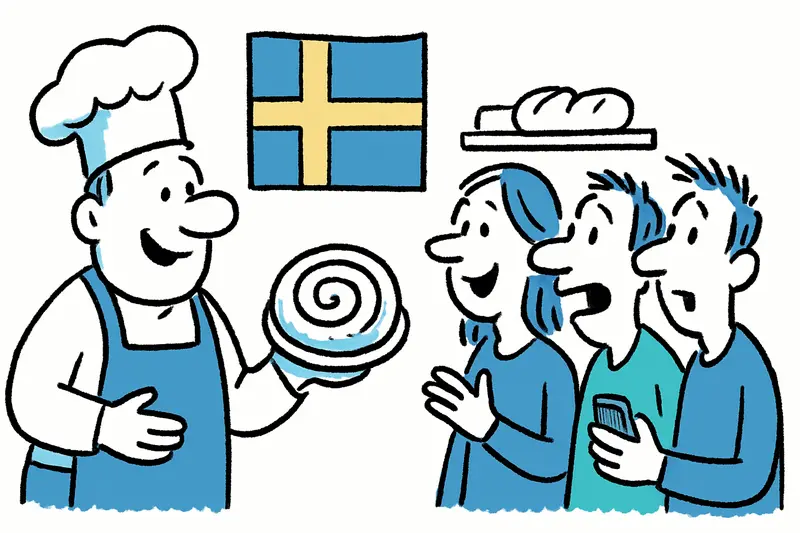
Cinnamon Rolls Instead of Ensaimada? Palma’s Tiny Bakery Draws the World
A Swedish-inspired microbakery near Plaça Coll has climbed high on an international ranking. The crowds show how quickly a scent from Palma can become a digital travel tip.
A scent from Palma, shared far beyond the island
If you walk through the old town at the end of Sindicat Street in the morning, you don’t necessarily need a sign to find the little bakery near Plaça Coll. The scent often does the job: warm pastries, cinnamon, a hint of butter in the air. People wait outside, some with coffee, many already holding their phones at the ready. They sell inside and eat outside—there are no seats in the narrow shop.
The cinnamon rolls look familiar, yet different. Their spiral brings Mallorca’s ensaimada to mind, but their inspiration comes from the north: the bakery has a Swedish influence, as does the pastry. In an international list for 2026, the shop ranks 27th among one hundred pastry shops. It’s a remarkable position for a place where you don’t linger for long, but take your pastry with you into the streets.
A ranking is a signal, not a verdict on taste
Lists like these don’t tell the whole story of a pastry. But they do show how attention is generated today. Someone tries a roll, takes a picture and recommends it online. Others see the image, stop by and share their own impressions. That’s how a small shop can suddenly appear on the global map without needing a café with a large dining room.
There’s something refreshingly tangible about this momentum: it starts not with an abstract concept, but with a product people enjoy eating and recommending. At the same time, rankings shouldn’t be mistaken for a final verdict. They show what’s getting a lot of attention right now. In the end, your own bite decides whether something is truly good—and perhaps whether you’re willing to queue for another roll.
A Nordic spiral in a Mallorcan street
The pastry’s success alongside the ensaimada doesn’t have to be a competition. Palma has long been a place where different culinary traditions find their way into everyday life side by side. A Swedish cinnamon roll doesn’t become Mallorcan because of it, and the ensaimada loses none of its own history. But in a city where shutters open in the morning, delivery vans navigate narrow streets and the first coffee is often drunk on the go, there’s room for both.
The bakery’s name also connects the business with its surroundings. Its words allude to flour and putting it in; its Catalan sound certainly doesn’t feel out of place in Palma among the stone façades. It’s not a grand gesture, just a small sign that a business can come from elsewhere and still become part of the streetscape.
What the buzz means for the neighborhood
The crowds bring life to a corner of the old town and make an independent bakery visible to people who might otherwise have walked past. At the same time, the queue is a very practical part of city life: it takes up space on the pavement, and visitors should take care not to block doorways or the path for others. A quick stop with a pastry in hand works best when the street doesn’t turn into a waiting room.
There’s a useful idea here for other small businesses, but no guaranteed formula. Good products, a distinct character and recommendations can add up to a lot. A viral post can’t be prescribed—and a crowded shop isn’t a business model for everyone. But the story shows that a tiny place doesn’t have to stay small when people enjoy telling others about it.
Palma doesn’t need another copy of a large café terrace to offer new flavors. Sometimes all it takes is a takeaway window, a warm cinnamon roll and a street where its aroma can spread faster than any advertisement. And if you prefer ensaimada, you don’t have to choose: there’s usually room for one more spiral in this city.
Frequently asked questions
Where can I find the cinnamon-roll bakery in Palma's old town?
How is a cinnamon roll different from a Mallorcan ensaimada?
Are cinnamon rolls replacing ensaimadas in Mallorca?
Why has a small bakery in Palma attracted attention from abroad?
Are online pastry rankings a reliable way to choose a bakery in Mallorca?
Can you sit inside the cinnamon-roll bakery near Plaça Coll in Palma?
What should I keep in mind when queuing outside a bakery in Palma's old town?
Does a Swedish-inspired cinnamon roll count as a Mallorcan pastry?
Similar News
Mallorca and the Germans: When Does Tourism Become a Power Factor?
German visitors, second homes and capital are often lumped together in a single debate. But what matters is not the pass...

The Trapeze Monkey Is Back at Palma City Hall
A mechanical monkey from the window of the former Babelín toy shop is swinging around again—this time in the City Hall f...
Mallorca Needs a Tourism Plan—but Not Just from the Hotel Industry’s Perspective
An island-wide tourism strategy sounds sensible. What matters is who writes it, which costs it makes visible, and whethe...
Christmas Flights to Mallorca: Who Pays the Island Premium?
Travel around the holidays becomes a question of cost. But without comparable booking data, it remains unclear whether M...

Sobrasada from Porreres in the Lab: What Six Pigs Can Really Tell Us
A project in Porreres is examining traditionally made sobrasada. The first samples have been taken, but that is not yet ...
More to explore
Discover more interesting content

Can Cap de Bou

Townhouse Lleo 72
