
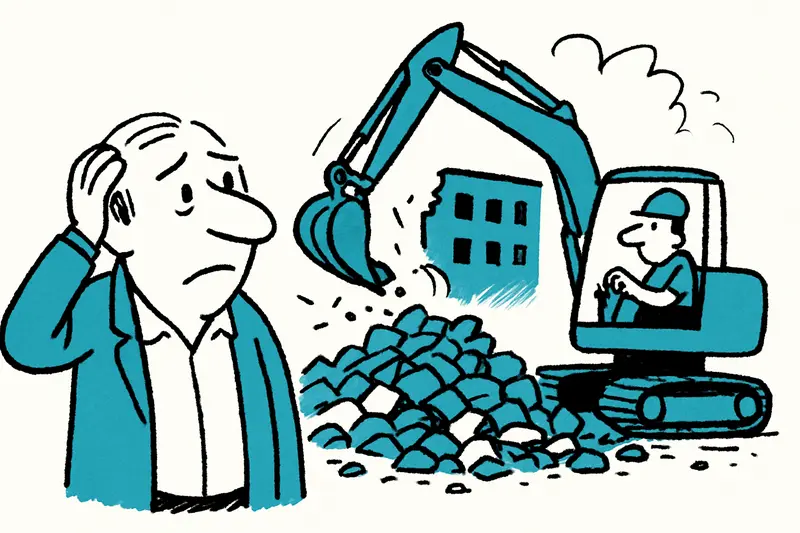
Son Dureta Disappears: End of an Era, Beginning of a Debate
The demolition of the old Son Dureta has begun. 70,000 tons of rubble, asbestos findings and a planned new building for outpatient care raise questions about transparency, the environment and the neighbourhood.
End of an era — and many open questions
When the cranes swung their long arms today on Avenida Gabriel Roca and the sky over Palma looked a little dustier, it became clear: Son Dureta, that grey colossus from the 1950s, has finally gone. For many it is an image from the family album — births, farewells, long corridors. For the city it is a project with practical constraints: 70,000 tonnes of construction debris, asbestos discoveries and a multitude of permit procedures. The central question remains: How will Palma manage the transition from demolition to sensible, transparent replanning?
70,000 tonnes of rubble, asbestos and the slowness of bureaucracy
The number hits like a blow: around 70,000 tonnes of material that now have to be transported away. Trucks queued up on Carrer Son Dureta, and in the morning the honking of delivery traffic mixed with the crash of excavators. The discovery of asbestos delayed the work; specialised companies were brought in, samples taken, contamination zones established. All of this is correct and important — but for residents it is also frustrating: quieter phases followed by louder ones, and hardly any clear time windows for when what will happen.
The often overlooked problem: Demolition produces not only dust and noise but also CO2 emissions and resource loss. Whenever possible, it should be examined whether materials can be recycled or reused on site. This not only saves transport and disposal costs but also protects the environment.
What the city plans — and what neighbours hope for
The plan is not for a new large hospital, but for a complex for outpatient care: a day rehabilitation centre, an emergency area, a health centre. For many residents this sounds pragmatic — less traffic than with a hospital operation, shorter journeys to doctor appointments, a more modern access to healthcare. On the square I spoke to Ana, a middle-aged woman, who told me she used to play here as a child; a little wistfulness mixed with curiosity. Older neighbours remember long waiting rooms and the birthdays connected to this place. Such memories are not building rights, but they should not be simply ignored in planning. Local coverage can be found in Último derribo de Son Dureta finalizado: espacio para un nuevo centro de salud.
What is often overlooked
Public discussion revolves largely around demolition dates and new construction plans — less around details that matter locally: How will air pollution be monitored during the demolition phase? Who controls the proper transport of contaminated material? Are there offers for temporary health services during the construction period so that gaps in care are not felt? And last but not least: How will public space be designed after completion — parking, green areas, traffic management?
Transparency and citizen participation are not empty phrases here. Public information events, regular measurements of fine dust and noise, an easily accessible construction site website — these would be simple but effective steps to build trust.
Concrete steps needed now
1) Publish ongoing environmental measurements: dust, noise and pollutant data in real time or updated weekly. People around Carrer Son Dureta have a right to know what they are breathing.
2) Strengthen the material cycle: systematically check before removal which materials can be recycled or reused locally — from bricks and metal to furniture.
3) Set up temporary care points: mobile health services or extended opening hours in nearby centres during the construction phase would close gaps and show that healthcare remains central to planning.
4) Involve the neighbourhood: small projects like a commemorative plaque, a photo project or a publicly accessible retreat space could preserve the memory of Son Dureta while making room for new urban qualities.
Outlook — opportunity instead of just noise
The next steps depend on the public tender, construction activity and the city's willingness to involve residents. If the administration now commits to openness, the demolition can become more than a noisy chapter: a modern, resource-efficient healthcare complex that considers local needs — and a piece of urban space that fits into the everyday life of the neighbourhood.
Until then: keep your eyes open, ask questions and occasionally walk through the dusty air on Avenida Gabriel Roca — the seagulls still screech, the cranes will keep working, and one day something new will stand here. It would be a pity if only concrete were reborn and the stories Son Dureta left behind were lost.
Frequently asked questions
What is replacing Son Dureta in Palma?
Why did the demolition of Son Dureta take so long?
Will there be more noise and dust around Son Dureta during demolition?
What happens to asbestos found during demolition in Mallorca?
Can the Son Dureta site in Palma become a greener project?
What do neighbours want to see at the former Son Dureta site?
Will Son Dureta be remembered after the demolition in Palma?
What should residents in Palma know during the Son Dureta works?
Similar News
Masked Images, Real Panic: When Social Media Aesthetics Alarm Neighbors
Five German content creators filmed on a recently vacated detention site using deceptively realistic props. The result: ...
Why the Striped Breams in Cala Pí Should Be a Wake-up Call
Once again bathers in Cala Pí were surrounded while swimming by small, nippy fish — some wounds bled. Time for clear rul...
Daily from New York: How Palma's Air Traffic Is Growing — and What Must Change
United will increase the Newark–Palma service to daily flights in 2027 (Boeing, 231 seats). Strong tourist numbers clash...
When Love Ends in Shards: Destruction in Son Vida and the Questions That Remain
In Son Vida a relationship dispute escalated: a woman destroyed furniture in a luxury villa, later pressed a panic butto...
Who Bears the Burden? Mallorca Between Tenant Protection and Landlord Fears
Madrid's new housing decrees strengthen tenant rights — but on Mallorca concern is growing: will the law drive small lan...
More to explore
Discover more interesting content

Can Cap de Bou

Townhouse Lleo 72
