
When Palma's Trees Fall Silent: Felled Pines and Lost Trust
Pines at the airport, plane trees in the old town, secret removals in Ciutat Jardí — the city makes decisions many residents only learn about after the fact. Why is there a lack of transparency, and how can trust be restored?
When Palma's Trees Fall Silent: Felled Pines and Lost Trust
Last week, early morning at Son Sant Joan airport: the typical smell of kerosene and freshly brewed coffee in the cafeterias. I looked for the pines that for years had greeted arriving and departing people with their shade, as reported in a report on felled pines at the airport. Nothing. Just a new, somewhat bleak bus stop and workers in orange vests. No one had informed the residents.
A small cut — and a big hole
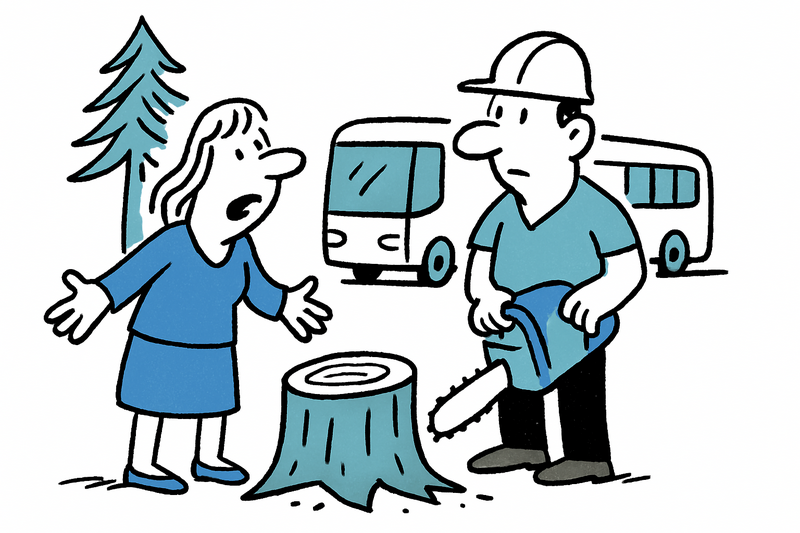
Scenes like this repeat themselves: in Ciutat Jardí two large pines were felled a few days ago. The chainsaws wailed in the first hours, residents peered from their balconies and heard the chain noise like a bad omen. Later came the explanation: risk of toppling. Safety comes first, everyone agrees. But why inform people only after the trunk already lies on the ground?
There is an emotional side to this. Trees are silently present in everyday life: they provide shade on hot days, dampen street noise, and serve as meeting points for neighborhoods. When a tree disappears, it is not just foliage that is lost — a piece of the city's history disappears. I have seen people rushing to the city walls early in the morning when ombú trees were to be cleared. It grew loud, complaints followed and a trial ensued, an episode included in an article on protected ancient trees in Palma. The judges sided with the city. Being legally right and regaining trust are two different things.
Technique, rules — and an information gap
The Associació Balear del Arbre (ABA) has since adopted a more conciliatory tone. Agustina Sol, the chair, does praise the existence of a management plan and expert assessments. That sounds reasonable—if those papers were not so often kept in the dark. The city's management plan from 2012 requires: 48 hours' notice in non-urgent cases. In practice: often not followed.
The problem is not the chainsaw alone. It is the way decisions are communicated. A notice on a lamppost, a short note on the city's website, a leaflet in the mailbox — little effort, big effect. Instead, citizens sometimes only encounter faits accomplis. That leaves distrust. And distrust spreads quickly: someone who sees a tree today wonders whether it will still be there tomorrow.
Between radical pruning and a new beginning
Of course there are cases where drastic cutting makes sense. In Palma's old town plane trees were pruned so severely that only ribbed trunks remained. For some that's vandalism, for others the chance for a new crown to grow back. Both sides would have felt less anger if the reason had been explained beforehand — with figures, photos and alternative scenarios.
A tree cannot simply be "replaced." A decades-old olive tree brings a different life than a freshly planted sapling. The ecology, the shade pattern, the birdlife — all of that needs time. And yes: a replacement tree is a promise to the future, not an immediate solution.
Concrete steps the city could take now
My proposal is pragmatic and local: more transparency, fewer surprises. Concretely this means:
1. Obligation to publish technical assessments — not only internally, but publicly accessible, with explanations in plain language. People who can understand why a tree is risky often accept the measure.
2. Take the 48-hour rule seriously — notice on-site, web information, social media post, and if possible a leaflet in the surrounding houses. The city has the tools; often only the habit is missing.
3. Tree register and QR codes — each notable tree gets an entry: age, species, assessments, planned measures. A small QR code on the trunk can satisfy curiosity and halt rumours.
4. Local involvement — involve neighborhood councils or tree sponsorships. If people can have a say, they don't automatically feel steamrolled.
5. Documentation and compensation — photos before/after, a timeline for replanting, promises of shade-restoring replacement plantings nearby. Not every promise is romantic — but it's a start.
Why this is not just about tree protection
It's about trust in the city. When an administration removes trees overnight and only explains itself later, a vacuum forms that is quickly filled with rumours and mistrust. The legal side may be settled, but the feeling remains: decisions are made for citizens, not with them.
Palma's street trees are more than urban furniture. They provide shade, meeting places and anchors for memory — and sometimes they are witnesses to small everyday stories we don't take seriously enough. When the chainsaw falls silent, the city should not remain quiet. Inform, explain, let people take part: it costs little and returns a lot. Above all: trust.
Frequently asked questions
Why are trees sometimes cut down in Palma without warning?
How much notice should Palma give before cutting a tree?
What happens to the shade and atmosphere when trees disappear in Mallorca neighbourhoods?
Are tree removals at Palma airport linked to safety concerns?
What is the issue with tree felling in Ciutat Jardí, Palma?
Why do people in Palma react so strongly when old trees are pruned or removed?
What could Palma do to make tree removals easier for residents to accept?
Can a replacement tree really make up for a felled tree in Mallorca?
Similar News
Masked Images, Real Panic: When Social Media Aesthetics Alarm Neighbors
Five German content creators filmed on a recently vacated detention site using deceptively realistic props. The result: ...
Why the Striped Breams in Cala Pí Should Be a Wake-up Call
Once again bathers in Cala Pí were surrounded while swimming by small, nippy fish — some wounds bled. Time for clear rul...
Daily from New York: How Palma's Air Traffic Is Growing — and What Must Change
United will increase the Newark–Palma service to daily flights in 2027 (Boeing, 231 seats). Strong tourist numbers clash...
When Love Ends in Shards: Destruction in Son Vida and the Questions That Remain
In Son Vida a relationship dispute escalated: a woman destroyed furniture in a luxury villa, later pressed a panic butto...
Who Bears the Burden? Mallorca Between Tenant Protection and Landlord Fears
Madrid's new housing decrees strengthen tenant rights — but on Mallorca concern is growing: will the law drive small lan...
More to explore
Discover more interesting content

Can Cap de Bou

Townhouse Lleo 72
