
Firewalk in Palma: All-day Road Closures and Bus Diversions — a Reality Check
Firewalk in Palma: All-day Road Closures and Bus Diversions — a Reality Check
Today the traditional firewalk in Palma is causing road closures from midday until late evening. Anyone heading to the city centre should know alternatives. A critical look at communication and mobility.
Firewalk in Palma: All-day Road Closures and Bus Diversions — a Reality Check
Leading question: How well prepared is Palma for traffic disruptions caused by large events?
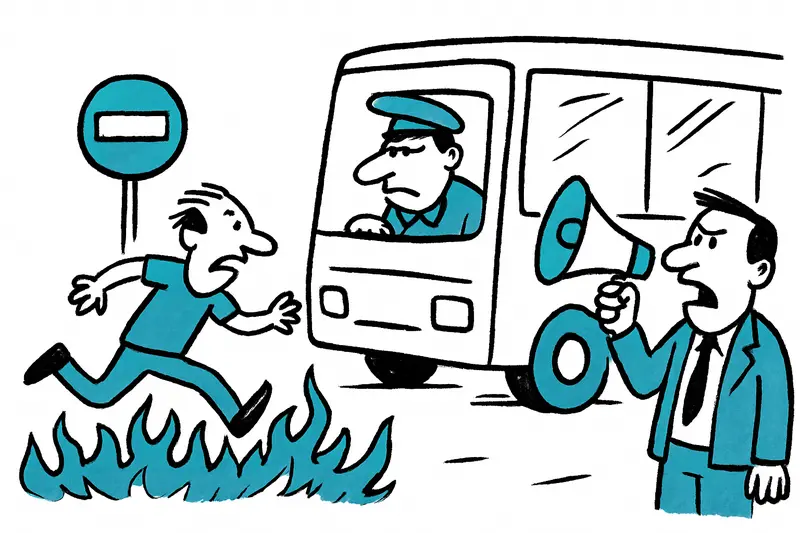
Today, when the flames dance across Palma's streets, drivers must say goodbye to their usual routes. From 12:00 the first closures begin around the bridge at the Riera stream and Avenida Jaime III. At 13:00 restrictions follow on Avenida Antoni Maura, and from 15:30 Avenida Argentina will be closed in the direction of Paseo Mallorca — at the same time there will be no exit from the parking garage at Paseo Mallorca after 15:30. The firewalk itself starts at 19:00; the restrictions are in place until about 23:00. In addition, numerous bus lines (A1, 1, 3, 4, 7, 20, 25 and 35) will be diverted during the day, a situation reminiscent of Accident on the Ma-19: Why Palma's Bus Network Collapses on Hot Days.
Sounds well organized? Not quite. The authorities have published the closure times in Palma at the Weekend: Closures, Detours and What Residents Should Know, but gaps arise in practice: commuting workers, people with shopping carts, older residents who rely on line 3 every day — for them a solution must be tangible and easy to understand, not just a note on a website.
Analysis: The city reacts with road closures and diversions, which is unavoidable for such events. The criticism is the visibility of information. Many tourists, but also locals, navigate on the go via apps, displays at stops or on-site signage. If diversions are only announced shortly before the closure or if parking garages suddenly prevent exits, this leads to congestion, frustrated drivers and potentially dangerous maneuvers.
What is missing from the public debate: clear guidance on alternatives. There is little information on where visitors can safely park their cars, which substitute stops buses will serve, and how people with reduced mobility can move through the city centre, as was evident during Palma packed: Fira del Variat and night run cause traffic stress – what residents and visitors need to know now. Practical advice for delivery services and taxis is also lacking — they are out on the road today and need reliable route suggestions to avoid disrupting supply chains.
An everyday scene: It is early afternoon on Passeig del Born. Delivery vans are parked at the edge, a café stacks its outdoor chairs fearing later closures. On Plaza de Cort an older woman stands with her shopping bag, looks at her phone and tries to find out whether line 1 is still running — the display at the stop, however, only shows the normal route. In the background drums mix with the distant crackle of preparations for the evening: beautiful, but stressful for daily life.
Concrete solutions that would help immediately: first: central, clearly visible information points on the main access roads and at parking garages with printed diversion maps; second: temporary park-and-ride sites on the city outskirts with shuttle service, especially for predictable closures lasting several hours; third: real-time updates not only on the city website but also as push notifications in official transport apps and via SMS for registered commuters; fourth: clearer signage for replacement stops and additional staff at hubs to direct arrivals; fifth: a clear regulation for parking garages so people are not trapped when exits are closed, an issue highlighted in Marathon on October 19: How Palma Organizes the State of Emergency — and What's Missing.
Practical tips for today: if possible avoid the city centre and instead park at peripheral lots; if you rely on buses, plan an extra 30–45 minutes and check alternative lines; only use parking garages if you are sure exit and return routes are guaranteed; for events, consider coming on foot or by bike as long as secure parking is available.
Conclusion: The firewalk is part of Palma and its cultural inventory — that is beyond question. Nevertheless, event logistics must take people's daily lives into account. Those who prepare for recurring closures gain peace of mind: clearer communication, simple detour routes and practical parking concepts would make the evening more relaxed for everyone. So today: enjoy, but with a plan B in your pocket.
Frequently asked questions
What roads are closed in Palma during the firewalk event?
Will buses in Palma run normally during the firewalk?
Can I leave the Paseo Mallorca parking garage during the firewalk?
What time do the Palma firewalk road restrictions end?
Is it still possible to get around central Palma on foot during the firewalk?
What is the best way to reach Palma city centre on a day with firewalk closures?
What should visitors to Palma do if they depend on public transport during the firewalk?
How should people with reduced mobility plan for firewalk closures in Palma?
Similar News
Injured captain, big plans: Germania Mallorca before the away match in Consell
The newly founded FC Germania Mallorca travels to Consell on Saturday. Captain Bastian Müller is out injured, but coach ...
Palma, Palma de Mallorca, Palma‑Mallorca: What is it really about?
The debate over the city's name is more than grammar: it concerns identity, law and branding policy. A sober reality che...
Warning to Bathers: Nipping Fish in Cala Major and Other Coves — a Reality Check
In Cala Major and several beaches around Mallorca, bathers report painful “nips”. Who are the animals, why are they gett...
Rental Car Theft in El Arenal: What This Incident Reveals About Our Gaps
A teenager steals a running rental car in El Arenal, flees on foot, climbs over walls and is caught by the Guardia Civil...
Red Rope in Palma's Library: What Helps Against Selfie Tourism — and What's Missing
Palma's city library cordoned off an area with a red rope to keep selfie tourism away from reading and working activitie...
More to explore
Discover more interesting content

Can Cap de Bou

Townhouse Lleo 72
