
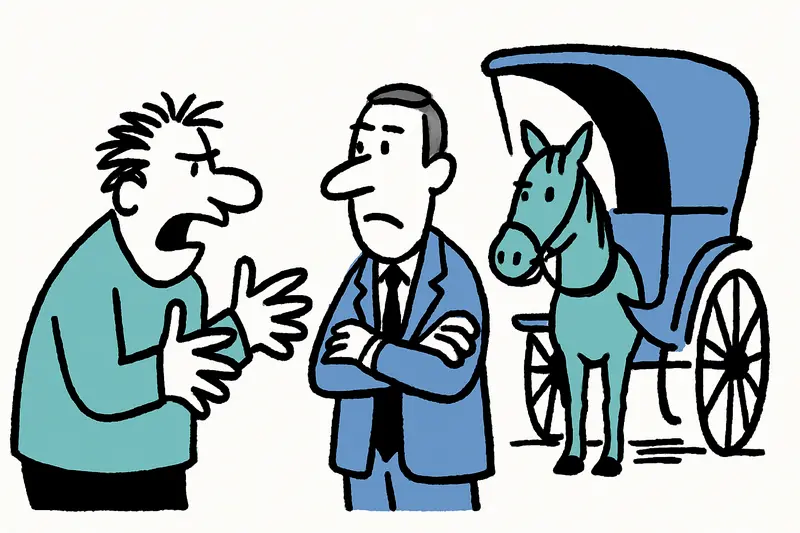
Palma and the Horse Carriages: Between Nostalgia, Costs and a Change of Heart
The clatter of hooves on the cobblestones is part of Palma's image for many. But lifelong, inheritable licenses, high buyback costs and growing animal-welfare criticism turn the carriage issue into a political dispute. A look at options, little-known problems and possible compromises.
Palma and the Horse Carriages: Between Nostalgia, Costs and a Change of Heart
When in the late afternoon the sun slowly floods from the Passeig del Born into the narrow alleys, the shimmering heat mixes with a familiar sound: the clatter of hooves, the rattling of wheels, a loud call from the driver. For locals sipping their espresso on Plaça Major, it is part of the city; for animal-rights activists and some tourists it is a relic that feels out of time, a debate covered in Palma Struggles to End Horse-Drawn Carriages: Majority but No Final Decision. The debate in Palma has long been: should the horse-drawn carriages disappear from the old town — and if so, how?
The central question: abolish, modernize or regulate?
The debate is not only about feelings, but about facts that are often swept under the rug. Many of today's visible problems stem from how licenses were granted: numerous permits were once issued for life and made inheritable. That makes a clean break practically impossible. A buyback of all licenses would hit the city budget hard; internally people talk about millions. Politically, those responsible are caught between election tactics and budget constraints — and no one wants to suddenly be seen as driving up costs.
Aspects rarely spoken aloud
Technical and logistical details receive less attention: the narrow cobbled streets are often not ideal routes for horses, especially on hot summer afternoons. Heat, heavy carriages and tourist crowds increase the risk of accidents and stress for animals and people, as reported in Horse Falls in Palma: Do Carriages in the Old Town Need Rethinking?. There is also a legal entanglement with other municipal rights: some carriage owners hold licenses that could be economically exploited — but only under complicated exchange or compensation rules.
Another hardly visible point is the social one: for many coachmen the job is their only livelihood. On a Tuesday evening I spoke with a coachwoman who mainly wanted one thing: clarity. Uncertainty is hard to calculate, and without clear transition rules social hardships threaten to arise that nobody intended.
What is realistically on the table?
The range of possible paths stretches from an immediate ban to complete modernization. The options at a glance:
Buyback of licenses: Feels final, but is expensive. The city would have to provide large sums and factor in legal steps.
Phased reduction: Do not issue new perpetual rights; incentivize the gradual buyback of existing licenses. This reduces fiscal pressure but requires transparent timetables.
Electric carriages or alternative vehicles: Pilot projects with low-emission, low-noise vehicles sound attractive. In practice there are challenges with maneuverability, infrastructure and acceptance — and they don't automatically solve animal-welfare issues.
License swaps or retraining: Carriage owners could receive taxi or delivery licenses or be supported in transforming their small businesses. Such exchange deals, however, meet resistance from other sectors and require clear compensation mechanisms.
Concrete opportunities — and how Palma could use them
A possible roadmap could look like this: First, immediate introduction of binding animal-welfare and traffic rules (temperature limits, rest breaks, route restrictions, regular veterinary checks, GPS tracking). Second, a phased license buyback financed from tourism levies and targeted grants — spreading the burden. Third, pilot routes for low-emission vehicles in the old town and a retraining program for coachmen to become guides or drivers of modern transport.
Transparency is crucial: disclose cost plans, guarantee social protection and involve local unions or stakeholders from the outset. Only in this way can one avoid the discussion being strangled by protests and legal battles.
Why a decision is needed now
The issue is not merely aesthetic. Palma stands for more than postcard images: urban appearance, animal welfare, the tourism economy and municipal finances are closely intertwined. If the city dithers too long, scandals, harsher protests and reputational damage could follow — louder than the clatter of hooves, as recent coverage After Two Collapsed Horses: Palma Faces a Decision — Rethinking Carriage Rides shows. On the other hand, a rushed cut would put people into hardship.
On Plaça Major, between street cafés and newsstands, people already say: 'It's time for a decision.' The challenge for Palma is to make that decision wisely, socially compatible and transparent. Then a messy dispute can become an orderly transition — and the sound that shapes the city in future will be chosen deliberately.
Between official letters, carriage routes and espresso cups, Palma is deciding how it wants to sound and look. A bit of nostalgia may remain — if it is fair and legal.
Frequently asked questions
Are horse-drawn carriages still operating in Palma’s old town?
Why is Palma debating the horse carriages at all?
Would Palma have to pay a lot to end horse-drawn carriages?
What happens to horse carriage drivers in Palma if the system changes?
Are horse carriages a bad idea in Palma during summer?
What kind of rules could Palma introduce for horse-drawn carriages?
Could Palma replace horse-drawn carriages with electric vehicles?
Why are people on Plaça Major talking about the horse carriage issue in Palma?
Similar News
First Day, First Consequences: What Palma's Rent Freeze Really Means
A new decree stops a planned eviction in Palma — but what really changes for tenants and landlords? A reality check with...
When Housing Becomes a Matter of Survival: Mallorca Between Rental Frenzy and Everyday Life
The case of 87-year-old Maricarmen showed that on Mallorca many people's lives are poised between affordable and uninhab...
Autumn in Mallorca: When Melancholy Gets a Window
Why autumn quietly tightens here — and how to make use of the mood: walks, culture, candles and the light from Palma to ...
Near-miss on Lanzarote: Landing Ryanair Jet and Iberia Takeoff — what really went wrong
On Lanzarote there was a dangerous incident: A Ryanair flight (FR5910) from Dublin landed on runway 03 while an Iberia E...
Eurowings introduces new Premium Business seats on Mallorca routes
From December 1, selected Eurowings flights to Palma and other destinations will feature eight particularly generous sea...
More to explore
Discover more interesting content

Can Cap de Bou

Townhouse Lleo 72
