
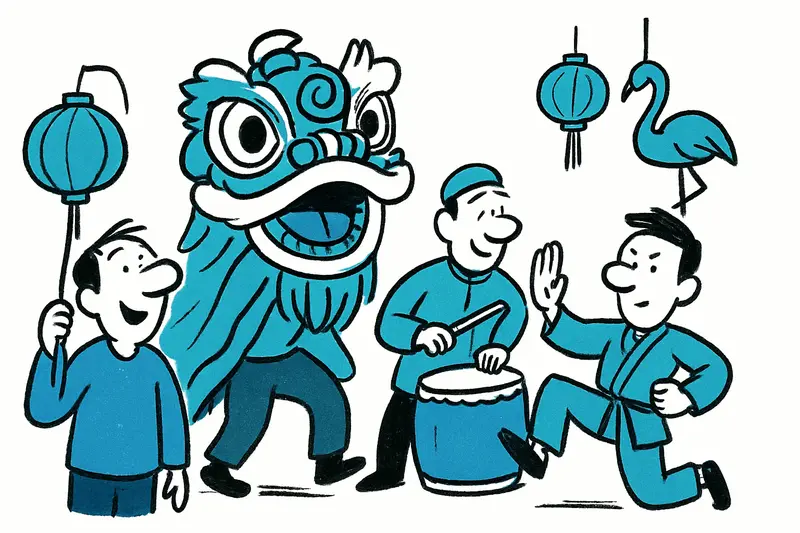
Lanterns, Drums, Scent: Palma Celebrates Chinese New Year in Pere Garau
Lanterns, Drums, Scent: Palma Celebrates Chinese New Year in Pere Garau
Colors, smells and Kung Fu shows: The Pere Garau neighborhood is today's meeting point for Chinese New Year. A celebration held since 2016 and recognized as a public cultural asset in 2025.
Lanterns, Drums, Scent: Palma Celebrates Chinese New Year in Pere Garau
When the morning sun lies low over the rooftops of Pere Garau, the neighborhood fills with drumbeats and the smell of ginger and fried noodles. Today, from 11:00 AM the opening dance begins, and anyone moving from the Mercat de Pere Garau toward the market streets encounters half a dozen small stages, colorful lanterns and stalls offering food from around 30 regions of China. The program runs until 11:00 PM – a whole day full of movement, music and aromas.
On the street you can see families with children, older neighbors, market vendors, tourists and workers using their lunch break to try a portion of jiaozi or crispy dumplings. The performances range from classical dance sequences to Kung Fu and Tai Chi displays; in between drum rolls sound, and small groups in red costumes pass by repeatedly. It is a celebration first experienced with the senses – noise, light, spices.
Many of the food stalls offer regionally typical dishes: spicy Sichuan notes alongside mild dim sum variations, plant-based specialties and fried seafood. This is not a gourmet event in the narrow sense, but a market as you imagine it: loud, warm-hearted and sometimes improvised. Those who are hungry will find something; those who are curious strike up conversations over unfamiliar dishes.
The festival in Palma has taken place since 2016. In 2025 it received recognition as a public cultural asset, giving the event a lasting local anchoring. For Pere Garau this is more than a holiday: the neighborhood with its market profile shows how cultural diversity is practiced in everyday life, as illustrated by Fira del Variat in Pere Garau: Neighborhood Night of Tapas, Music and Community Spirit. Today the stalls do not feel like alien elements, but like an additional thread in the fabric of the quarter.
For Mallorca the event has several positive aspects. It livens up a season that is otherwise quieter in many places and brings together people from different communities. Local merchants benefit from the extra visitors, and guests gain an authentic picture of Palma's everyday life beyond the seafront promenades. Passing the plaza you hear Mallorcan voices next to Mandarin, Arabic and Spanish – a small but clear sign that the island is multilingual and layered, a pattern also seen during First 'Fira del Variat' in Pere Garau: Palma celebrates sharing on small plates.
A practical tip: those who want to try the best dishes should arrive early – the most popular items sell out quickly. Comfortable shoes are worth it, since the paths between stalls, stages and small side streets are paved and full of people. Those seeking a calmer experience will find a different atmosphere in the evening, when the stage lights come on: the music remains, conversations quiet down, and the lanterns reflect in the shop windows, in a way not unlike the Night of Souls in Palma: Tradition Between Firelight and Weather Stress.
Such festivals are small bridges: they allow neighbors to celebrate side by side and together, create opportunities for conversation and open culinary horizons. For Palma this means a cityscape defined not only by the sea, but also colored by neighborhoods like Pere Garau. An invitation, then, to feel the sun on your brow, listen to the drums and stroll the alleys with a pastry in hand.
Outlook: If you miss the festival, don't despair: Pere Garau remains a lively place with a permanent market character, and the Chinese community on the island regularly organizes public events. Today, however, it is worth stepping right into the action, counting the lanterns overhead and watching how a city in a small space welcomes a new year.
Frequently asked questions
What is Chinese New Year like in Palma’s Pere Garau?
When should I arrive at Pere Garau for the Chinese New Year festival in Palma?
What kind of food is served at Chinese New Year in Palma?
Is the Chinese New Year celebration in Pere Garau family-friendly?
How do I get to Mercat de Pere Garau for the festival?
Why is Pere Garau important for multicultural life in Palma?
What should I wear or bring to Chinese New Year in Palma?
Does Chinese New Year in Pere Garau happen every year in Mallorca?
Similar News

Mistaken identity with fatal consequences: Brutal assault in S'Aranjassa — what's missing in the follow-up?
At S'Aranjassa a visitor to a finca was tied up, beaten and thrown out of a van. Three men have been arrested, including...
High heel slips, car accelerates: accident on Camí de Son Hugo
A woman lost a high-heeled shoe on the forecourt of the sports facility at Camí de Son Hugo. The car accelerated, mounte...

Phone Scam: How Two Hotel Employees at Playa de Palma Lost Thousands of Euros
One morning in September, two reception employees at Playa de Palma were pressured by alleged alarm-company staff — in t...
When the Wallet Becomes a Danger: Attack in Peguera and Lessons for Mallorca
In Peguera, two women are said to have stolen the wallet from a 75-year-old German couple. When the victim intervened, t...
Plata stays Plata: Young people take over, Llonguets remain
A small bar on Carrer de l'Argenteria will continue: Tolo Serra hands the place over to young Mallorcans at the end of t...
More to explore
Discover more interesting content

Can Cap de Bou

Townhouse Lleo 72
