
Palma's New Club de Mar: Luxury, Noise and the Big Question About Benefits for the Neighborhood
The new Club de Mar is about to open: four buildings, rooftop pools and space for 170‑meter yachts. But who truly benefits from the project — locals, mega‑yachts or the investors?
Who owns the new Club de Mar? A site visit and the open question
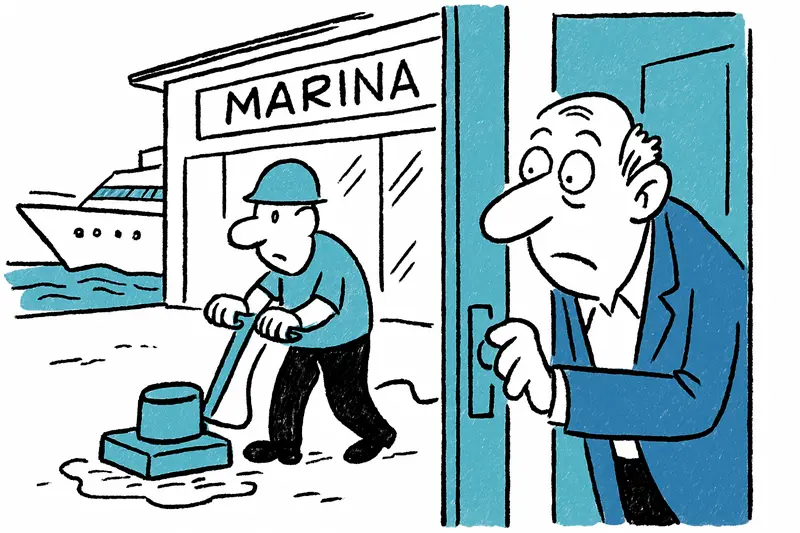
You can smell the work: paint, construction sand in your shoes and the salty harbour breeze. Shortly after 1 pm, during the supposed midday calm, there is still bustling activity on the new Club de Mar site. Workers push polishers, project managers lead visitors across bridges and roof terraces. After four and a half years of construction, the complex ensemble is about to open — and with it a central question that has hardly featured prominently in public speeches so far: Who was this project actually built for?
Four parts, one overall picture — and many decisions
The site is divided into Tramuntana as the main building, Llevant and Ponent connected by bridges, and Migjorn with a parking garage and nightlife area. The vertical and horizontal structure makes the building more interesting than a mere yacht shed: bright rooms, lava stone, leather benches, retro references to old luxury ships. The team apparently made an effort so that passersby can also benefit — the bridge to the Paseo Marítimo was removed and the view of the city opened up. That is a step toward permeability. But is that enough to prevent the Club from becoming a private island for superyachts?
Economic figures that give pause
Originally about 60 million euros were estimated; in the end it is supposed to have been around 83 million. Pandemic, raw material prices, a change of construction companies — the usual explanations. The investments are visible: berths for yachts of up to around 170 metres, exclusive club areas, pool terraces, a hall for large events. Such numbers appeal to investors and high‑net‑worth owners, but they do not automatically translate into benefits for the wider city community, as explored in who really benefits from Mallorca's tourism. Will the economic benefit in the form of local jobs, business tax or supplier contracts justify the costs? That remains open.
Catering as a puzzle: Who will pick up the bill?
Of eight retail units, about 85 percent are leased, one ice‑cream shop is confirmed, a supermarket for yacht crews is planned, a high‑end restaurant, pool catering and a nightclub for December. Many puzzle pieces are still missing: Which head chefs will come? What will prices look like? Will the pool bar be tied to memberships or open to day visitors? For locals these details are crucial: if the gastronomy is designed exclusively for a luxury clientele, the complex may be visually open but socially closed.
The little‑discussed topics: noise, traffic and environmental impact
The debate so far has focused on image and investor capacity; quieter have been questions about nighttime noise (especially from DJ sets and late‑night operations, as with the free electronic festival 'Patrona' on the Paseo Marítimo), additional traffic toward Porto Pi and the facility's energy needs — from air conditioning to megayachts. During the tour you could hear the distant honk of the ferry, the clatter of craftsmen and occasionally someone tossing a cigarette into a construction container. Such sounds are harmless during construction; whether they will stand up to rooftop parties and DJ sets in season is another matter.
Recognize opportunities — and set conditions
The project offers real opportunities: if it succeeds in creating permeability, integrating local providers and keeping parts of the offer affordable, the Club de Mar can enrich urban life. Practical suggestions that seem sensible:
1. Noise and opening time rules: fixed curfews for the nightclub, decibel limits on roof terraces, clear liability rules for event organisers.
2. Social permeability: at least one shop or one event per season with discounted offers for locals; prioritise local gastronomy concepts.
3. Ecology and energy: mandatory eco‑certificates for operators, e‑charging points for boats, rainwater storage and clear wastewater management standards.
4. Transparency in economic figures: a public statement of how many permanent jobs are created and how much is purchased locally.
A look ahead — realistic and local
Until the season opening there are still tests, furniture deliveries and approval procedures to be completed. The location between the cruise terminal, Porto Pi and the Paseo Marítimo makes the Club inevitably visible — it will enrich the cityscape, but whether it strengthens or rather exclusivises the neighbourhood depends on the coming months. The city administration has the chance to set rules now, before practices become entrenched. And for local restaurants, fishers and shop owners: if they do not want to remain mere spectators, they should speak up now.
On the Paseo Marítimo it smells of sea, paint and freshly laid wood. A silent appeal that luxury can coexist with public access and sustainability — if there is the will.
Frequently asked questions
What is the new Club de Mar in Palma expected to be used for?
Will the new Club de Mar in Mallorca be open to the public or only for yacht owners?
Could the new Club de Mar in Palma cause more noise at night?
How much did the new Club de Mar in Palma cost to build?
What kind of yachts can the new Club de Mar in Palma accommodate?
How could the new Club de Mar affect traffic around Porto Pi and the Paseo Marítimo?
What benefits could the new Club de Mar bring to Palma’s neighbourhood?
What are the main sustainability concerns around the new Club de Mar in Mallorca?
Similar News

Sant Salvador: The Christ That Becomes a Touchstone for Memory Politics
A statue, 33 applicants and a ministry under review: Why the crowned Christ on the mesa near Felanitx has suddenly becom...

Why the yacht "Sasha I" remains in Palma — a reality check
The luxury yacht "Sasha I" has been held in Palma since 2023. Spanish authorities maintain the seizure despite a propert...

Curious Derby: When the Away Game Is Only 150 Meters Away
On Saturday FC Germania Mallorca meets U.D. Pla de na Tesa — a local derby that is effectively decided on the doorstep. ...

Protection failed? A murder in Coll d'en Rabassa and the gaps within
A jury found a man responsible for his partner's death: 66 stab wounds, the crime carried out in front of their shared d...
Palma opens s’Aigua Dolça: New sports centre opens on October 15
The new municipal sports facility s’Aigua Dolça above the Paseo Marítimo opens on October 15 in several stages. Initiall...
More to explore
Discover more interesting content

Can Cap de Bou

Townhouse Lleo 72
