
Five Days for Palma's Old Prison: Why a Deadline Alone Is Not Enough
Five Days for Palma's Old Prison: Why a Deadline Alone Is Not Enough
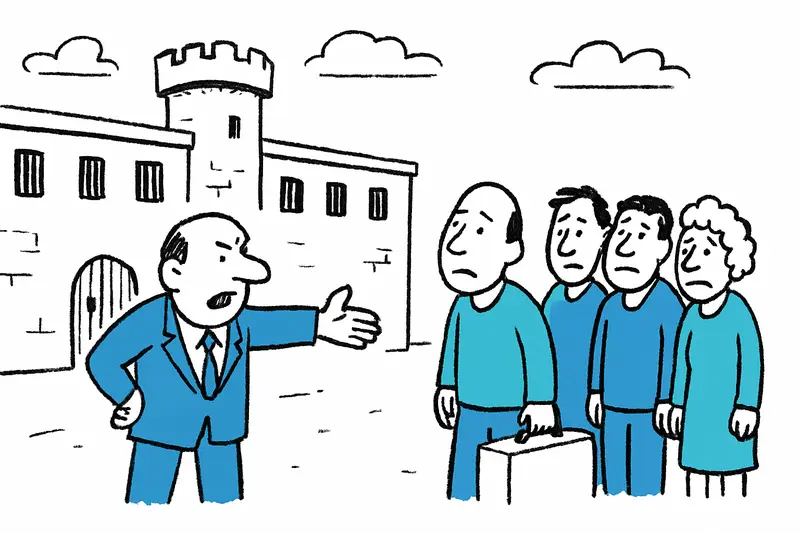
The City Council is asking more than 225 residents of a former prison to leave within five days. The measure follows fires and complaints — but what happens to the people afterwards? A reality check from Palma.
Five days for Palma's old prison: Deadline runs, questions remain
The City Hall of Palma has sent the residents of the decommissioned prison a notice: five days, then the site should be vacated. According to a municipal statement, more than 225 people live there. Earlier, 45 appeals against the eviction procedure were rejected; the process began in February after fires, violent confrontations and repeated complaints from the neighborhood.
Key question
What happens to people who live without secure housing in an empty, dilapidated building when the administration gives them such a short deadline?
The sober numbers — 225 people, 45 rejected appeals, five days — sound like administrative routine. In reality, however, behind these figures are people with very different biographies: workers, family members, people with drug problems (When the Night Hums: How Palma Can Stop Drone Deliveries to the Prison), undocumented people, pensioners, couples. For some the old prison was a last emergency shelter, for others a self-organised living space. That the situation is untenable after fires and violence is a reality; but the question is: who catches the affected people when doors are closed?
Palma knows these situations. Early in the morning, when garbage trucks rumble through side streets and delivery vans reach the first bakeries, you see neighbors standing on doorsteps with worried faces. They speak of rising plumes of smoke, nights with sirens and police, and children who no longer want to play outside, and of incidents that have left residents on edge such as Nighttime Break-ins in Palma: Arrest Stops the Spree — But How Safe Is the Old Town Really?. These scenes give the administrative act a face: it is not only the building that is at risk, but also the social peace of the area, echoing longer-term concerns documented in Four Years of Fear in Palma: How Neighbors, Justice and the City Must Improve Protection.
Critical analysis
Legally, the city stands on solid ground when it cites hazard prevention and public safety. Yet a five-day deadline feels administratively harsh and socially ill-considered. Evictions without parallel provision of support capacities quickly lead to displacement effects: people spread into other empty buildings, into makeshift camps on the city outskirts, or simply remain on the street. All this increases short- and medium-term risks — not only for the evicted people but for the entire neighborhood.
Added to this is the tendency of public debates to serve two extremes — toughness against “illegal housing” or romantic notions of self-managed projects. Both overlook practical questions: Who is entitled to municipal emergency accommodation? Which social services are available locally? Are there health, addiction or migration counselling services? Will families be separated?
What is missing from the public discourse
Little is said about aftercare: clear, binding plans on where people should go and how long transitional shelters will be available. A transparent inventory of capacities in municipal emergency shelters is also missing. Equally rarely addressed is what prevention could look like: fire protection, safety inspections and social-pedagogical support can improve conditions as long as alternatives are not yet tangible.
Another blind spot is cooperation with non-governmental organisations, church institutions and neighborhood initiatives. These groups often have information about individual needs, enjoy trust and can help with mediation — provided they are involved early and in a structured way.
Concrete solutions
1) Immediate measure: extended transition period tied to proof of availability for concrete accommodations. Five days are too short when alternatives are lacking. A commitment to reachable places in emergency shelters or supported housing reduces chaos.
2) Mobile counselling teams: social workers, mediators and fire-safety officers who create individual plans on site — from finding housing to healthcare and addiction counselling.
3) Transparent overview: the city publishes a situation report on available places in emergency shelters, NGOs and municipal programs, coordinated by a central coordinator.
4) Short-term damage limitation: fire-safety measures at the building, secured areas and clear communication with residents. This lowers the risk of further escalation.
5) Medium term: review vacant municipal properties and convert them into socially subsidised housing projects. This is more expensive and takes longer, but is more sustainable than repeated evictions.
Everyday scene
A Tuesday evening in Palma: people stand in small groups in front of the old prison, some with bags and cardboard boxes, others smoking nervously. A delivery van pulls up and leaves a pallet of blankets. Music comes from a side street, a neighbor pushes her shopping trolley past and looks at the masonry — her face hardened, her voice low: “It is not just about the building, but about the people inside.” This scene shows: there is empathy, but little system.
Punchy conclusion
An eviction may be necessary. But administrative action that relies solely on short deadlines is incomplete. Without accompanying measures, displacement rather than solutions threaten. The city must now do more than apply legal pressure: transparency, concrete reception places and coordinated social work are not a luxury but an obligation. Otherwise all that remains in the end is an empty building and a shifted problem — with new fires, new complaints and a renewed loss of trust on all sides.
Frequently asked questions
What is the weather usually like in Mallorca in late March?
Can you swim in Mallorca in March or early spring?
What should I pack for Mallorca in March?
Is March a good time to visit Mallorca?
What is Sóller like in spring?
What can you do in Mallorca when the weather is still a bit cool?
Is it sunny in Mallorca in early spring?
What is the weather like in northern Mallorca in spring?
Similar News

More water than last year: Mallorca's reservoirs breathe easier
September rain refilled the Tramuntana's reserves: overall fill around 35 percent, Cúber at 40.42 percent, Gorg Blau at ...
Three Luxury Hotels in Banyalbufar: Lots of Money, Many Questions
A Danish investor plans three exclusive accommodations in Banyalbufar — including the historic Son Valentí. The announce...
2.1 tonnes of cocaine on sailing yacht off Spain's coast – a reality check for the coastguard
A 14-metre yacht was seized with 2.1 tonnes of cocaine. Who monitors the ports, how does the international hunt succeed ...

Heat Bonus in Mallorca: 100 Euros Extra for Outdoor Staff at MarSenses
MarSenses pays employees who worked outdoors in August an extra €100 as recognition. Lighter uniforms, reduced hours for...
Renovating in Mallorca: What You Really Can Do Without Neighbour Consent
Many think they can do whatever they want in their apartment. That's partly true — but only as long as structural elemen...
More to explore
Discover more interesting content

Can Cap de Bou

Townhouse Lleo 72
