
Palma's Old Prison: Who Stays, Who Leaves — and What the City Must Address Now
Palma's Old Prison: Who Stays, Who Leaves — and What the City Must Address Now
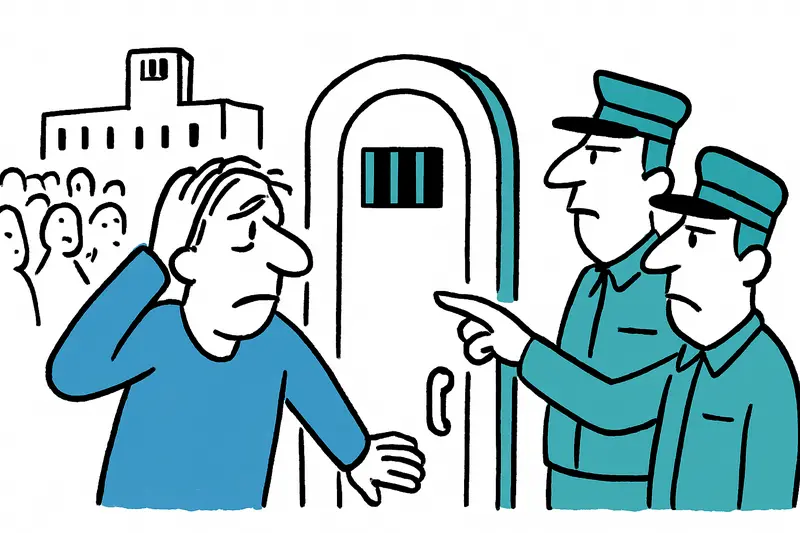
Shortly before a court-ordered eviction, more than one hundred people voluntarily left Palma's former prison. About 101 people still live there. Who will protect them when the deadline expires?
Palma's Old Prison: Who Stays, Who Leaves — and What the City Must Address Now
Key question
Who will protect the people who still live in Palma's old prison when the city applies for a court-ordered eviction next week?
Critical analysis
On May 12 the city of Palma reported that more than a hundred people had voluntarily left the former prison, while around 101 people still live there. The deadline for voluntary departure runs until Friday; after that the town hall plans to take legal action. Mayor Jaime Martínez pointed to massive safety and hygiene deficiencies as well as acute fire hazards. Those are strong words—and they explain why the city is increasing the pressure. But they do not answer the crucial question: What happens to those who remain or who suddenly find themselves on the street after a forced eviction?
What is missing in the public debate
The debate currently revolves around numbers and deadlines. Little is heard about concrete alternatives for those affected: Where should the remaining residents go? Could initiatives such as Palma's plan to convert vacant offices and shops into apartments provide alternatives? Are there enough places in emergency shelters, and will chronically ill or elderly people receive special care? Transparency is also lacking in the inventory: On what basis is the figure of 101 people founded — is it up to date or an estimate? Equally neglected is how the city could technically remedy the hygiene problems if an immediate evacuation is not possible.
An everyday scene from Palma
Early in the morning in front of the building you see the island's typical everyday life: delivery vans with building materials, a few neighbors carrying bags from the market, and the smell of freshly baked pa de pagès coming from a nearby bakery. Some residents look worried, others are annoyed by piles of rubbish along the wall. A municipal vehicle is parked there, workers in reflective vests speak quietly among themselves. Such images show: an eviction is not an abstract act — it changes streets, the neighborhood's sense of community and the daily routes of people.
Specific problems
From the limited facts some problems can be derived: First, a short-term forced eviction can drive homeless people into a precarious situation. Second, safety and hygiene deficiencies justify a rapid response — but without reliable alternative offers, social hardship may intensify. Third, legal proceedings are a matter of time; while lawsuits are pending, it often remains unclear who is responsible for food, medical help and accommodation.
Concrete solutions
The city administration should now pursue several steps in parallel: First, present an updated, verifiable inventory — including age structure, health needs and family ties. Second, immediately intensify contact with regional social services and established aid organizations to secure short-term places and medical care; as in the Son Banya before the eviction: Court confirms Palma as owner — and now? case, legal clarity does not automatically translate into practical solutions. Third, implement temporary safety measures at the building (fire protection, rubbish clearance, sanitary points) so that the danger is reduced until a transitional solution is found. Fourth, offer each affected person an individual moving-out and accommodation plan — this increases the chances of a voluntary departure and reduces long-term costs for the city and the social system. Finally, the administration should explain the legal route transparently: which steps are planned, what court dates are pending, and what support is available during the proceedings?
Why this matters for Palma
Such operations affect not only the people in the building but also the city's image and the neighborhood's trust in the administration. If an eviction is carried out without adequate social support, new problem areas emerge — as seen in other cities; incidents like Collapse at Palma's City Wall: What Needs to Happen Now show how physical damage and poor management can erode public trust. Well-managed transitions, on the other hand, can demonstrate that safety and social responsibility go hand in hand.
Pointed conclusion
The city is right to point out the acute danger — but safety must not be understood solely as a policing task. Those who push people out of a dilapidated building must at the same time offer concrete, controllable alternatives. Otherwise what remains is an empty façade and a growing social problem. Friday is the deadline. The clock is ticking not only for the administration but for every person still living there.
Frequently asked questions
What is happening with Palma's old prison and why is the city acting now?
How many people still live in Palma's old prison?
What happens if residents do not leave Palma's old prison voluntarily?
What support should Palma offer people leaving the old prison?
Why is the former prison in Palma considered a safety risk?
What should happen before a forced eviction in Palma?
How does the old prison issue affect Palma's neighbourhood?
What is the deadline for leaving Palma's old prison?
Similar News
More water than last year: Mallorca's reservoirs breathe easier
September rain refilled the Tramuntana's reserves: overall fill around 35 percent, Cúber at 40.42 percent, Gorg Blau at ...
Three Luxury Hotels in Banyalbufar: Lots of Money, Many Questions
A Danish investor plans three exclusive accommodations in Banyalbufar — including the historic Son Valentí. The announce...
2.1 tonnes of cocaine on sailing yacht off Spain's coast – a reality check for the coastguard
A 14-metre yacht was seized with 2.1 tonnes of cocaine. Who monitors the ports, how does the international hunt succeed ...

Heat Bonus in Mallorca: 100 Euros Extra for Outdoor Staff at MarSenses
MarSenses pays employees who worked outdoors in August an extra €100 as recognition. Lighter uniforms, reduced hours for...
Renovating in Mallorca: What You Really Can Do Without Neighbour Consent
Many think they can do whatever they want in their apartment. That's partly true — but only as long as structural elemen...
More to explore
Discover more interesting content

Can Cap de Bou

Townhouse Lleo 72
