
Dinner Under Surveillance: Palma's Old Town as a Target for Pickpockets — What Must Happen Now
Dinner Under Surveillance: Palma's Old Town as a Target for Pickpockets — What Must Happen Now
Increasingly, restaurateurs from La Lonja, El Borne and around Plaza Mayor report pickpocketing incidents affecting restaurant guests. Who is responsible, and how can tourism and safety be reconciled? A critical look and concrete proposals.
Dinner Under Surveillance: Palma's Old Town Is Not a Safe By-Product
Key Question
Who ensures that a summer evening in La Lonja truly remains a dinner and does not end in the loss of a wallet?
Critical Analysis
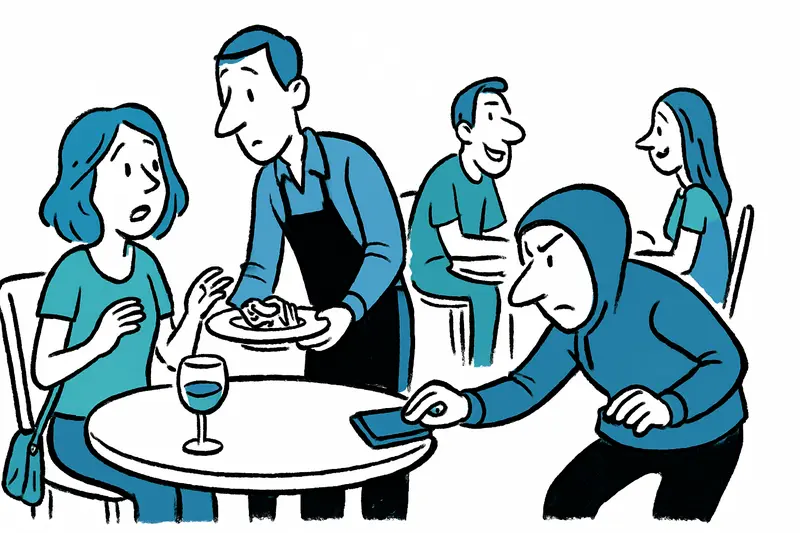
In recent weeks, operators of restaurants in Palma's historic center have sounded the alarm more often: guests return to their tables and notice that their wallet or phone is missing. Recent incidents, including Watch theft in Palma's Old Town: Escape ends in Barcelona – How safe are our streets?, have been widely reported. The industry association CAEB Restauración has therefore sent a letter to the Spanish government's delegation and demands significantly more measures for La Lonja, El Borne and Plaza Mayor. Voices from the scene, such as Valentín Haslbeck from La Lonja or Toni Garau from the Caballito de Mar, describe a noticeable increase in pickpocketing. There have even been cases where off-duty officers intervened, as reported in Old Town Alarm in Palma: Three Off-Duty Police Stop Handbag Robbery — Time for a Security Check?.
What stands out here: many complaints are directed at a state authority — which is correct — but the situation is more complex than just more uniforms. Pickpocketing works as an opportunistic crime: people with hands full, bags hanging open from chairs and loud, distracting situations are ideal targets. At the same time, illegal street vending, nighttime noise, and public urination worsen the subjective sense of safety and make the problem more visible, even if not every disturbance of the peace is linked to property crime. Local vendors at La Seu have reported similar problems, as described in Who Protects the Vendors at La Seu? Rising Pickpocketing Puts Craftspeople Under Pressure.
What Is Missing from the Public Debate
1) Clear, verifiable data: An increase is being talked about, but how many reports were actually filed, how many incidents were solved? Without transparent figures, no targeted strategy can be planned. 2) Victim-oriented measures: Restaurants report incidents, but those affected need quick help to block cards, incident report forms in English/German, and reliable channels for filing reports. 3) Coordination among actors: Local police, Guardia Civil or Policía Nacional, municipal administration, social services and business associations often operate in separate lanes. 4) Prevention at the business level: Many restaurateurs know simple prevention steps but do not apply them systematically or communicate them to guests.
Everyday Scene from Palma
Imagine a mild evening in La Lonja: guitar sounds, the clink of glasses, a waiter balancing plates of fideuà across the cobbles. At the next table a small group laughs, a handbag hangs on the back of a chair. Minutes later a visitor stands at the bar, visibly upset; she believes she left her wallet on the chair. In reality she has been stolen from. Scenes like this repeat on warm summer evenings — not dramatic, but exhausting for guests and business owners. There are also incidents where attentive passersby intervene, for example Attentive passerby stops suspected pickpocket at Mercat de l'Olivar – Why is vigilance alone not enough?.
Concrete Solutions
- Visible and targeted police presence at peak times: not only patrols but also short checkpoints at the entrances and exits of central squares. - Plainclothes teams dedicated to pickpocket investigations combined with immediate data collection on site. - Uniform and multilingual signs on terraces encouraging simple behaviors (carry bags on the body, keep handbags closed). - Training for service staff: recognizing suspicious behavior, calm intervention strategies, digital reporting channels. - Rapid victim support: on-site checklists, links to card and phone blocking services, standardized online incident forms in German, English and Spanish. - Better lighting in alleys and passageways, targeted removal of visual shielding to minimize dark corners. - Regulation and consistent control of illegal street vending, coupled with offers for affected people (social support rather than only repression). - A pilot project for the high season: clearly measurable targets (e.g., reduction in reports by x percent, clearance rate), evaluation after three months.
Why This Can Work
A bundle of prevention, quick assistance and targeted investigations hits offenders where they operate: in the details. If restaurant guests are informed, servers are sensitized and police and social services act in a coordinated way, the offense loses its ease. What matters is a pragmatic plan that does not only respond in the short term but also addresses the social causes of marginalization and excessive drinking.
Pointed Conclusion
Palma thrives on atmosphere, on people who want to eat outdoors and feel safe. State power in uniform is part of the answer, but not a sole panacea. More important are interconnected, immediately implementable measures: better lighting, clear reporting channels, staff training, multilingual victim support and a coordinated strategy between police, city and social services. If this succeeds, mild evenings will remain where they belong — at the table, with a glass of wine, not at the police station.
Frequently asked questions
What’s the best time to visit Mallorca for pleasant weather?
Is it safe to swim on Mallorca’s beaches?
What should I pack for a trip to Mallorca?
What’s the best way to get around Mallorca?
Which Mallorca beaches are family-friendly?
What local dishes should I try in Mallorca?
What are top activities to do in Mallorca?
What are good day trips from Mallorca?
Similar News

When the Wallet Becomes a Danger: Attack in Peguera and Lessons for Mallorca
In Peguera, two women are said to have stolen the wallet from a 75-year-old German couple. When the victim intervened, t...
Plata stays Plata: Young people take over, Llonguets remain
A small bar on Carrer de l'Argenteria will continue: Tolo Serra hands the place over to young Mallorcans at the end of t...

Unnoticed in the Luggage Compartment: How a Boy Traveled More Than 100 Kilometers in a Team Bus
A minor traveled in the undercarriage of a team bus for more than 100 kilometers until his cries for help were heard. A ...

Cap Vermell Grand: Second Michelin Key – a Gift for the East
The Cap Vermell Grand in Capdepera has been awarded its second Michelin key. For the region this elevates the luxury off...
Eurowings lets four aircraft carry names – a friendly idea that also reaches Mallorca
Eurowings is launching a campaign: four Airbus A320s are to carry the first names of people who help others in everyday ...
More to explore
Discover more interesting content

Can Cap de Bou

Townhouse Lleo 72
