
Palma’s Parking Zones: More Blue Lines Won’t Solve the Problem on Their Own
Managed parking can distribute spaces more effectively. But those who decide the rules in Palma must also consider tradespeople, delivery services and people without good bus connections.
Palma’s Parking Zones: More Blue Lines Won’t Solve the Problem on Their Own
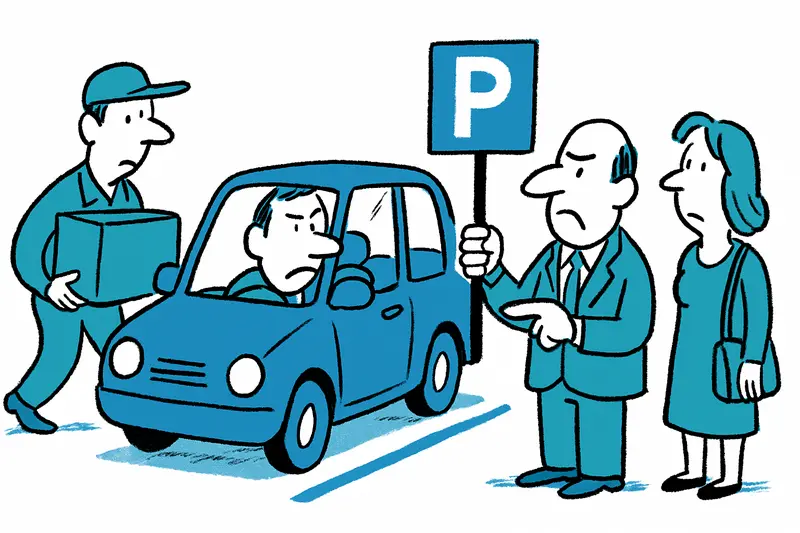
The key question is not just where people will have to pay to park in future. It is this: who will still be able to reach Palma by car when parking spaces are more tightly managed? Expanding paid parking areas can reduce traffic from drivers searching for a space and free up spots for people who need them briefly. But it can also make daily life more complicated for people who drive into the centre not for convenience, but to work, care for relatives or unload supplies.
In Palma, scarce street space has long been a daily source of friction. Cars are parked bumper to bumper, delivery vans pull over briefly with their hazard lights on, and a scooter slips through the gap. Anyone out and about near Pere Garau in the morning knows the little ritual: drive around the block once, then again, while the market is already buzzing and the coffee at the bar goes cold faster than expected. That is not a statistic. But it is exactly what a shortage of parking feels like in the neighbourhood.
A Price Tag Is Not a Transport Policy
Fees can help if they stop the same vehicle from occupying a parking space for hours on end. But they do not create new routes, a bus connection or a place to load and unload. A blue line initially sets out who may park and under what conditions. It does not automatically answer whether the rules fit the everyday needs of the street.
For residents, a paid parking space is one thing; for someone stopping briefly to shop, it is another. For a business with a service van, the vehicle may be a tool of the trade: tools, spare parts and materials have to go along. Someone who drives to a job early and ends up in another neighbourhood later cannot always sensibly plan around one fixed parking space. Care workers, mobile tradespeople and small delivery services also have a different pattern of movement from visitors spending a few hours in the city.
Things become particularly tricky when permits depend on criteria designed for private individuals. A business that has worked in a neighbourhood for years may then be in a worse position with its vehicle than a local resident, even though the company’s services are needed there every day. This is not an argument for allowing every business fleet to park on the street for free. But it is a reason to review these cases carefully before making a change, rather than treating them as exceptions afterwards.
What Often Gets Overlooked in the Debate
Discussions about parking fees tend to focus on amounts and zones. Less visible are the questions behind them: Which streets will actually be included? At what times will the rules apply? Will there be short-stay options for deliveries, care work and tradespeople? How will resident parking permits be issued, and what rules will apply to company vehicles or people using a car that is not registered in their name? Without clear answers, an apparently simple rule can turn into a daily administrative obstacle course.
Nor should the alternative to driving exist only on paper. Anyone living in a neighbourhood where a bus journey with a transfer takes considerably longer than driving needs more than a reminder to travel differently in future. This is especially true for people with limited mobility and for workers whose shifts begin when public transport is running infrequently. Conversely, a better bus connection could ease pressure on a street where many cars are parked today simply because there is no practical alternative.
One more point is essential to an honest discussion: fees are not proof that traffic will decrease. If drivers simply move to the next street without paid parking, the problem shifts—often right outside other residents’ homes. The problem has not been reduced; only the map has been recoloured. The impact of a measure should therefore be reviewed after it is introduced: How long do drivers spend looking for a space? Where does illegal parking increase? Are loading zones being used or blocked?
What Palma Could Do Better in Practice
First, the city needs a clear map showing the affected streets, times, rates and exemptions well before new rules take effect. It should not be a technical document that people have to painstakingly zoom in on their phones; it should also be easy to read on site and available in multiple languages. Second, there should be a clearly defined solution for essential work vehicles, such as time-limited permits, digital day passes or designated loading windows. The details must remain enforceable; otherwise, every exception becomes a loophole.
Third, residents and small businesses on affected streets should be consulted early—not just through a general online survey. A bakery, a carpenter’s workshop and a home-care service all experience the same kerb very differently. Fourth, the city should assess the results after a few months, publish its findings and allow the rules to be adjusted. If parking pressure merely shifts to side streets, the city must acknowledge that and respond.
Anyone currently driving a rental car in Palma should not rely on guesswork: the signs and rules at the specific location are what matter. A blue line is an indication, but it does not fully explain the rate, permitted parking duration or possible exemptions. In an unfamiliar city, taking a moment to check the signs costs less than a later dispute over a parking ticket.
The Blue Line Is Only the Beginning
Palma can regulate parking. It has to, if pavements, delivery traffic and residents are not to be pitted against one another indefinitely. But expanding paid parking is convincing only when it comes with practical alternatives, fair permits and transparent rules. Otherwise, the cost will fall not only on those who park for convenience, but also on people whose work is hardly possible without a vehicle. More blue lines can bring order. The rules will only be fair when they take the real daily life of neighbourhoods into account.
Frequently asked questions
What do blue parking lines mean in Palma?
Does paid parking make it easier to find a space in Mallorca?
Can tradespeople and care workers get parking permits in Mallorca?
What should I check when parking a rental car in Mallorca?
Will parking charges reduce traffic in Palma?
What public transport alternatives matter when parking rules change in Mallorca?
How do parking restrictions affect deliveries and short visits in Mallorca?
Why can parking near Pere Garau in Palma be difficult in the morning?
Similar News

Mallorca’s Cars Are Getting Older – But the Municipal Rankings Tell Only Part of the Story
The number of registered passenger cars has grown and aged over the past decade. Montuïri has the highest average vehicl...
Santa Catalina in Port de Sóller: A Neighborhood with Its Own Rhythm
Away from the promenade, Port de Sóller reveals a quieter side. Santa Catalina invites you to slow down and see the town...

Dinosaurs in Palma: A Window into the Distant Past
An exhibition about the dinosaurs of Patagonia invites visitors to take a closer look at CaixaForum Palma—not only at th...

If Madrid Swings Right: What It Could Really Change for Mallorca
A change in tone in Madrid would be felt in Mallorca—but it would not automatically lead to a political breakthrough. Re...

La Victòria Needs More Than a New Roof
Renovating the La Victòria youth hostel would only be the beginning. The key question is whether Mallorca will make last...
More to explore
Discover more interesting content

Can Cap de Bou

Townhouse Lleo 72
