
Palma closes parks and the Paseo Marítimo — are the precautions against the storm enough?
Palma closes parks and the Paseo Marítimo — are the precautions against the storm enough?
The parks Bellver, La Ribera and Can Terrers have been closed since 3:00 p.m., and the seaside promenade is scheduled to be closed from 6:00 p.m. What the measures achieve — and what Palma still lacks.
Palma closes parks and the Paseo Marítimo — are the precautions against the storm enough?
Key question: Do closures alone protect people and infrastructure — or do critical gaps remain?
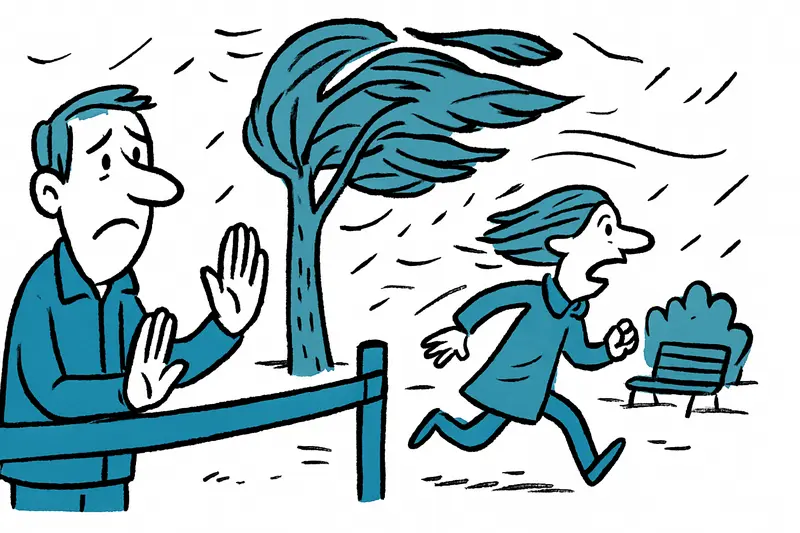
On Thursday afternoon the Palma city administration closed several public areas: the parks Bellver, La Ribera and Can Terrers have been inaccessible since 3:00 p.m., and the seaside promenade (Paseo Marítimo) is to be cordoned off from 6:00 p.m. The 'Patis Oberts' programme is also being suspended. The reasons are clear: forecasts predict strong gusts and a sea storm, and the orange warning level justifies the protective measures.
That makes sense and is necessary. Still, the question remains: are targeted closures sufficient to cushion the impacts on people and businesses? And how well is the city able to react in real time if things really escalate on the promenade or in the harbours?
A brief stocktake: closed parks prevent walkers and families from being surprised by flying branches or falling trees. Early closure of the promenade can reduce direct dangers from storm surges and loose objects. Suspending 'Patis Oberts' aims to prevent open schoolyards from becoming temporary gathering spots during risky hours.
But closures alone do not fix structural problems. On the Passeig Marítim one often sees weathered palm trees with large, overhanging crowns; on many beach sections there are loose sunshades, furniture and seasonal stalls that can become hazards in strong gusts. A tragic incident in 2019, when a falling palm tree cost lives, is a reminder that the island knows wind storms but is not always prepared enough.
What is usually missing from the public debate: concrete information on the duration of closures, live information for drivers and harbour operators, and guidance for residents and businesses on how to secure or tie down items in their outdoor areas. Many people only learn about closures via social media or once tape is already in place. That is not enough.
An everyday scene from Palma: at the Mercat de l’Olivar vendors puzzle over delivery times, delivery vans on Passeig Mallorca stand with open loading beds while a stiff breeze blows palm leaves across the road. Small harbour bars bring in tables and chairs, a group of tourists turns back because the promenade was just closed. Moments like these show that practical preparedness depends on fast, clear information — not just tape and barriers.
Concrete solutions:
1. Real-time info hub: A central municipal site or app with a map that consolidates all closures, forecasts (AEMET data) and official notices. Multilingual and with push notifications for registered users.
2. Preventive securing obligations: Temporary rules for beach bars, landlords and market stalls during announced storms — for example early tie-downs or storing movable items indoors.
3. Tree and palm management: Prioritised inspections along promenades and park areas, targeted crown pruning and removal of hazardous specimens with clear division of responsibilities between the city and private owners.
4. Logistics rules for ports and harbour zones: Early notification of boat owners, coordinated measures with the port authority, and temporary mooring bans during sea storm warnings.
5. Social protection: Emergency plans for hospitality and tourism workers who lose income due to closures; short-term information points in neighbourhoods with high tourist density.
All this would not only increase immediate safety but also public acceptance of the measures. People who understand why something is closed and who are offered alternatives are more likely to comply — and thus help minimise damage.
In conclusion: the closures this afternoon were correct and necessary. But they are part of a response, not the whole concept. Anyone living or working in Palma feels the wind in the streets and sees how quickly loose objects can become dangerous. The city administration can do better at bundling information, clarifying responsibilities and enforcing preventive duties.
When the warning is lifted and the tape comes down, it would be good not only to clean up but also to get to work on planning — so that the next stormy hour does not again meet unnecessary chaos.
Frequently asked questions
What actions does Palma take during a storm to protect people and property?
Are closures of parks and the seaside promenade enough to keep residents safe during Mallorca storms?
How can I get real-time storm information for Palma and Mallorca?
What should beach bars and outdoor stalls do to prepare for a storm in Mallorca?
How are ports and harbour areas managed during sea storm warnings in Mallorca?
Why is tree and palm management important along Palma’s promenades during windy weather?
What support exists for hospitality workers when closures affect income during storms in Mallorca?
What steps should Palma take after a storm to improve future responses?
Similar News
Orange Alert for All of Mallorca: How Prepared Are We Really?
Aemet has raised the warning to orange: thunderstorms and heavy rain may hit the island. A critical appraisal — what's m...
New Roman Floor in Son Sard: A Piece of Mallorca Revealed
During this year's excavations in Son Sard (Son Servera), archaeologists uncovered an opus signinum floor — the first ev...
Alarm at Ballermann: Why the Promenade is Becoming Overgrown
Residents at Playa de Palma see decayed green strips, dried Washingtonia palms and waist-high weeds. The announced milli...
Early autumn flirt in Mallorca: Iris Katzenberger begins a quiet love chapter with a partner 22 years younger
Iris Katzenberger (59) has a new man by her side after several relationships: 37 years old, private, they met at a priva...
"We do what we like" — Stones, social media and the disappearance of respect at Es Colomer
At the Es Colomer viewpoint, tourists tore stones from a dry-stone wall, filmed it and spread the footage on social medi...
More to explore
Discover more interesting content

Boat Tour with BBQ along Es Trenc Beach

Private transfer from Mallorca Airport (PMI) to Pollensa
