
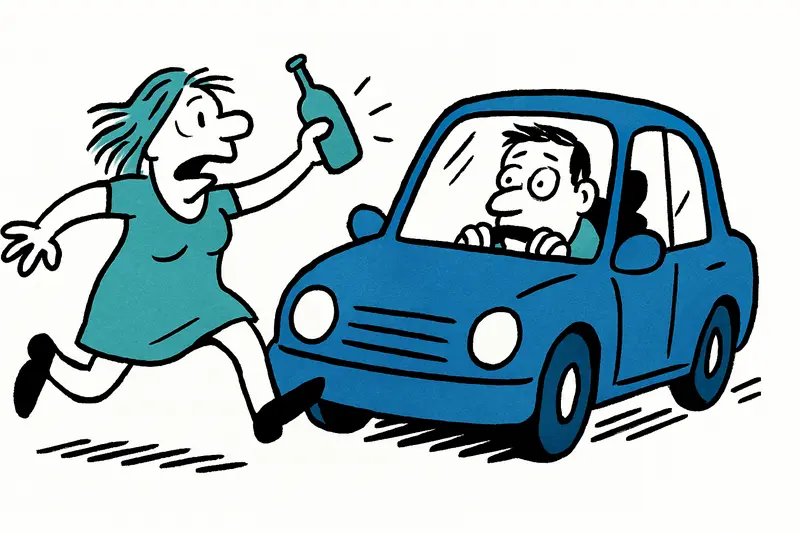
Paseo Marítimo: Intoxicated Pedestrian Struck at a Red Light – Danger on the Promenade
On the Paseo Marítimo an apparently intoxicated woman was struck by a car at a red light on Sunday morning. A look at causes, responsibility and possible measures.
Paseo Marítimo: Intoxicated pedestrian struck at a red light
On Sunday morning a usually sunny section of the Paseo Marítimo briefly became an incident scene: at around 10:10 a.m. a woman was hit on the roadway by a car, a case similar to Accidente en el Paseo Marítimo: una peatona embriagada es atropellada por un coche. Eyewitnesses report that the pedestrian appeared to be intoxicated and had ignored a red traffic light. The driver could no longer avoid the collision; there was a side impact, the woman fell and suffered a head injury. Ambulances from Falck emergency services and SAMU, a logistics vehicle from the 061 service and units of the local police were quickly on site. The injured person was taken to Juaneda Hospital; no further details are available for data protection reasons.
Key question: Why do such accidents repeatedly happen on the promenade?
The Paseo Marítimo is a lively mixed-use area: cyclists, joggers with headphones, delivery vans, tourists with suitcases and the aforementioned street cafés, from which the clinking of cups and the honking of delivery drivers can still be heard in the morning. It is precisely this mix that makes the spot problematic. Previous reports, such as Gravemente herida en el Paseo Marítimo de Palma: un accidente, muchas preguntas and Accidente nocturno en el Paseo Marítimo: alcohol, punto de tropiezo y muchas preguntas, illustrate how different factors converge. The central question is not only who is at fault, but which structural and everyday factors can turn a moment of inattention into an accident.
Analytical view: More than just a red light
People often point the finger quickly at the injured person – and rightly so when alcohol is involved and traffic rules are ignored. But the situation at Avenida Gabriel Roca and the adjacent Paseo Marítimo has several dimensions: traffic light phases, sightlines, vehicle speeds, the quality of pedestrian areas and the mix of traffic types. Time of day also plays a role: after nights out, drinks and uncertainty can sometimes remain effective well into the morning.
Another aspect that is rarely mentioned aloud is expectation. Seeing a wide promenade with the beach right next to it often makes people perceive it as a “safer” place – and they underestimate the danger of moving traffic. Added to this are language barriers among tourists, tiredness among night owls and the everyday tunnel-vision behaviour of pedestrians with smartphones or headphones.
Concrete opportunities and solutions
Practical measures can be derived from this small but serious incident:
Infrastructure: Raised crosswalks (speed bumps), shorter pedestrian signal phases and more visible signage can help. Narrowing the driving lane or creating a temporary pedestrian island increases safety when crossing.
Technology and enforcement: Mobile speed controls, 30 km/h urban speed regulations and guidance from the DGT or smart traffic lights that detect pedestrian movement would reduce risk. More presence of the local police during peak times sends a clear signal.
Prevention: Low-threshold information campaigns for nightlife crowds and tourists – for example notices in bars, on hotel flyers or at popular meeting points in the harbor – could raise awareness about daytime alcohol risks.
Community: Local restaurateurs and residents can contribute to a safer environment: coordinated serving times, clearly visible warnings about dangerous crossings and more seating instead of people standing on the pavement and obstructing sightlines.
Between everyday life and responsibility
On a Sunday morning a local hears the seagulls, the clinking of cups, the distant rumble of a delivery van – and suddenly sirens. Moments like these are a reminder that promenades are not traffic paradises. What is needed are fewer dramatic words and more concrete steps: individual responsibility, technical adjustments and targeted enforcement.
What remains
The police are still investigating the exact cause of the accident and are examining possible regulatory offences. We hope for a speedy recovery for the injured person. And for the rest of us: a little more attention, a few extra seconds of caution – sometimes that's enough to prevent a regular promenade walk from turning into an emergency.
Note: The accounts are based on statements from emergency personnel and eyewitnesses; personal details have not been published.
Frequently asked questions
Why is the Paseo Marítimo in Mallorca considered a risky place for pedestrians?
What should pedestrians keep in mind when crossing roads in Palma’s Paseo Marítimo area?
Can alcohol make walking in Mallorca’s city streets more dangerous?
What can help reduce pedestrian accidents on the Paseo Marítimo in Palma?
Is the Paseo Marítimo in Palma safe for tourists who do not know the area well?
What happens after a pedestrian is hit by a car in Mallorca?
Why do accidents happen so often on Palma’s Avenida Gabriel Roca?
What is the safest time of day to walk along Palma’s seafront promenade?
Similar News
Release after bloody attack in Palma: Why the court's decision raises questions
An 18-year-old who allegedly inflicted a serious neck injury on a man at Plaza Gomila using a wristwatch wrapped around ...
Kidnappings in Inca: Three young men forced into car trunks and abused in the forest – a reality check
In Inca, three 18-year-old men were forced into car trunks by masked assailants at the Plaça des Bestiar, taken to a for...
Spreading Massification: The Brake That Still Has Much Work to Do
Marga Prohens announces limits on volume tourism. The measures sound harsh — but are they enough to save everyday life, ...
Through the Keyhole onto the Party Yacht: How Daniela Katzenberger Is Planning Her 40th on Mallorca
Daniela Katzenberger turns 40 and wants to celebrate it on the island — likely with a boat, cake and her mother. A relax...
By Boat Instead of the Road: Palma's Water Bus — a Reality Check
The 'Bus Nàutic' launches in two stages — but questions remain over interim operations, fares and environmental requirem...
More to explore
Discover more interesting content

Can Cap de Bou

Townhouse Lleo 72
