
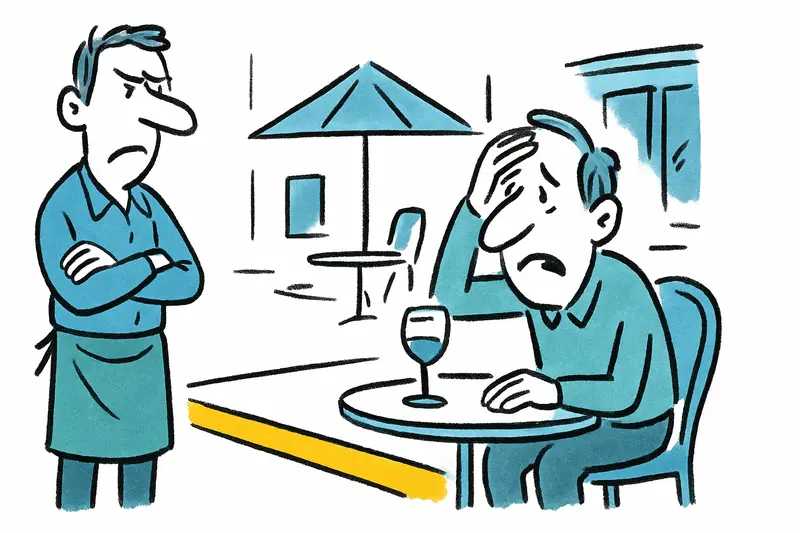
Palma wants to abolish the yellow terrace markings – what this means for restaurateurs
The yellow lines on the Ramblas and Paseo Marítimo are set to disappear. For restaurateurs this brings relief for the city's appearance – but new problems for enforcement, accessibility and legal certainty.
Palma wants to abolish the yellow terrace markings – what this means for restaurateurs
If you stroll along the Ramblas in the morning, you hear the clatter of chairs, the calls of a newspaper seller and now and then the screech of a seagull from the harbor. The yellow markings on the ground that later outline the outdoor areas of cafés are part of this cityscape – at least until now. Palma's city administration now plans to remove these strips step by step, as reported in Palma plans to remove yellow terrace markings. Sounds harmless, but it is more than just a fresh coat of paint.
The key question: How do we keep order without visible lines?
At first glance it's about aesthetics: according to the city, the yellow areas are no longer contemporary and "disturb" the appearance. But the real question is practical: How are inspections and fair use of public space supposed to work in the future if the boundary is no longer clearly visible? For many restaurateurs the answer is uncertainty. Who will measure from now on? How will disputes be decided: was that within the allowed area or not?
Problems that are rarely voiced aloud
In conversations with restaurateurs, residents and city staff the same worries keep coming up: accessibility, traceability of area boundaries, liability issues and the workload for inspectors. The proposed metal studs in the pavement look restrained and modern. But are they practical? Older guests with walkers, strollers or visually impaired people could easily miss them. When streetlights cast long shadows in the evening or rain makes the studs reflective, the delimitation suddenly becomes contentious again.
Another aspect: while there are often more inspections in prime tourist locations like the Paseo Marítimo, smaller residential streets remain problematic, as Palma Tightens Controls: More Security — or a New Punitive Culture? reports. Around 800 terraces in Palma are reportedly unclearly marked at present. This is not only a legal problem but also a social one: a café that complies with the rules feels disadvantaged if its neighbor clearly extends the tables.
It won't get easier for inspectors
Missing visible lines make the work of regulatory officers more difficult. Without a clear boundary, proving infringements becomes laborious: photos from different angles, on-site measurements, possibly repeated checks. That costs time and personnel – both scarce resources in Palma's town hall. And who pays the fines when there are boundary disputes? The restaurateur who believes they were positioned correctly, or the tourist who crosses the line without noticing?
Concrete solutions – realistic or utopian?
There are ideas that go beyond cosmetic changes. Some proposals we heard on site include:
1. Different solutions for different places: In promenade and harbor locations discreet metal studs may suffice; in narrow residential streets clear, high-contrast surfacing or temporary kerbs should mark the area.
2. Combination of physical and digital aids: An official map layer in the city's geoportal accessible to restaurateurs and residents, as well as a simple app for inspectors that uses GPS to show the permitted area.
3. Accessible design: Contrasts designed by experts instead of purely decorative studs, low, flat edges instead of sharp spikes, and tactile indicators for visually impaired people.
4. Pilot zones and joint inspections: Trial areas where restaurateurs, residents and the regulatory office test how well a solution works — and publish the results.
Opportunities for a better public space
If the city approaches this change seriously, Palma could become cleaner, more harmonious and at the same time fairer. No more garish yellow patches, but clearer rules that everyone understands. However, this only works if administration and businesses do not talk past each other. In practice that means: more dialogue, simple digital tools, and a clear timetable for the marking changes.
What restaurateurs should do now
For the coming months the advice is: stay calm. Measure your terraces precisely, document the current situation with photos, and take part in the announced pilot discussions. Small investments in mobile markings or clearly visible signs can prevent conflicts in the short term. In the long run it pays to participate in solutions that deliver both aesthetics and legal certainty.
On the Plaza del Mercat, when the late-morning sun hits the cobblestones and the voices of the market sellers fill the air, it becomes clear: it's not just about yellow paint. It's about fair use of public space — and ensuring Palma continues to offer room for people, not just tables.
Frequently asked questions
Why is Palma removing the yellow terrace markings from café and restaurant areas?
How will terrace boundaries be checked in Palma if the yellow lines disappear?
Are metal studs a good replacement for terrace markings in Palma?
What should restaurateurs in Palma do if their terrace boundary is unclear?
Could removing terrace markings make problems worse for people with limited mobility in Palma?
Which areas of Palma are most affected by terrace control and inspections?
What are the main concerns for cafés and restaurants in Palma if the painted terrace lines go away?
What is Palma trying to achieve by changing terrace markings in the city centre?
Similar News
Masked Images, Real Panic: When Social Media Aesthetics Alarm Neighbors
Five German content creators filmed on a recently vacated detention site using deceptively realistic props. The result: ...
Why the Striped Breams in Cala Pí Should Be a Wake-up Call
Once again bathers in Cala Pí were surrounded while swimming by small, nippy fish — some wounds bled. Time for clear rul...

Daily from New York: How Palma's Air Traffic Is Growing — and What Must Change
United will increase the Newark–Palma service to daily flights in 2027 (Boeing, 231 seats). Strong tourist numbers clash...

When Love Ends in Shards: Destruction in Son Vida and the Questions That Remain
In Son Vida a relationship dispute escalated: a woman destroyed furniture in a luxury villa, later pressed a panic butto...
Who Bears the Burden? Mallorca Between Tenant Protection and Landlord Fears
Madrid's new housing decrees strengthen tenant rights — but on Mallorca concern is growing: will the law drive small lan...
More to explore
Discover more interesting content

Can Cap de Bou

Townhouse Lleo 72
