
Palma Street Corner Loses Bar Sagrera — When Memory Becomes Building Land
Palma Street Corner Loses Bar Sagrera — When Memory Becomes Building Land
A long-closed traditional bar on the corner of General Riera is set to be demolished and replaced by an eight-story residential building. An inheritance, a dispute with a bank and questions about how to deal with urban memory are at stake.
Palma Street Corner Loses Bar Sagrera — When Memory Becomes Building Land
Guiding question
How can Palma prevent a place with family history and a city-defining past from simply disappearing under concrete — while tenants' rights and memorabilia get lost among bank files and demolition permits?
Critical analysis
The corner on the inner ring road where the General Riera begins is a piece of Palma with several layers: once Bodega Buenos Aires, later Bar Sagrera, a hostel, schoolyards, fairs with bumper cars and carousels. Today the premises have been closed for about ten years; the intermediate ceiling collapsed, allegedly due to illegal work on the roof. According to the available facts, the building's owner is the Sabadell bank; the heir to the lease, Juan Sagrera, has been engaged in a protracted legal battle for years. He not only reports material losses — photos, wine bottles, mementos — but also the feeling that his family's and the neighborhood's history receives little attention in the sale of the property. Meanwhile, plans for a new residential building replacing Bar Sagrera are moving forward and will change the physical structure of the quarter.
What is missing from the public discourse
The debate usually focuses on returns, the number of floors and ownership structures, as seen in a dispute over a new housing block on the General Riera corner. Three questions remain underexposed: What concrete protection mechanisms exist for traditional businesses that do not have official landmark status but are identity-forming locally? How are compensations or partial ownership claims by heirs legally and fairly assessed when the property belongs to a bank? And: are there binding rules that prevent memorabilia and inventory from simply disappearing during property transactions? These points rarely appear on Palma's agenda — even though behind every façade there are people and stories.
Everyday scene from Palma
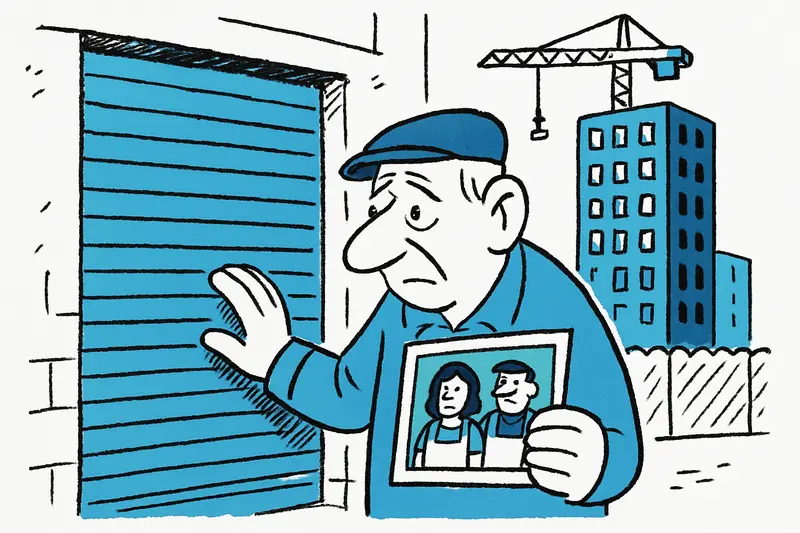
Imagine a February morning: traffic noise mixes with the smell of fried churro dough, delivery vans squeeze around the corner, joggers cut across the avenues. The Sagrera façade is faded, the windows barred, and newer high-rises tower nearby. An older man stops in front of the closed gate, runs his fingers over a faded photograph, takes it from his pocket and shows a black-and-white image of parents in aprons. He says nothing, but his expression asks whether this corner will soon be just an address in a development plan.
Concrete solutions
There are ways to handle such situations without resorting to sentimental appeals. First: the city administration can demand a rapid inventory — a formal list of the premises' contents that records family memories and movable cultural goods before demolition permits are granted. Second: when converting to residential use, building regulations should include social requirements: mandatory ground-floor commercial spaces at regulated rents or a quota of affordable apartments for local residents. Third: there must be clear rules for compensation to long-term tenants with inheritance agreements — a percentage or share system that considers market value and historical attachment; in this case the tenant demanded ten percent of an estimated value of €1.2 million. Fourth: banks and owners must be obliged to communicate transparently; contact points for affected tenants (city mediators) can help speed up processes. Fifth: the municipality could write into building requirements an obligation to make local memory visible — plaques, archive access or a small memorial window in the new building.
What should happen immediately
Before the excavators move in, the city should examine whether the bank's protective measures were adequate when damages occurred; it's not just about concrete, but responsibility, as in the controversial Bennazar house demolition. A judicial review of the events surrounding the breaking of locks and the removal of personal items would also be sensible: memorabilia are not automatically the property of the new owner. A swift, transparent mediation process could spare much escalation and pain.
Conclusion
The story of Bar Sagrera is more than a real estate case. It's about how Palma treats places that are not fully protected as monuments but are anchored in collective memory. If the city does not act now — with inventories, mediation and clear requirements for new buildings — an eight-story box will soon stand on that corner and the Sagrera family's stories will live on only in faded photographs. That is a loss that cannot be measured merely in square meters.
Frequently asked questions
What is happening to the former Bar Sagrera site in Palma?
Why do local businesses in Palma disappear even when they are part of neighborhood history?
What can tenants in Mallorca do if a leased property is sold or redeveloped?
How can Mallorca protect memorabilia and personal items when a building is cleared or demolished?
What is General Riera in Palma changing into?
Can Palma require new housing projects to include space for local shops?
Why is the Bar Sagrera case in Palma seen as more than a real estate dispute?
What can Palma do to keep the memory of old neighborhood places visible after redevelopment?
Similar News

Who Benefits from the Half‑Hourly Flight on the Edge? Aena, Investments and the Island's Interests
Almost one billion euros is flowing into Son Sant Joan. The figures show the scale of investment and expected beneficiar...

Are the Balearic Islands the Southern Border of Europe? A Reality Check on Immigration
The Balearic Islands are again calling for EU aid after a sharp rise in arrivals by sea. Conflicting priorities between ...

"Expensive chaos" and many open questions: What clients can do when a lawyer suddenly stops responding
Several clients complain that a well-known German lawyer in Mallorca has been unreachable for months. Key question: What...

TV tip: 'The Last Problem' — Mallorca as the setting of a classic crime
A classic whodunit on Mallorca: A new miniseries set in spring 1959 brings storm, an isolated hotel and a dense web of s...

Nipping Sea Creatures: Why Bathers in Cala Major and Elsewhere Should Be Cautious
In Cala Major, bathers have reported being nipped by small fish. What is behind it, how can problems be avoided — and wh...
More to explore
Discover more interesting content

Can Cap de Bou

Townhouse Lleo 72
