
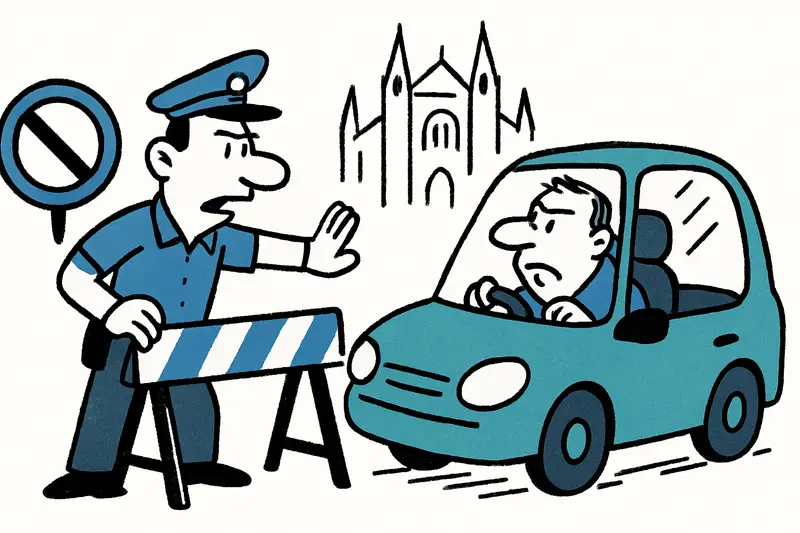
Palma: Wide-area closures around the Seu during the patronal feast – What residents and visitors need to know
For the patronal feast of the Mare de Déu de la Salut, large parts of the Avenida Adolfo Suárez around the cathedral will be closed. What this means for residents, taxi drivers and travellers — and how to avoid traffic jams and stress.
When the bells call, the city is sealed off
The patronal feast in honour of the Mare de Déu de la Salut brings music, candlelight and crowds back to Palma's old town this weekend. Anyone planning to visit the Seu (cathedral) visitor information and the Parc de la Mar should expect restrictions: Avenida Adolfo Suárez will be temporarily closed in one direction or completely, and entrances and exits will be blocked. This is not a theoretical problem — many residents and businesses feel the effects immediately.
Facts at a glance
Main closure times: On Friday, September 5, the road is closed from 23:00–00:30 towards Porto Pi; on the night from Friday to Saturday from 00:30–02:00 towards the airport. On Saturday, September 6, a full closure of both directions of Avenida Adolfo Suárez will be in effect from 12:00 until Sunday, September 7, 04:00. In addition, the exit from Parc de la Mar to the motorway will be blocked at certain times (Friday 23:00–00:30 and Saturday 12:00–04:00). For local reporting and maps of closures see Fiesta patronal en Palma: cierres de calles y desvíos el sábado.
Bus services are also affected: EMT Palma service updates — EMT line 25 will be diverted during the full closure and the usual stop at Parc de la Mar (number 1982) will be cancelled. Allow extra time, especially if you have luggage or need to catch a ferry.
What is often missing from the public discussion
The usual message is: if it's closed, don't drive. That's true, but incomplete. Local coverage of the restrictions of traffic in Palma during the Fiesta Patronal highlights the knock-on effects: supply chains for restaurants and hotels, for example deliveries of fresh goods early on Saturday morning, are disrupted. Taxis must take detours and lose time slots for airport transfers. People with limited mobility need concrete information on where they can be dropped off barrier-free. And: what happens if an ambulance needs quick passage through the old town? Officials and residents can consult Spain's emergency number 112 information for guidance on emergency access protocols.
Another aspect: short-notice closures at exits create stress for drivers who need to reach a ferry or the airport. The result is hasty decisions, unnecessary detours and sometimes frustrated tourists — with consequences for the island's first impression.
Concrete everyday problems
Imagine: dusk, brass bands playing on the Passeig del Born, the air smelling of fried ensaimadas and sea breeze. Suddenly a police officer tells you the exit is closed. A taxi driver curses, a delivery driver has to leave his refrigerated box in the heat. Scenes like this repeat themselves — and nobody benefits when communication comes too late.
Practical solutions and opportunities
The patronal feast is important and beautiful. Still, annoyance and risk can be reduced if organisers and the city organise a few things more clearly:
Early, clear communication: Clear signs on access roads, push notifications via the EMT app and notices on car park signs would avoid many misunderstandings. A map showing temporary taxi stands and barrier-free routes would be helpful.
Organised delivery windows: Restaurants and shops need coordinated time slots for deliveries — for example very early in the morning or after midnight — so that fresh goods are not missing.
Shuttle and park-–ride offers: Temporary shuttles from an outer car park to Parc de la Mar could reduce car traffic. That keeps the atmosphere on the plazas pleasant without clogging the streets.
Marked emergency corridors: Ambulances and fire services must always have a clear route. Visible corridors and personnel to enforce them are not a luxury but a safety standard.
Tips for residents and visitors
If you need to go into the old town: leave the car at home. Walk, cycle outside the closure zones or use an alternative EMT stop. Order taxis to pick up outside the closed area; many drivers can drop passengers at an agreed meeting point. If you're going to a car park: arrive early and have a plan B — access routes can be changed at short notice.
One more practical tip: residents should check their parking permit now and speak to local police instead of hoping for a solution on a fully booked evening.
Conclusion
The patronal feast brings Palma to life: music, candles and a sea of people are a part of island life not to be missed. But joy should not come at the expense of accessibility and safety. With better organisation, earlier information and some pragmatic measures, the balance can be struck: festive atmosphere without chaos. And those who prepare — shoes on, extra time in their bag and patience — will likely enjoy the evening too, between trumpets, seagull cries and the roar of the sea at Parc de la Mar.
Frequently asked questions
Will the roads around Palma Cathedral be closed during the patronal feast?
How will traffic be affected in Palma on Friday night and Saturday?
Can I still take the bus to Parc de la Mar in Palma?
Is it a bad idea to drive to Palma old town during the fiesta?
How can I get to the Seu in Palma if the streets are closed?
Will taxis in Palma be delayed during the patronal feast?
What should visitors to Palma Cathedral know before going this weekend?
Are there emergency access routes kept open in Palma during the closures?
Similar News
Masked Images, Real Panic: When Social Media Aesthetics Alarm Neighbors
Five German content creators filmed on a recently vacated detention site using deceptively realistic props. The result: ...
Why the Striped Breams in Cala Pí Should Be a Wake-up Call
Once again bathers in Cala Pí were surrounded while swimming by small, nippy fish — some wounds bled. Time for clear rul...
Daily from New York: How Palma's Air Traffic Is Growing — and What Must Change
United will increase the Newark–Palma service to daily flights in 2027 (Boeing, 231 seats). Strong tourist numbers clash...

When Love Ends in Shards: Destruction in Son Vida and the Questions That Remain
In Son Vida a relationship dispute escalated: a woman destroyed furniture in a luxury villa, later pressed a panic butto...

Who Bears the Burden? Mallorca Between Tenant Protection and Landlord Fears
Madrid's new housing decrees strengthen tenant rights — but on Mallorca concern is growing: will the law drive small lan...
More to explore
Discover more interesting content

Can Cap de Bou

Townhouse Lleo 72
