
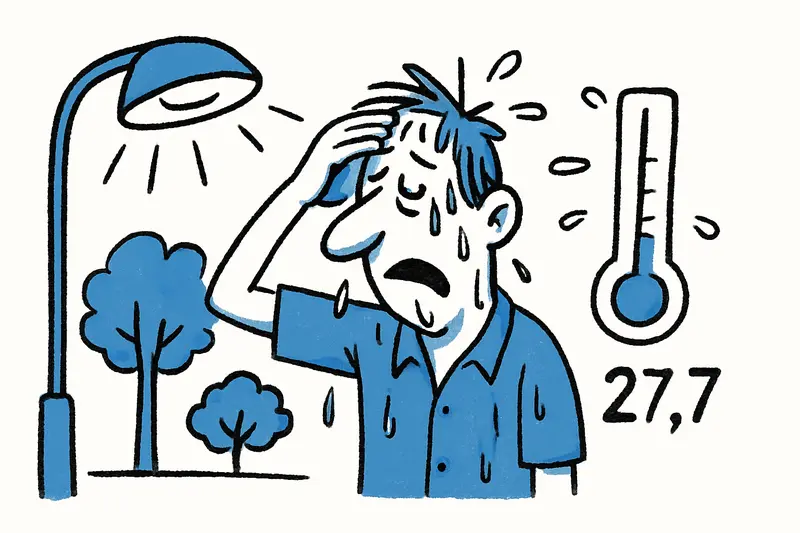
Palma swelters through the night: 27.7 °C at the Portopí station — a warning sign
Palma swelters through the night: 27.7 °C at the Portopí station — a warning sign
The night in Palma turned sultry: at the Portopí station the thermometer did not fall below 27.7 °C. AEMET records extremely high minimum temperatures across the region. What does this mean for quality of life and health?
Palma swelters through the night: 27.7 °C at the Portopí station — a warning sign
What does a night in which the thermometer in Palma did not drop below 27.7 °C tell us? This simple question is the starting point when trying to assess the significance of the recent measurements. The national weather service AEMET in the Balearics confirmed that the Portopí station recorded a minimum temperature of 27.7 °C on Monday night and humidity exceeded 90 percent — a combination that strains sleep, work and health.
The raw numbers can be expanded: unusually high minimum temperatures were recorded in several locations across the island. Port de Sóller reported 28 °C; in Banyalbufar, Campos, at the Capdepera lighthouse, in Santanyí, at Son Bonet airport and in Portocolom minimums were around 27 °C. At other stations such as Colònia de Sant Pere, Cabrera, Pollença harbour, Llucmajor, Binissalem, Santa María, Sineu, Manacor or Calvià the minimums barely fell below 26 °C; elsewhere, for example in Artà, Andratx, Petra, sa Pobla and Muro, they remained around 25 °C. Further reporting can be found in Mallorca swelters once more: Short heatwave brings late-summer warmth.
The heat continued during the day: inland, maximum values around 40 °C were measured, with an orange warning level in effect there; values around 39 °C were also expected in the north and northeast. Local coverage included When Palma Is Sweating by Mid-Morning: Heat Alert, Risks and What's Missing Now, and related reporting noted shifts in evening breezes in Palma in late summer: pleasant warmth, a few clouds and the northeast breeze.
Critical analysis: why this night is more than a record. A night that does not cool down means the body receives no recovery period. That increases cardiovascular strain, worsens sleep quality and raises vulnerability for older people and those with chronic illnesses. High humidity significantly worsens the perceived temperature — 27.7 °C with over 90 percent humidity feels very different than in dry air. For people who work outdoors or live in poorly ventilated housing, this is not a mere loss of comfort but a health problem.
What is missing in the public discourse. We talk a lot about daytime highs — hardly anyone focuses on nighttime minimums. Yet warm nights are a clear indicator of climatic shifts: the lack of nocturnal cooling is a symptom of urban heat islands, land use change and long-term warming. The debate often lacks concrete figures on the spatial distribution of measuring stations on the island, specific consequences for workers (hospitality, construction, transport) and for households without air conditioning — as well as practical plans for short-term protection during particularly hot nights.
A everyday scene from Palma shows the effect: around three in the morning on the Passeig del Born warm air still hangs over the plane trees, air conditioners hum through the night, taxi drivers wait with open doors, and the usual conversations about holidays and construction sites sound warmer than usual. In many courtyards people open the windows, but there is no breeze. The market stalls that set up during the day push palettes of water bottles into coolers — nobody likes to talk about it, but the heat affects even these small routines.
Concrete immediate measures: 1) Municipal cooling rooms and extended opening hours of public facilities on nights with extreme humidity to protect particularly vulnerable people. 2) More public drinking fountains and mobile water distribution points for outdoor workplaces. 3) Intensively use night shifts for construction and road work to reduce physical strain. 4) Targeted expansion of urban greenery — more shade on streets like Avenida Jaime III or near Plaza Cort reduces daytime temperatures and helps night-time cooling. 5) Information campaigns: simple behavioral rules such as cool showers, daytime shading and rest periods for the elderly.
In the longer term we need more climate-adaptable buildings: better heat insulation, retrofitted shading against solar radiation, and energy-efficient cooling that relieves the power grid. Equally important is a denser spatial distribution of measuring stations — only with a richer data base can heat islands and vulnerable neighbourhoods be precisely identified.
A pointed conclusion: the record night is not an isolated event but a symptom. If nights no longer cool, comfort shifts toward stress — and that has real consequences for health, work and urban life. AEMET has confirmed the values; the question now is whether administrations, businesses and neighbourhoods will take the necessary practical steps so that such nights have a milder impact. Those who now only call for more parasols for tourists miss the real challenge: protecting the quality of life of those who live here and feel the heat every night.
Frequently asked questions
What does a Palma night of 27.7°C tell us about recent weather?
How does humidity change how hot nights feel in Mallorca?
Who is most at risk during hot, humid nights in Mallorca?
What can residents do to cope with hot, humid nights in Palma?
Are such hot nights in Mallorca a one-off event or part of a climate trend?
Where on Mallorca were the highest night-time temperatures recorded?
What were the daytime conditions and warnings across Mallorca during the heat event?
What long-term adaptations are suggested to make Mallorca nights more livable?
Similar News

More water than last year: Mallorca's reservoirs breathe easier
September rain refilled the Tramuntana's reserves: overall fill around 35 percent, Cúber at 40.42 percent, Gorg Blau at ...

Three Luxury Hotels in Banyalbufar: Lots of Money, Many Questions
A Danish investor plans three exclusive accommodations in Banyalbufar — including the historic Son Valentí. The announce...
2.1 tonnes of cocaine on sailing yacht off Spain's coast – a reality check for the coastguard
A 14-metre yacht was seized with 2.1 tonnes of cocaine. Who monitors the ports, how does the international hunt succeed ...

Heat Bonus in Mallorca: 100 Euros Extra for Outdoor Staff at MarSenses
MarSenses pays employees who worked outdoors in August an extra €100 as recognition. Lighter uniforms, reduced hours for...
Renovating in Mallorca: What You Really Can Do Without Neighbour Consent
Many think they can do whatever they want in their apartment. That's partly true — but only as long as structural elemen...
More to explore
Discover more interesting content

Can Cap de Bou

Townhouse Lleo 72
