
When Palma Is Sweating by Mid-Morning: Heat Alert, Risks and What's Missing Now
By mid-morning the thermometer in Palma had already climbed above 40 °C. Beyond immediate warnings, the question arises: how prepared is the city for such extreme temperatures — and what needs to happen right now?
When Palma Is Sweating by Mid-Morning
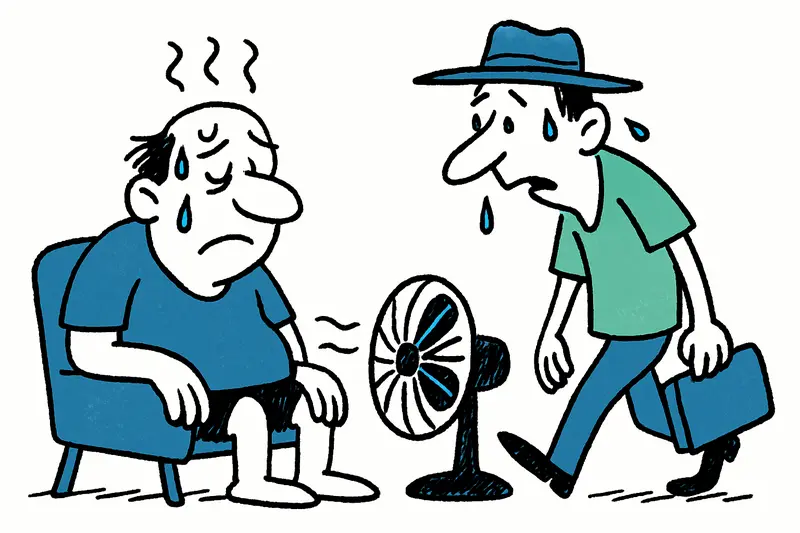
On Sunday morning the air in Palma didn't just feel warm — it was like a curtain of heat: over 40 °C at some measuring points, open windows without a breeze, and only a few people moving slowly in the shade of the plane trees on the Passeig Mallorca. The scene seems almost normal for August, but the timing — already in the morning — gives cause for concern. This concern is explored in Heat alert on Mallorca: How well is the island prepared for infernal heat days?.
The acute situation: more than just record numbers
Official measuring stations reported local readings up to around 40.3 °C, and in the island interior and the south some spots even exceeded 42 °C. Particularly burdensome: the nights remain tropical, barely dropping below 25 °C. For many people living in old buildings without air conditioning this means little recovery, poor sleep, and increased strain — especially for the elderly and those with chronic illnesses. Local reporting provides context in Nearly 40 °C: Mallorca's Daily Life Under Heat Stress — How the Island Can Respond.
The central question: Is Palma prepared?
That's the guiding question behind images of towers of fans and full water containers. In the short term authorities respond with warning levels, loudspeaker announcements and recommendations. But the heat wave also exposes systemic problems: old buildings without insulation, inadequate public cooling spaces, and an urban infrastructure barely designed for more frequent extreme heat. Who helps the market traders who dismantle their stalls in the morning? Who checks whether buses are actually air-conditioned? For a broader assessment of preparedness across the island see When Mallorca Cooks: How Prepared Is the Island for the Next Heatwave?.
Aspects that rarely make the headlines
A few observations often missing in regular heat reporting: the city's electricity load rises sharply — increasing the risk of outages. Ambulance and care staff work under the same conditions as those affected. Social isolation becomes a danger: neighbors living alone often don't notice in time when someone needs help. Local animal life also suffers; dogs and farm animals need shade and water or they risk heat shock.
Concrete: What would help immediately
A few pragmatic proposals that can have quick effect:
1. Public cooling centres and extended opening hours: designate schools, community halls and libraries as cooler shelters and keep them open to everyone — with clear communication about local meeting points.
2. Mobilise neighbourhoods: activate volunteer programmes to call or visit elderly and isolated people daily.
3. Market support: enable early-morning work — adjust delivery times, promote shade nets and mobile cooling units, and provide temporary financial support to market traders.
4. Energy checks and emergency plans: grid operators should ensure priority power for hospitals, care homes and cooling systems; keep municipal generators ready at critical locations.
Set the course for the long term
Heat is no longer a one-off event. Urban planning must respond: more trees (not just decoration but real shade), water-retaining green spaces instead of pure concrete areas, lighter-coloured facades and green roofs, drinking fountains on streets and squares. Also: subsidy programmes for energy-efficient air conditioning and facade renovations so tenants are not left living in unbearably hot apartments.
Everyday tips — short and useful
The usual advice still helps: drink plenty of fluids, wear light clothing, take a siesta during the hottest hours. Practical local tips: go to the market early (7–9 a.m.), visit cafés with shaded terraces, prefer public buses — but check whether the air conditioning works. For the night: darken windows early, take a lukewarm shower in the evening, and use cool cloths and fans, and for official health guidance see WHO fact sheet on climate change and health.
Conclusion: Consideration and planning — now and for later
This weekend's heat is a warning signal. In the short term caution, solidarity and clear information are crucial. In the medium term Palma needs a programme against increasing summer heat: better infrastructure, more shade and a social safety net that leaves no one alone. Those who help now — neighbours, market traders, the elderly woman in the stairwell — make a difference. And those who plan for the long term ensure that such mornings become rarer and more bearable one day.
Frequently asked questions
How hot does Mallorca usually get during a summer heatwave?
Is it safe to swim in Mallorca during extreme heat?
What should I wear and bring for very hot weather in Mallorca?
When is the best time to do errands in Palma during a heat alert?
What are the biggest heat risks for older people in Mallorca?
Are there enough cooling spaces in Palma during extreme heat?
Can buses in Mallorca be relied on for air conditioning in hot weather?
How can neighbours help during a heatwave in Mallorca?
Similar News
Bloody clash in Canòdrom Park: What is missing in addressing violence on Mallorca's streets?
At midday on October 23, an 18-year-old man was critically injured in Canòdrom Park in Palma. The attack raises question...
Palma raises bus fares: Who pays the bill for public transport?
Single tickets rise from €2 to €3, airport trips have a reference price of €4.50. It remains unclear whether residents w...
Palma's New Indoor Pool: Sea View, Sunbeds and Space for Everyone
At Aigua Dolça, near the Paseo Marítimo, Palma has a new municipal indoor pool. For a small fee people can now train, re...
How Four Burglars Emptied Ten Houses with a Simple Trick — and What It Means for Mallorca
Four men used the impressioning technique, posed as delivery workers and accepted two years in prison. A reality check f...
Bundles of Drugs, Containers and Open Questions: A Reality Check for Mallorca
3.3 tonnes of marijuana, 80 kilos hidden in golf-ball vending machines and a 44-year-old German released on conditions i...
More to explore
Discover more interesting content

Can Cap de Bou

Townhouse Lleo 72
