
Nearly 40 °C: Mallorca's Daily Life Under Heat Stress — How the Island Can Respond
On an August weekend the thermometer climbs toward 40 °C. People move into evening life, shutters stay down. The central question: How resilient is Mallorca to such heat peaks — and what practical changes can be made now?
When the island breaks a sweat: Nearly 40 °C and the question of resilience
The air is still. On the Passeig del Born not only sweat drips, but the asphalt shimmers. Nearly 40 degrees on an August weekend — this is not a local summer tale, but reality. The simple yet urgent question is: How well does Mallorca really cope with these extreme temperatures, as asked in When Mallorca Cooks: How Prepared Is the Island for the Next Heatwave?.
Everyday tactics: rise early, stay out late, survive in between
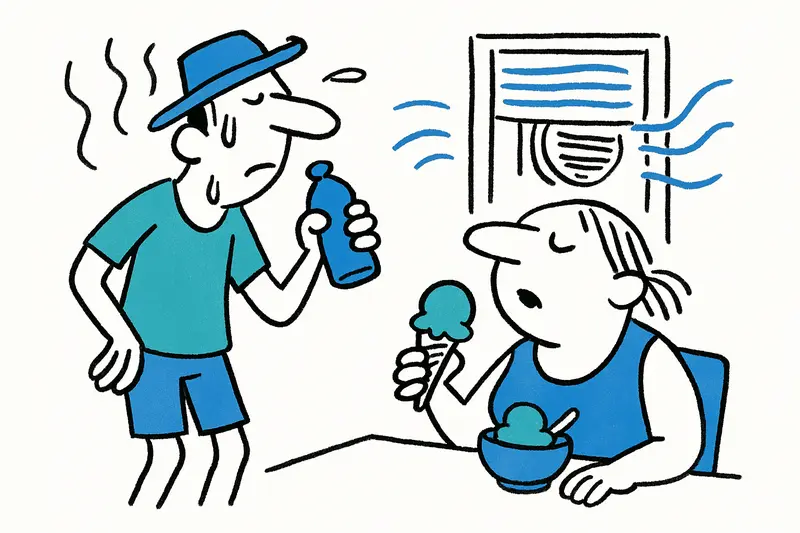
The picture is familiar: shutters down, windows closed, air conditioning on economy mode. Those who can shift activity to the cooler hours do so. On the Paseo Marítimo you hear voices again in the evening, the clink of glasses, the hum of mopeds. Cafés and ice cream shops form small oases of relief. People improvise: pools become baths (30 °C already feel “cool”), gelaterias turn into lifesavers, and the old town becomes a promenade at night.
What public policy often overlooks
Such everyday strategies are enough to keep the tourism machine running. But they mask problems: the construction and insulation of many buildings are not designed for hot nights. Outdoor workers — construction workers, delivery people, service staff — suffer particularly because midday breaks are not always practical. Then there are elderly people in remote villages who endure midday alone in overheated apartments. And the rising energy demand from air conditioners strains the grid during peak times.
Another, less discussed point: nocturnal heat. When temperatures barely drop in the evening, bodies don’t recover and electricity consumption stays high. The island pays for this with increased energy demand, higher costs and a noticeable fatigue among many residents — and this can last for weeks, not just single hot days. This concern is discussed in Heat alert on Mallorca: How well is the island prepared for infernal heat days?.
Economic and social consequences
Business life adapts: evening gastronomy gains, midday revenues shrink. That is an opportunity for bars and restaurants — but for craft businesses or beach stalls it can mean the opposite. For healthcare, more heat means more cases of dehydration, circulatory problems and fainting. For the social fabric the challenge is the isolation of vulnerable people when neighborhood support networks do not hold.
Concrete opportunities and solutions — what to do now
The island is not powerless. Some measures could be implemented relatively quickly and would help noticeably:
1. Create cooler urban spaces: more trees along avenues like the Passeig, shade sails over specific squares, drinking fountains in tourist centers and more green roofs in urban neighborhoods. The urgency of such measures is highlighted in 40 Degrees This Weekend: Mallorca Faces a Heat Test – What Matters Now.
2. Tighten occupational safety: flexible working hours, mandatory heat breaks for outdoor jobs, drinking stations on construction sites and financial incentives for employers to provide shaded areas.
3. Energy and buildings: grant programs for better insulation, more efficient air conditioners and night-ventilation concepts. At the same time: expand decentralized renewable energy sources so that nighttime cooling does not overload the grid.
4. Strengthen social networks: neighborhood checks on hot days, evening meeting points for older residents and mobile cooling centers in smaller towns like Campos, where people often have to walk far to the nearest cooled building.
5. Tourist adaptations: inform visitors about times of day with lower strain, promote evening tourism and develop new offers outside midday hours — an opportunity for a more relaxed island routine.
No pessimism, but clear priorities
We love the island for its warm evenings, the chirping of cicadas and the scent of fried fish on the promenade. That will not change, but the way we build, work and plan must adapt. If shutters and gelato help in the short term, we need better long-term solutions, as detailed in Heatwave reaches 42 °C: How Mallorca should cope with the new temperature peak. This is no reason to panic, but to act.
Practical tip for visitors and locals: Use the cooler mornings and evenings, refill bottles at public fountains, seek out old palm courtyards and shady alleys in the old town. And if the heat becomes too much: ask a neighbor or the local bar — often a conversation in the shade is the best cool-down.
Mallorca is used to heat, but extreme hot spells challenge us all. Those who plan wisely now protect health, income and community on the island.
Frequently asked questions
How do people in Mallorca cope with extreme summer heat?
Is it safe to swim in a pool when Mallorca is very hot?
What should I pack for Mallorca in a heatwave?
When is the best time of day to go out in Mallorca during hot weather?
What is special about the Passeig del Born during a Mallorca heatwave?
How does the Passeo Marítimo change on very hot days in Mallorca?
How is heat affecting daily work in Mallorca?
Why is Mallorca more vulnerable when nights stay hot?
Similar News

Palma Gets a Welcoming Park: Tirador Goes Greener — and a Café Is Coming
A new green project in Es Fortí/Camí de Jesús will transform the old Voltadora into a city park with an experience fores...
Why the End of "Los Últimos Mohicanos" Is More Than the Closing of a Bar
With squealing tires and one last glass, an icon on the Palma–Manacor expressway closes. Why the demise of this German b...
Protest camp on Plaza España: Who asks for solutions to the right to housing?
Around 30 activists set up a tent camp on Palma's Plaza España to push for stronger tenant rights. Our analysis asks: Ar...

In the Name of a Gang: Alleged Extortion in El Molinar and What It Reveals About the Protection of Sex Workers
A man is accused of posing as a member of the Hells Angels and extorting two women at accommodation in El Molinar. The s...
When Chile Meets the Mediterranean: A New Flavor at Can Bordoy
At Can Bordoy in Palma's old town, Chilean chef Jhonatan Maldonado combines Patagonian seafood with Mediterranean island...
More to explore
Discover more interesting content

Can Cap de Bou

Townhouse Lleo 72
